Stop the Water. Dry the Structure. Recover with Confidence.
Emergency water extraction, structural drying and full restoration for homes and businesses across Brisbane, Ipswich and Logan — documented for your insurer from the first hour.
Restoring what matters, drying it properly. We help Brisbane homes and businesses recover from water, flood, storm, sewage, fire and mould damage with fast response, measured drying and clear reporting from inspection to reinstatement.
One accountable team
Emergency extraction, drying, sanitising and reinstatement scoping coordinated under one process.
Our mission
To get on site fast, dry every affected material to a verified standard, and give every property owner a clear path forward after unexpected water damage.
Our approach
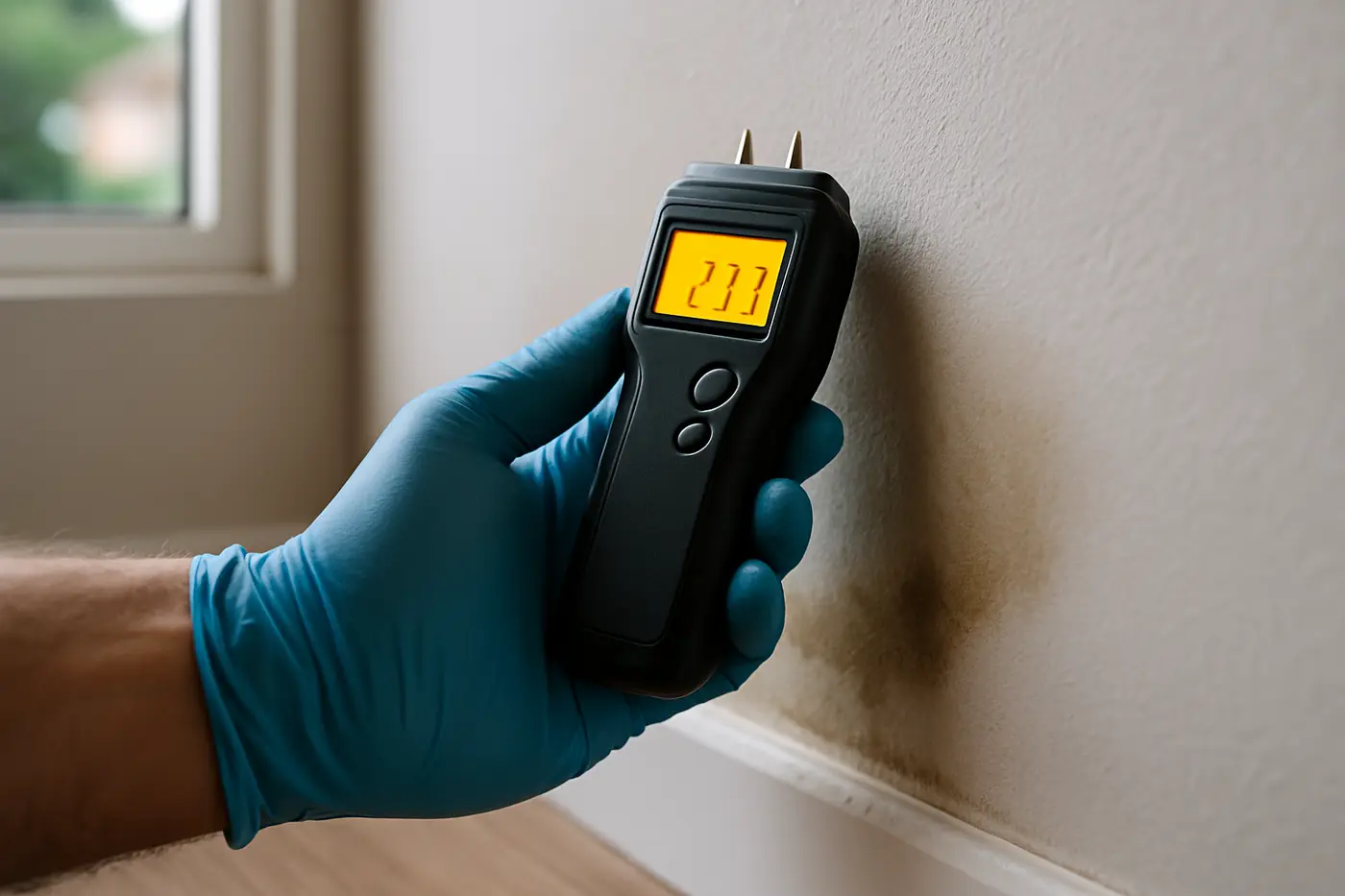
Measure first. Every drying plan starts with moisture readings and the water category, because a wet wall cavity that looks fine today is the mould claim in three weeks.
Every property faces different problems after water gets in. Our technicians match the response, drying method and treatment to the water category and the condition of your home or business.
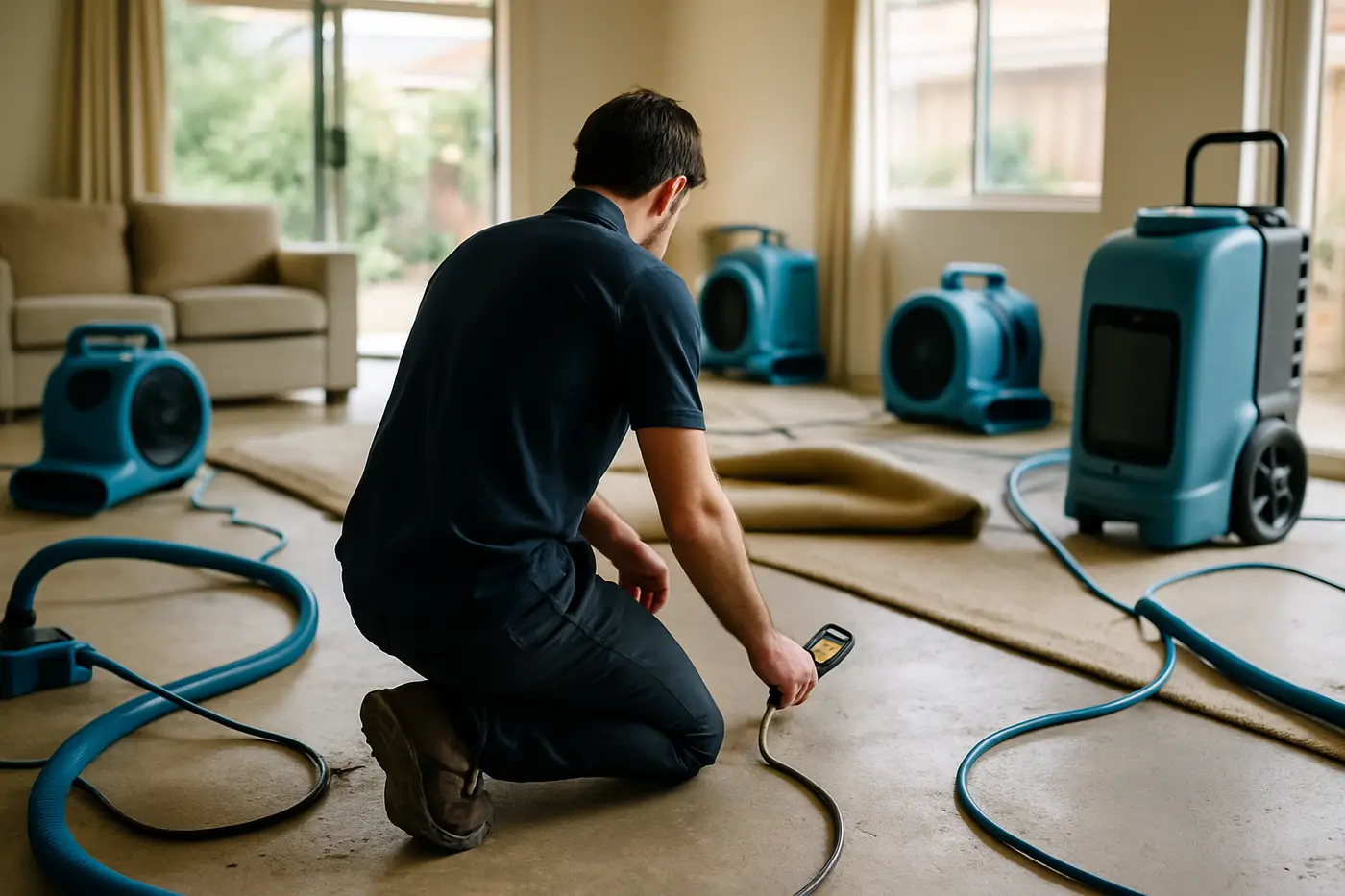
Successful restoration takes more than fans. It takes moisture documentation, the right equipment for the evaporation load, trained technicians and a process that protects the property at every stage.
Rapid Coordination
Clear priorities from the first call — stop the water, protect what can be saved, get equipment on site.
Detailed Assessment
Moisture mapping that looks behind skirtings, under floors and inside wall cavities, not just at the wet patch.
Consistent Updates
One coordinator, daily moisture readings and a clear next step for you and your insurer.
Complete Recovery
Extraction, drying, sanitising and reinstatement scoping under one plan, to the IICRC S500 standard.
Local crews ready across Brisbane, Ipswich & Logan.
Water Damage BNE supports homeowners, landlords, property managers and businesses across the Brisbane metro, the Ipswich corridor and the Logan region.
Do you offer 24/7 emergency water damage response in Brisbane?
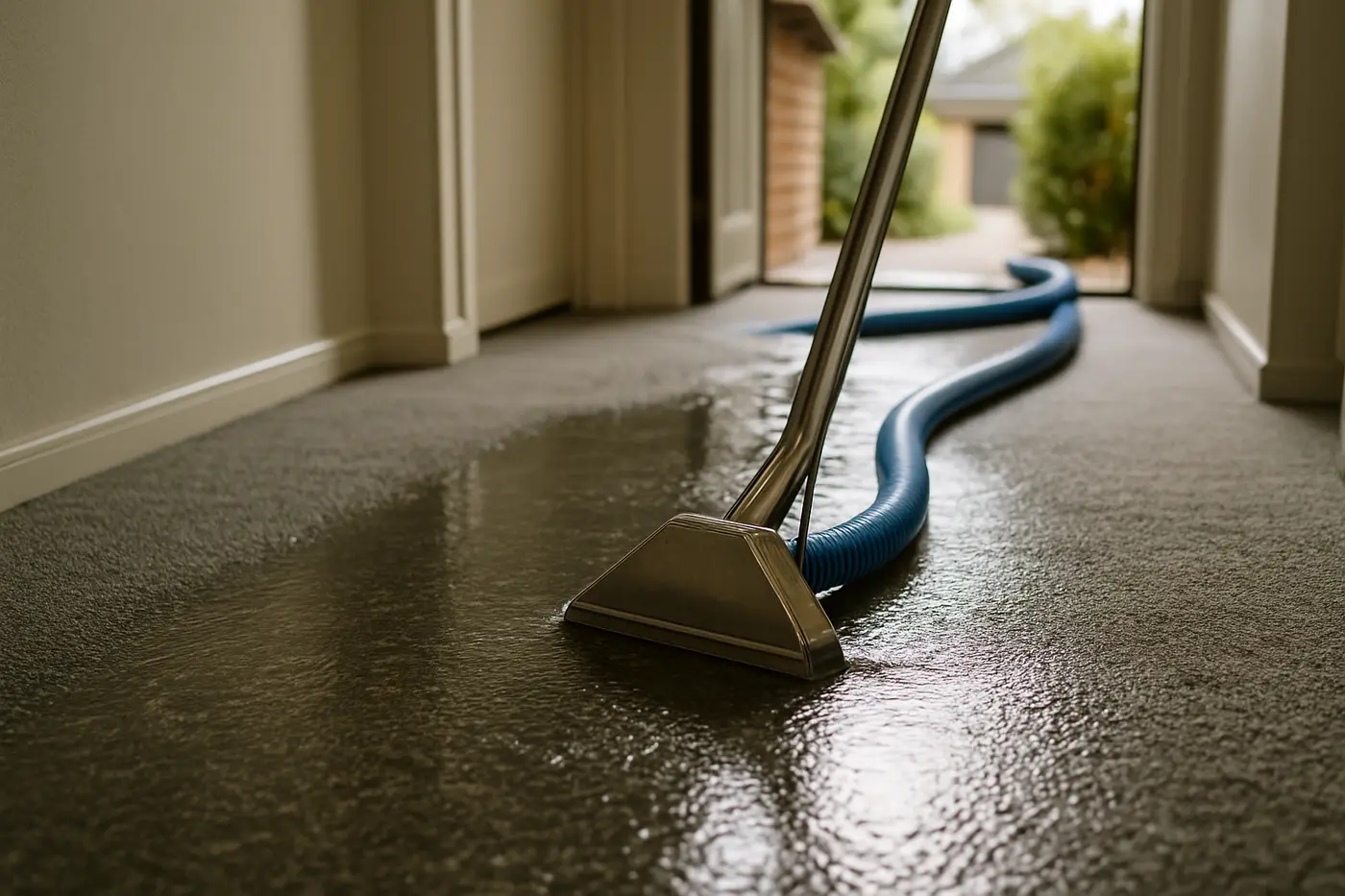
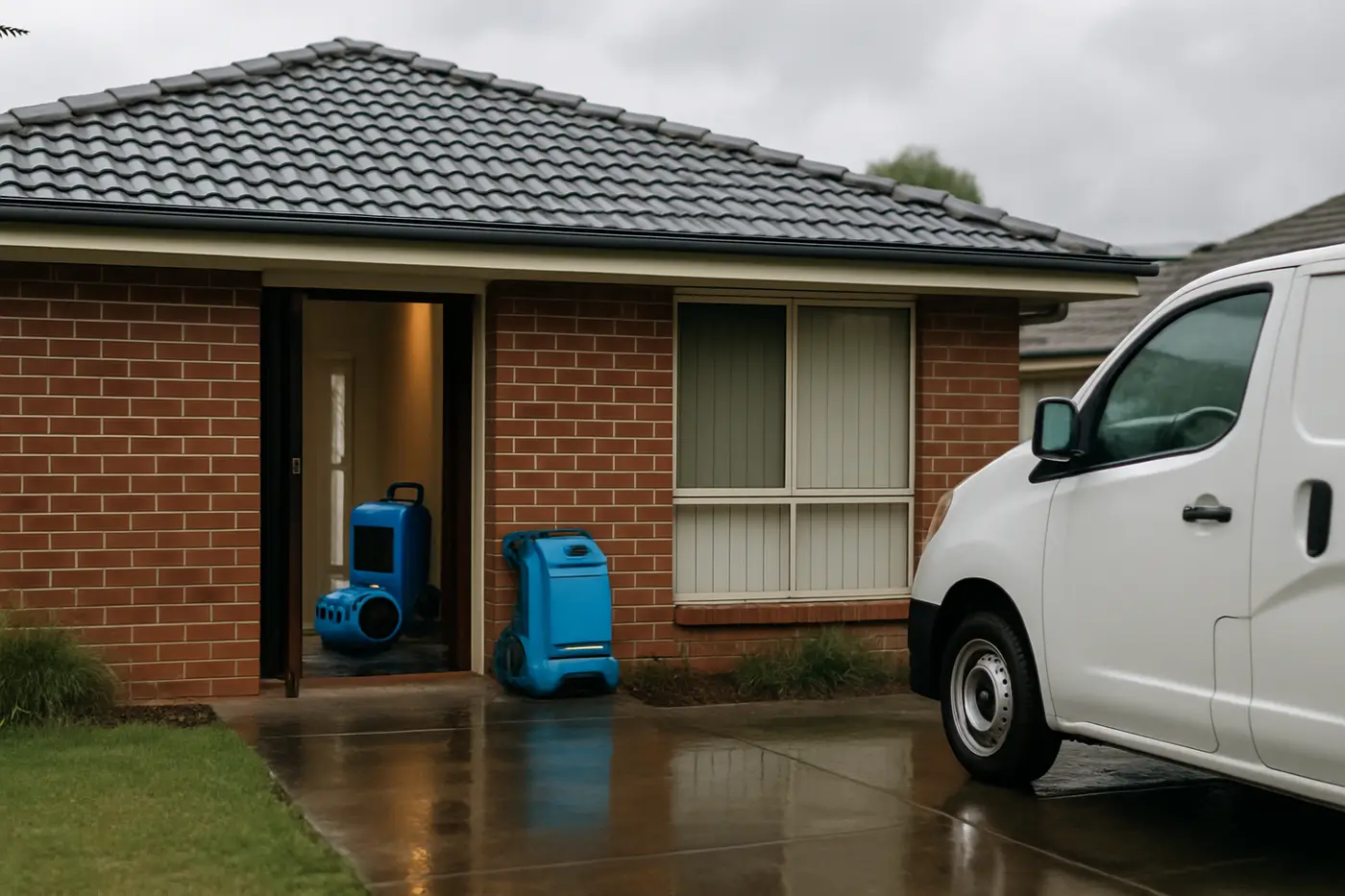
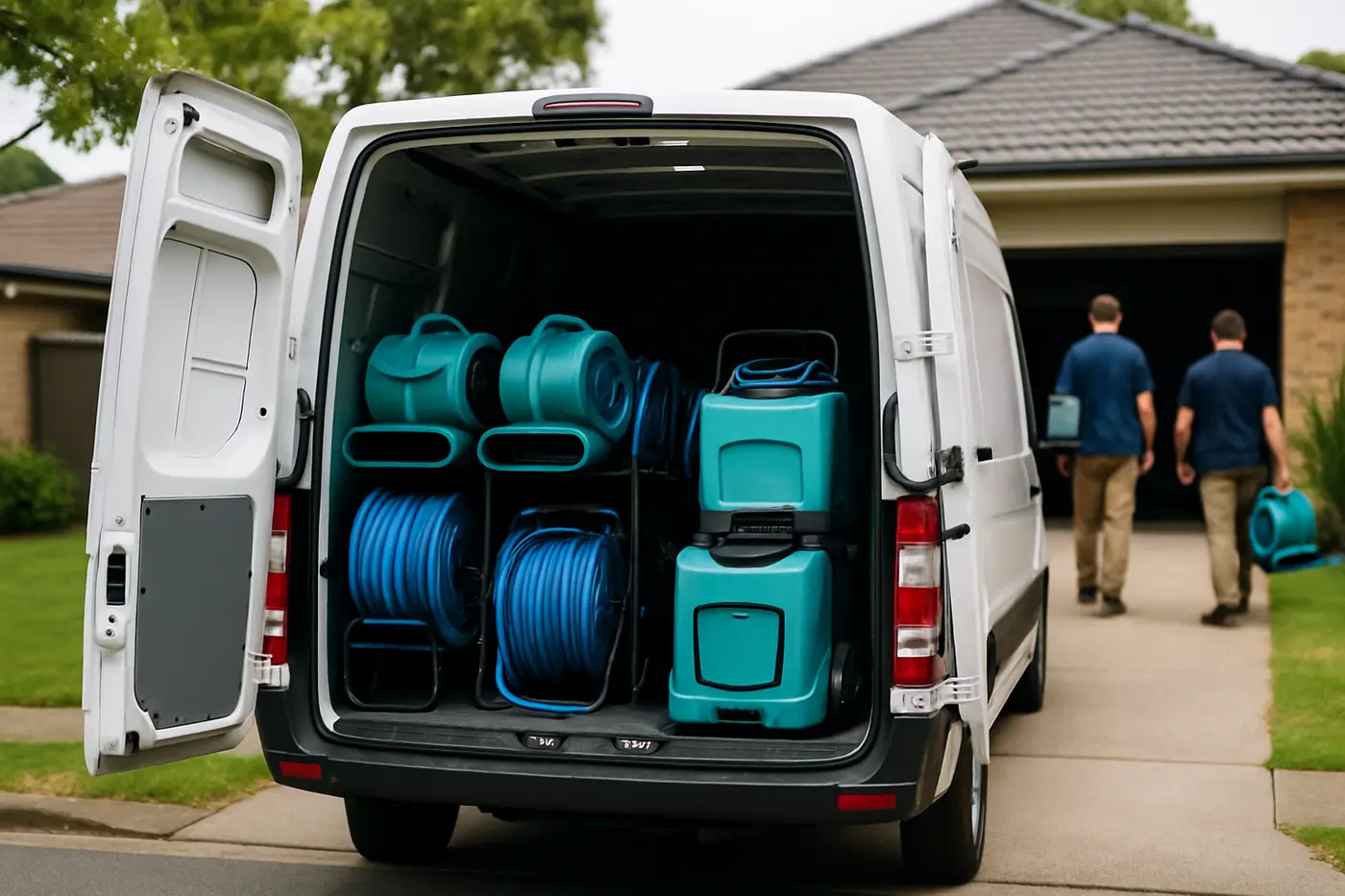
Yes. We run a 24/7 emergency response across Brisbane, Ipswich and Logan, including nights, weekends and public holidays, because water damage gets worse by the hour and Brisbane's humidity gives mould a head start within 24 to 48 hours. Typical travel time is 45 to 75 minutes depending on where you are and the time of day, and active water, sewage and multi-unit jobs go to the front of the queue. When you call, we ask a few questions about the source and the water category so the crew arrives with the right extraction and drying gear on the truck.
Does home insurance cover water damage in Queensland?
Usually, but it depends on the cause. Most Queensland home policies cover sudden and accidental escapes of water, such as a burst flexi hose, a failed hot water system or a storm putting water through the roof. Flood, meaning water rising from a river, creek or lake, is covered only if your policy includes flood cover, and since 2012 insurers use the Insurance Council of Australia's standard flood definition to decide. Slow leaks, poor maintenance and rising damp are commonly excluded. We document the cause, the water category and the extent of damage in a photo and moisture report so your claim reflects what actually happened.
How long does it take to dry a house after water damage?
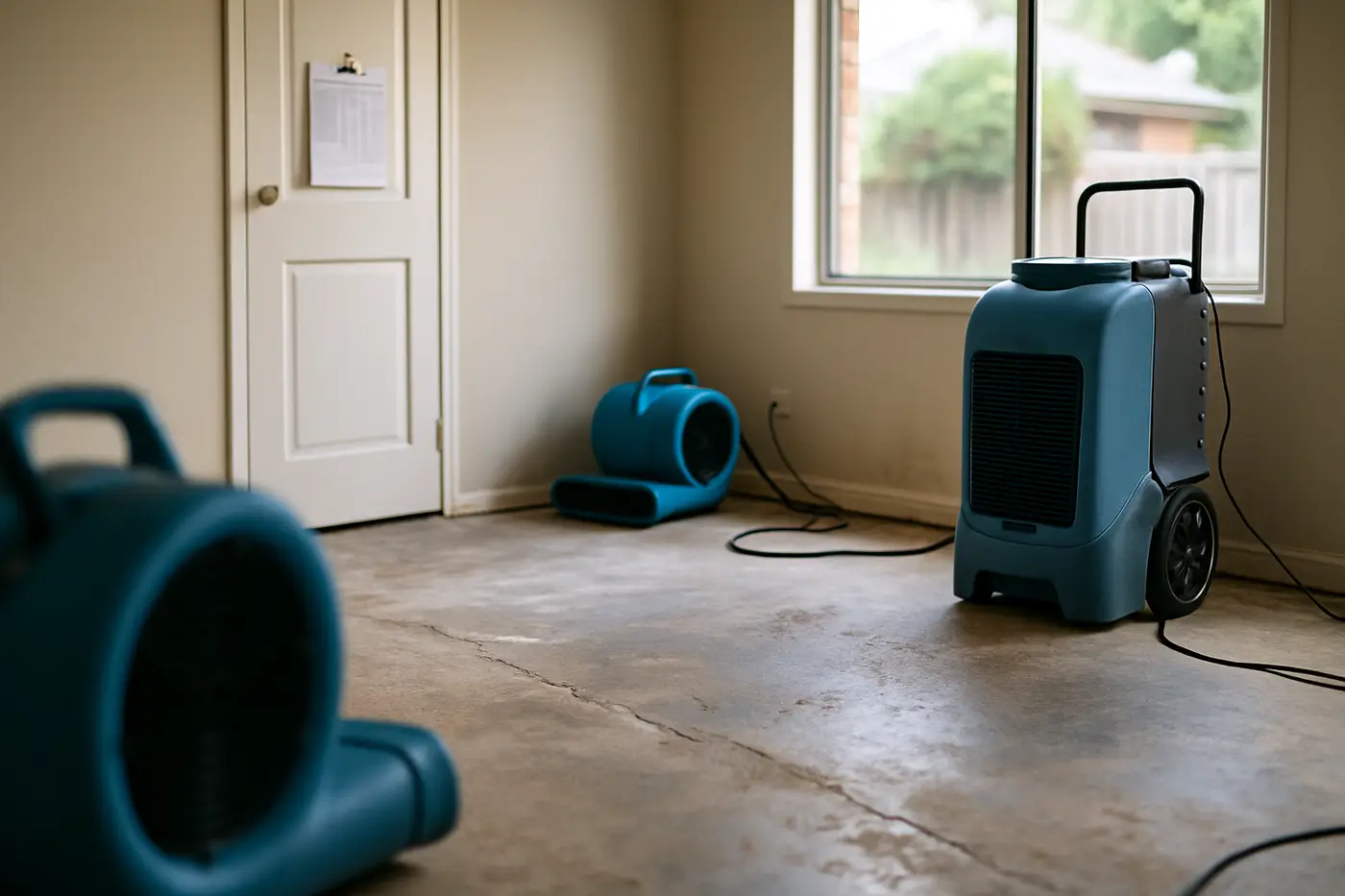
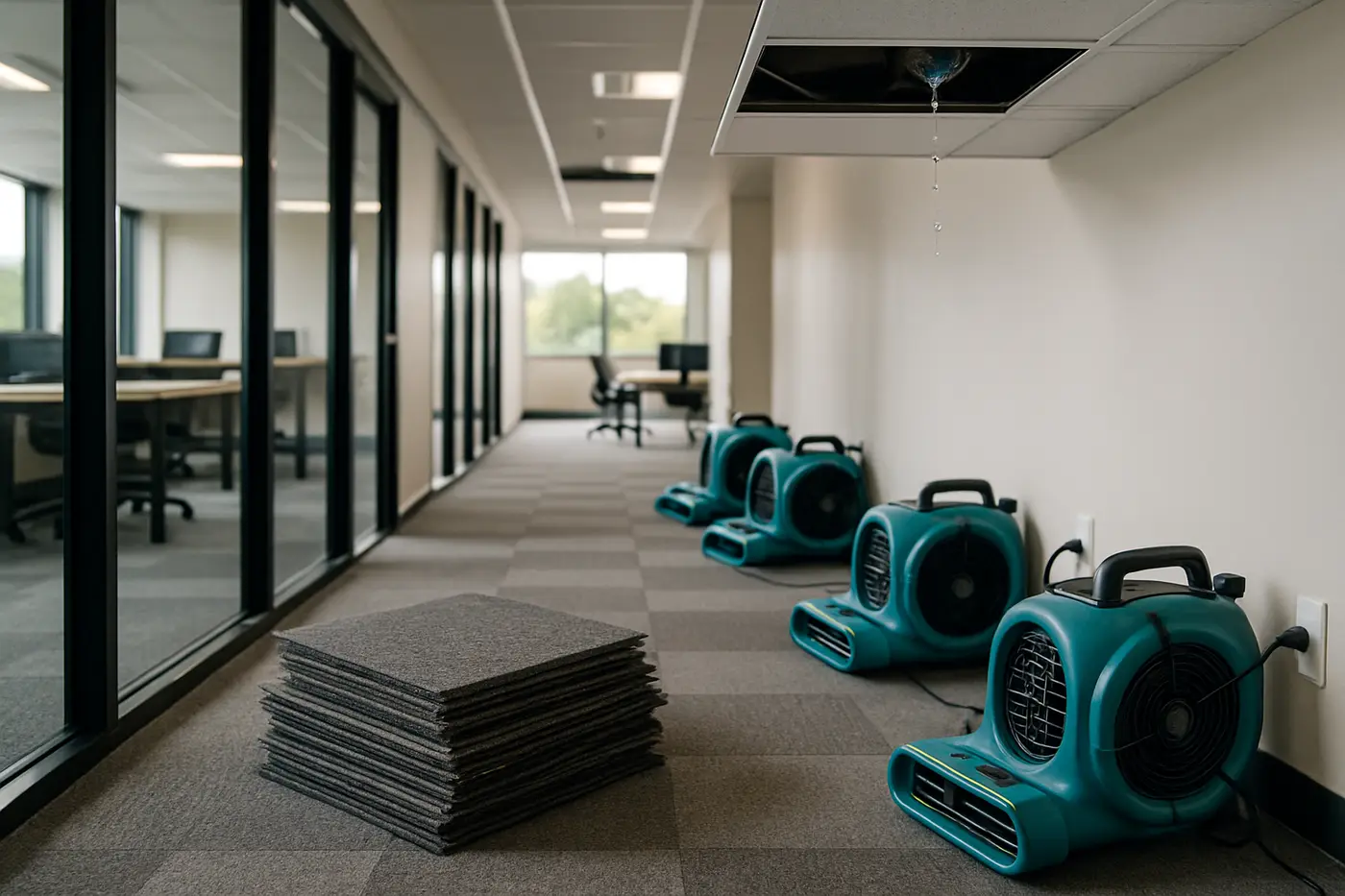
Three to five days is typical for a clean-water job across a few rooms, once the standing water is extracted. Larger events, slab-on-ground homes and timber floors can take a week or more. The drying is done with air movers to pull moisture off surfaces and LGR dehumidifiers to take it out of the air, and we measure progress daily with moisture meters and a hygrometer rather than judging by touch. The job is finished when the readings match a dry reference area in the same house, not when the carpet feels dry, because moisture inside the bottom plates and under the slab lags well behind the surface.
How much does water damage restoration cost in Brisbane?
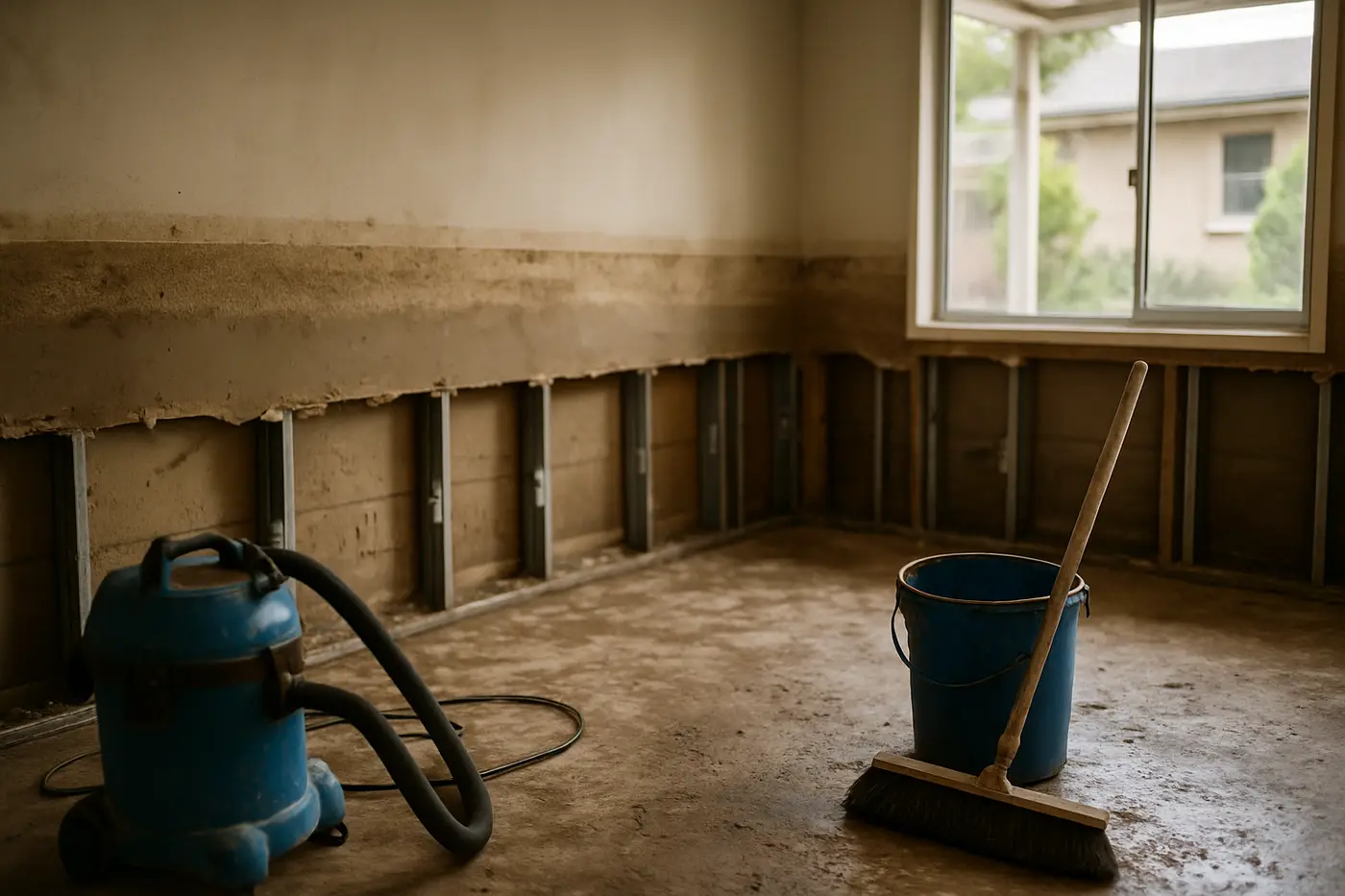
It depends on the water category and how far it has spread. A clean-water job across two or three rooms, such as a burst flexi hose caught the same day, typically costs $2,000 to $6,000 including extraction, drying equipment and monitoring. Grey or black water across multiple rooms, where carpet, underlay and lower gyprock have to be removed and the structure sanitised before drying, runs $6,000 to $15,000 or more. The emergency call-out and assessment, including moisture mapping and a written report, is $300 to $600. We quote on site after mapping the moisture, not from a description over the phone, and the quote is free.
Why does mould grow so fast after water damage in Brisbane?
Mould needs moisture, a food source and warmth, and Brisbane provides all three. Summer relative humidity often sits at 70 to 80 per cent, temperatures stay in the mould-friendly range day and night, and gyprock paper, timber and carpet underlay are exactly what it feeds on. Under those conditions spores that are always present in the air can colonise a wet wall within 24 to 48 hours. That is why we start drying immediately rather than waiting for an assessor, and why we treat wet materials with antimicrobial as we go. Once a colony is established it is a remediation job under the S520 standard rather than a straightforward dry-out.
Which areas do you service?
We cover Brisbane, Ipswich and Logan on a 24/7 basis. That means the whole of Brisbane City from the inner suburbs out to the northside, southside, western suburbs and Redcliffe, the Ipswich local government area including Springfield, Goodna and Redbank Plains, and Logan City from Springwood and Logan Central down to Beenleigh and Shailer Park. Typical travel time is 45 to 75 minutes depending on where you are and the time of day. If you are on the edge of that area, call anyway; we will tell you straight away whether we can get to you and when.
Let's take the next step toward drying your property.
Tell us what happened, where the water is and whether it is still active. A restoration coordinator will explain what to do next and what your insurer will need.
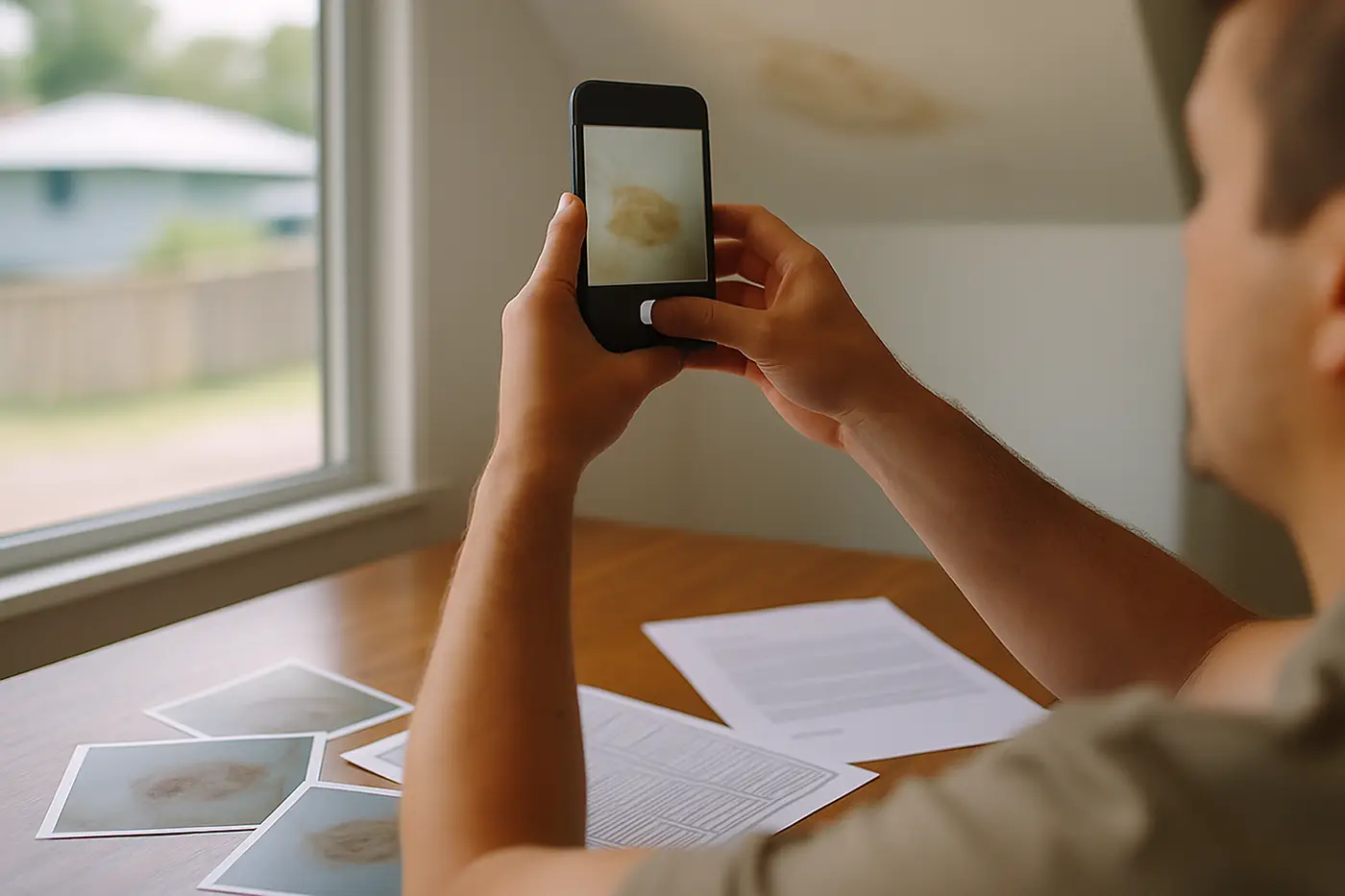
Water damage claims in Queensland are decided on evidence: what the house looked like before anyone touched it, where the water came from and what was done to limit the damage. Here is what to record and how.
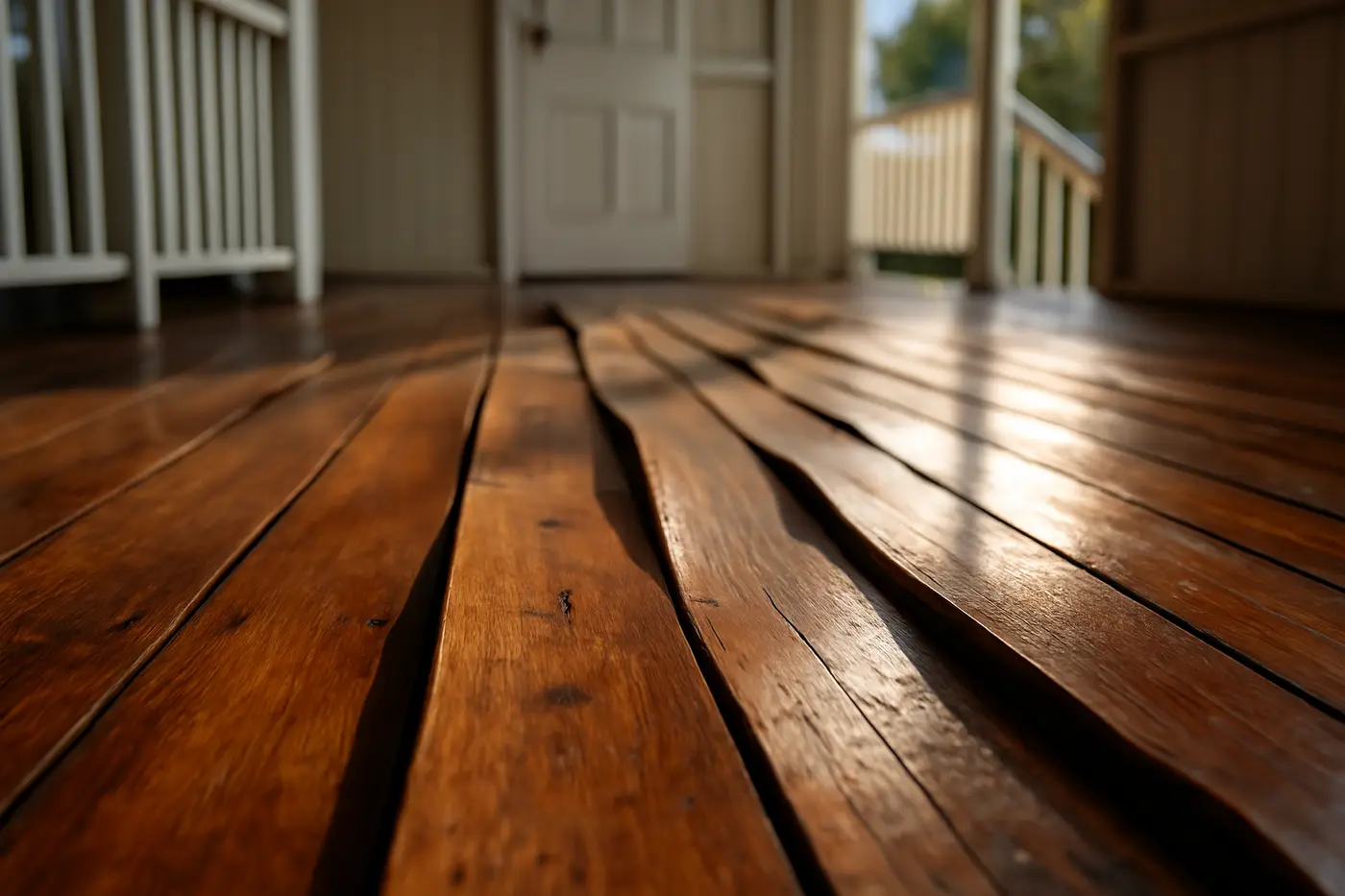
Hoop pine and hardwood floors make a Queenslander what it is, and they are the hardest surface in Brisbane to dry well. Why timber cups and buckles, how controlled drying prevents it, and why the subfloor matters.
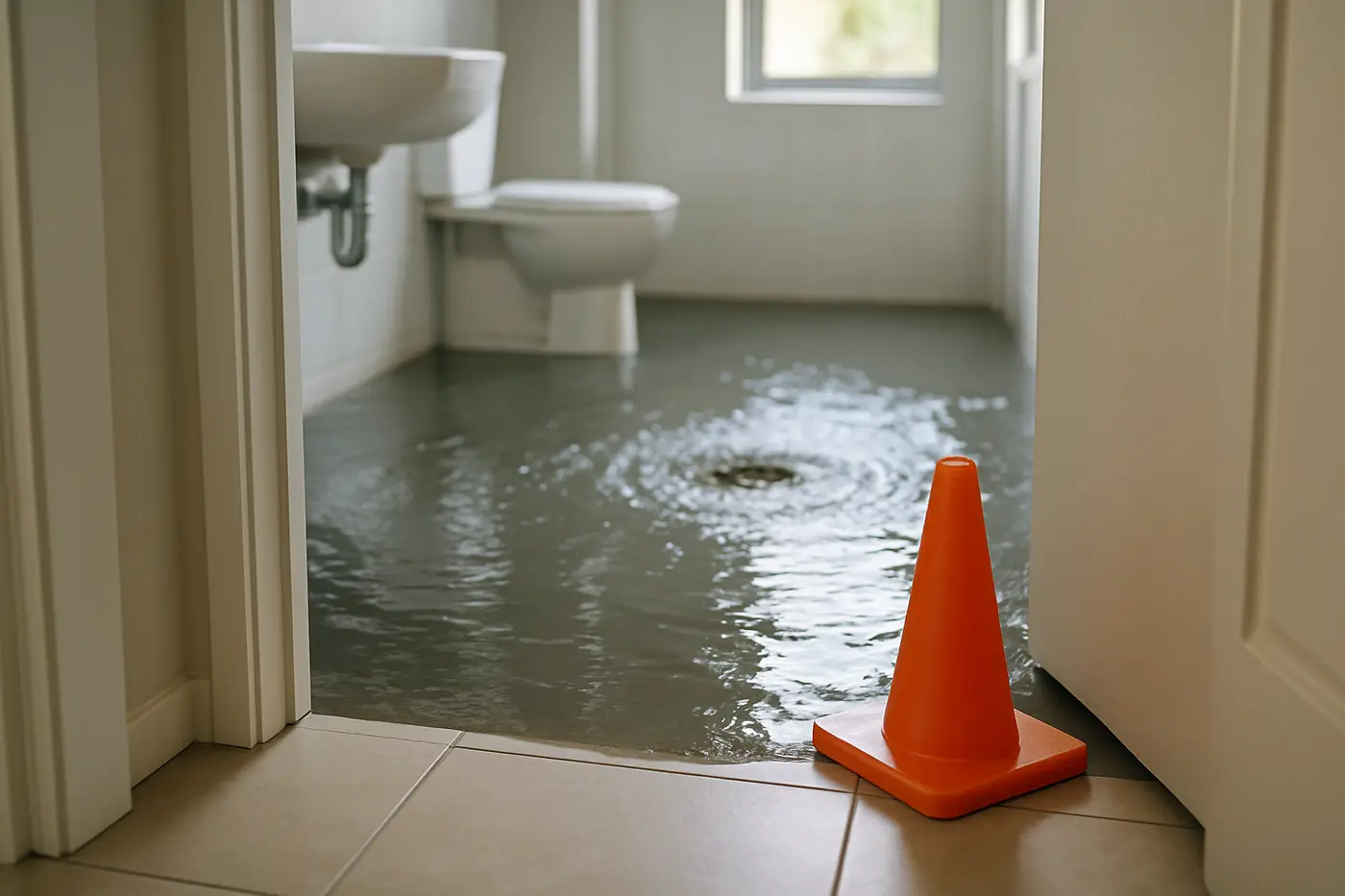
Sewage coming up through a shower waste or toilet is not a cleaning job. It is a contamination event that needs isolation, protective equipment and disposal of everything porous it touched. Here is the sequence.