About Water Damage BNE
Restoration technicians
who measure before they dry.
A Brisbane-based water damage restoration team covering Brisbane, Ipswich and Logan, 24 hours a day. Burst pipes, creek floods, storm ingress, sewage and the mould that follows.
Who we are
Water Damage BNE is a team of restoration technicians based in Brisbane. We extract, dry, sanitise and document water damage for homes, rentals, body corporates and businesses, working to the IICRC S500 and S520 standards.
One accountable team
One coordinator from the first call to the final reading, so you and your insurer get one story and one report.
Our mission
To get on site fast, dry every affected material to a verified standard, and give every property owner a clear path forward after unexpected water damage.
Our approach
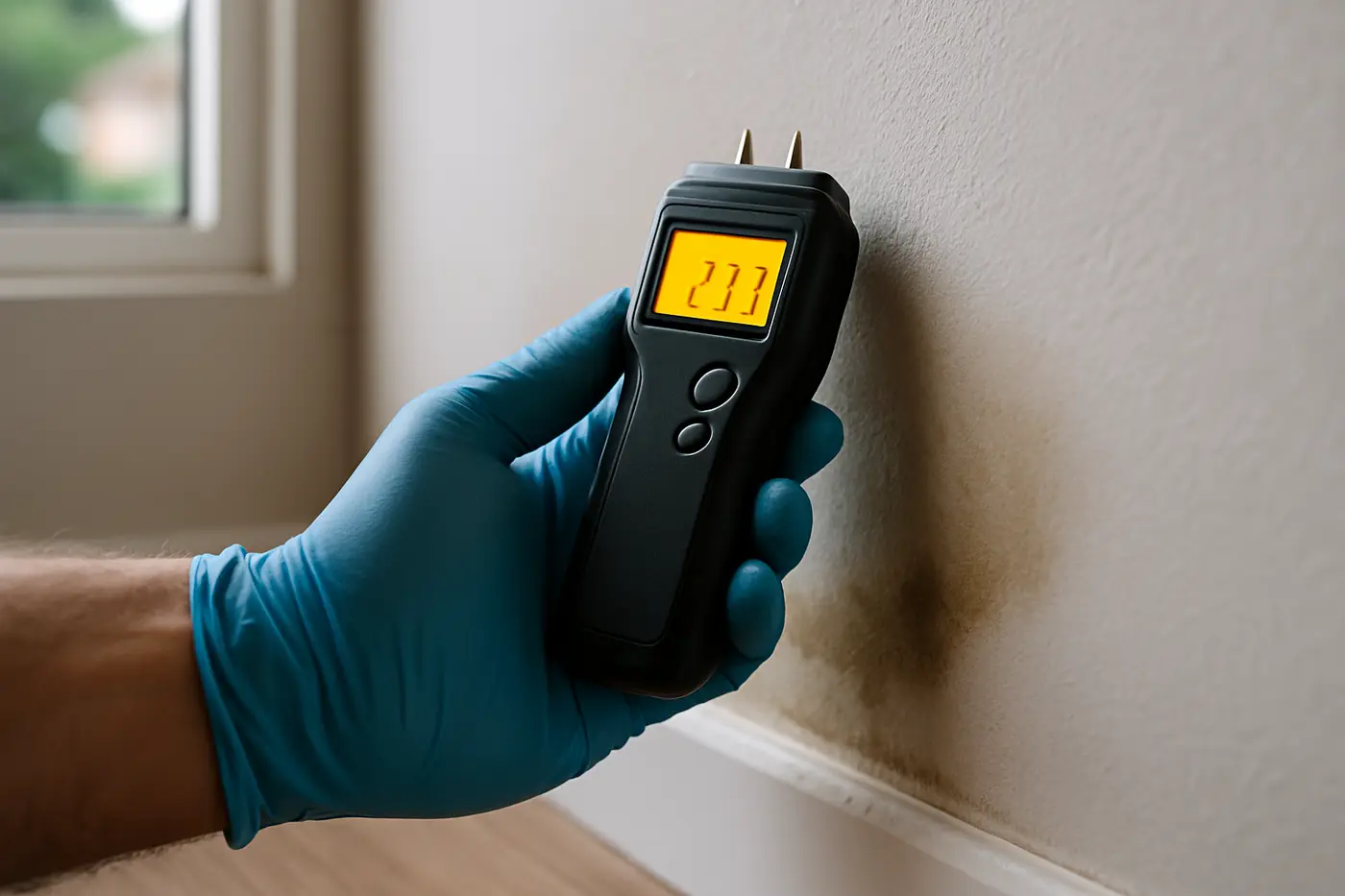
Measure first. Every drying plan starts with the water category and moisture readings, because a wall cavity that looks fine today is the mould claim in three weeks. Brisbane humidity does not give you long.
- Emergency extraction and stabilisation, any hour
- Moisture mapping before any drying plan is set
- Water category identified and treated accordingly
- Daily readings logged until the structure is dry
- Photo and moisture reports written for your insurer
Standards we work to
The same rules the
insurers expect.
Restoration is not regulated the way plumbing or electrical work is, so the standard you follow is the difference between a dry-out and a strip-out six months later.
IICRC S500
The industry standard for water damage restoration. It sets how water is categorised, how a drying plan is built and when a structure is dry.
IICRC S520
The mould remediation standard: fix the moisture first, contain the area, remove what cannot be cleaned, HEPA filter, then verify.
Water categories 1, 2 and 3
Clean, grey or black water decides what can be dried in place and what has to come out. We tell you which one you have before work starts.
Measured, not guessed
Moisture meters, hygrometers and a daily drying log. A job is finished when readings match a dry reference area, not when the carpet feels dry.
How we work
Four steps, the same
on every job.
A burst flexi hose in Chermside and a creek flood in Goodna are very different jobs, but the sequence does not change. That is what makes the outcome predictable.
Emergency contact
Tell us what happened, where the water is and whether it is still flowing. Active water, sewage and multi-unit jobs go to the front of the queue.
Inspect and stabilise
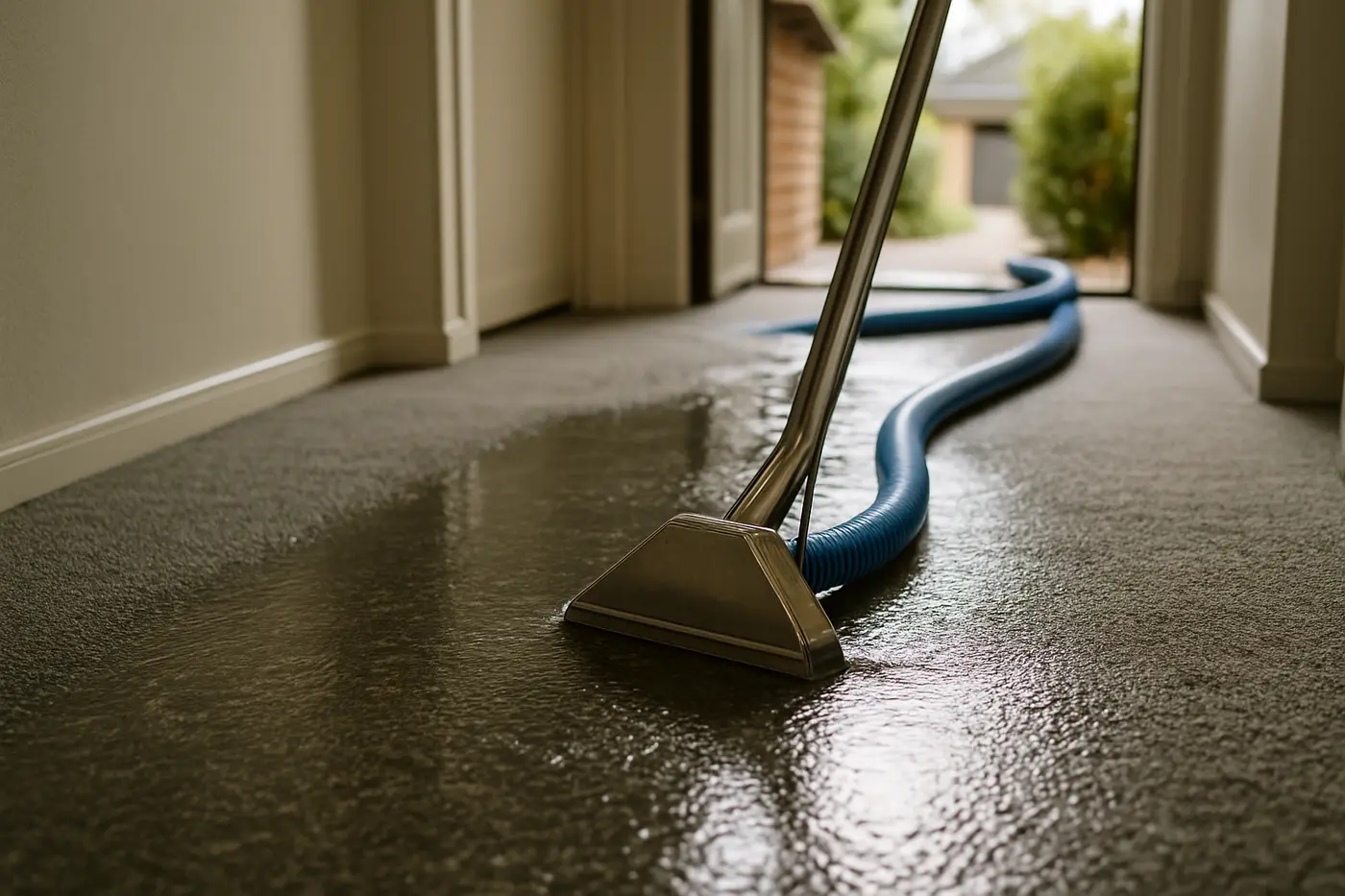
Water category identified, every affected room mapped with moisture meters, standing water extracted and contents lifted clear.
Drying and treatment
Air movers and LGR dehumidifiers placed to a drying plan, antimicrobial applied where needed, readings logged daily until dry.
Report and reinstatement
Final moisture verification, a photo and reading report for your insurer, and a written scope for any rebuild work.
What to expect
Clear information at
every stage.
Most people only deal with water damage once or twice in their life. You should not need to understand psychrometrics to know what is happening in your own house.
Straight answers on site
Whether carpet, timber or gyprock is worth saving is decided after moisture mapping, and we tell you which way it went and why.
Prices from a published guide
The ranges on our pricing page apply across Brisbane, Ipswich and Logan. Every job is quoted on site before work starts.
Insurer-ready documentation
Before and after photos, a moisture map of each room, a daily drying log and a scope of works, in the format assessors expect.
Respect for the property
Contents protected, containment where it is needed, equipment placed to dry the structure rather than to look busy, and removed when the readings say so.
What we will not do
Five things you will not get from us.
Most of the bad outcomes we get called to fix started with one of these. Putting them in writing keeps us honest and tells you what to watch for elsewhere.
See the price guideQuote from a phone description
Water damage is priced on what the moisture meter finds, not on what it looks like. We quote on site, after mapping, and the quote is free.
Dry Category 3 water in place
Creek, river and sewer water contaminates everything porous it touches. Carpet, underlay and lower wall linings that met black water come out.
Leave equipment running for the sake of it
Drying equipment is charged per unit per day, so it stays only while the readings say it is needed. The daily log shows you the numbers.
Paint over or bleach mould
Neither fixes it. Mould after water damage is handled under the S520 standard: moisture corrected, area contained, material removed, air filtered.
Invent credentials
No made-up star ratings, years in business, job counts or awards on this site. What you see is how we work; the rest you can judge on the job.
Key facts
- 24/7 Emergency Response
- IICRC S500 Drying Standard
- Insurance-Ready Moisture Reports
- Fully Insured Technicians
- Residential & Commercial
Ready when you are
Let's take the next step toward drying your property.
Tell us what happened, where the water is and whether it is still active. A restoration coordinator will explain what to do next and what your insurer will need.