- #storm-season
- #checklist
- #prevention
- #brisbane
- #flash-flooding
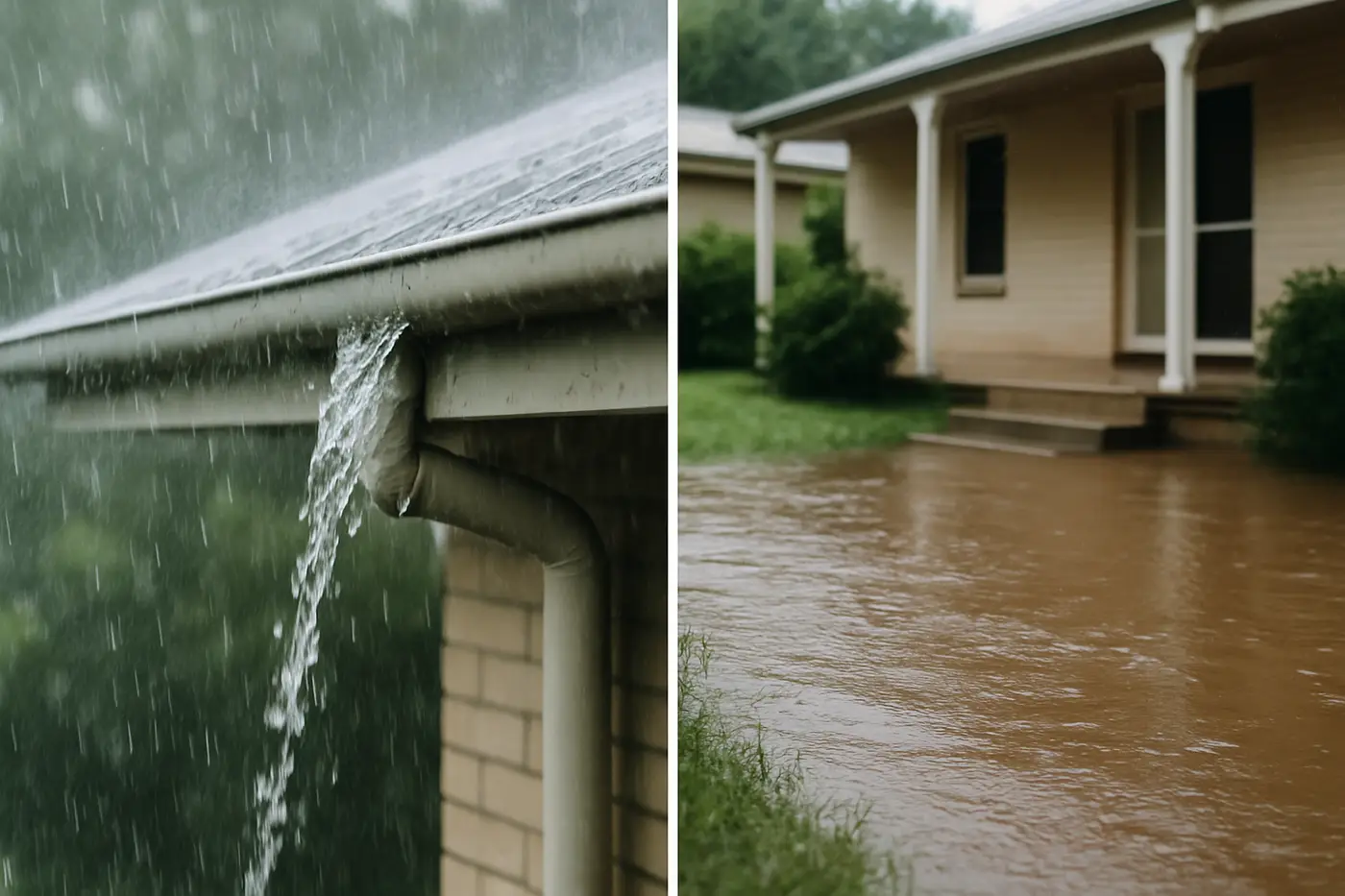
Brisbane storm season runs from November to March, and the water damage it causes falls into two groups: water that comes through the roof and ceiling from storm damage, blocked gutters and wind-driven rain, and water that comes in at ground level from overwhelmed stormwater systems and creek flash flooding. Most of it is preventable with an hour of preparation in October and a plan for the day the warning comes.
This checklist is organised in that order: before the season, when a storm is coming, when water is already inside, and afterwards.
Why Brisbane storms are a water damage problem
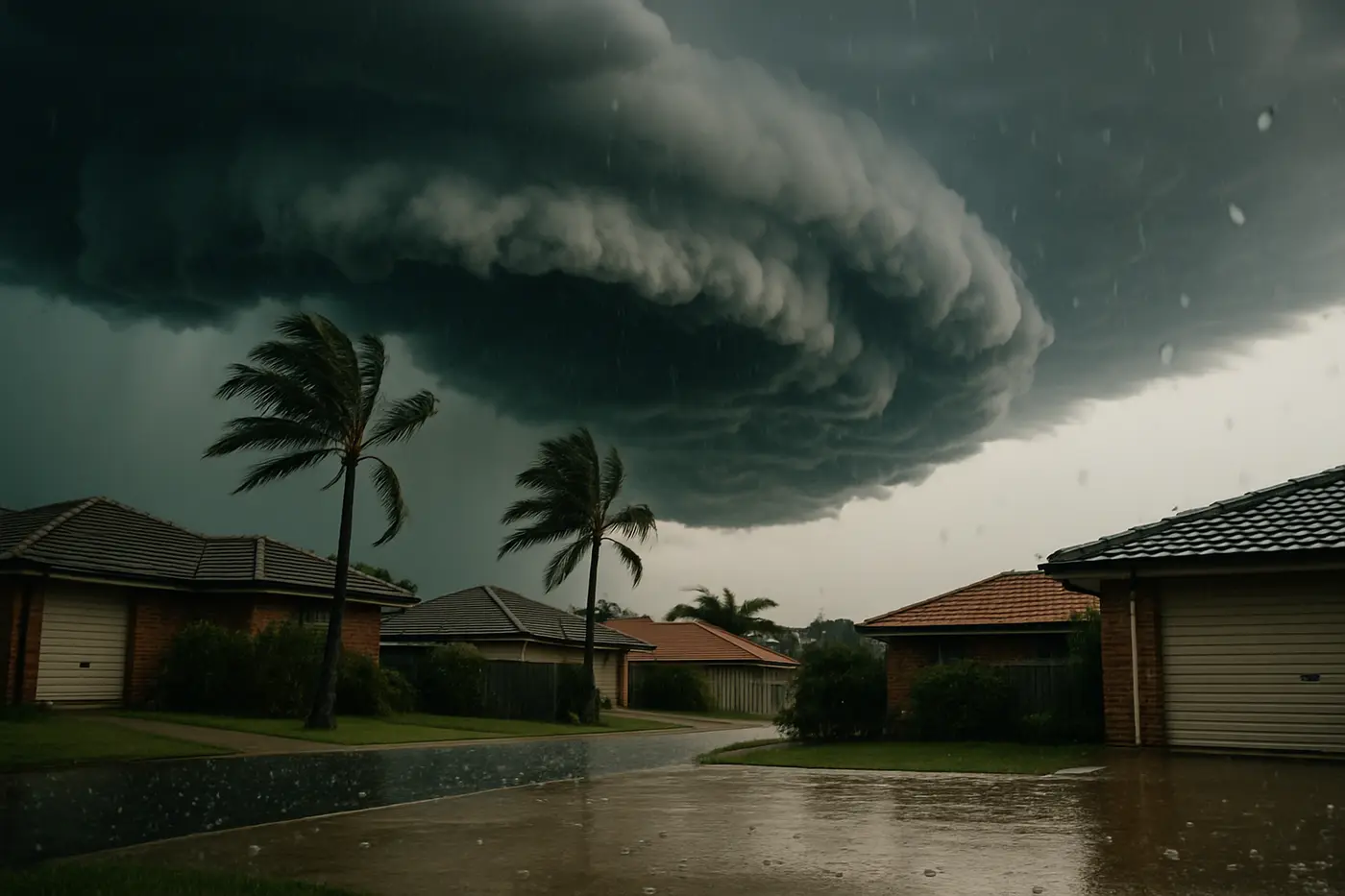
The typical Brisbane severe storm is a supercell that forms in the heat of the afternoon over the ranges to the west and south-west, then tracks north-east across the city. It brings three things that put water inside houses:
- Intense rain. Fifty millimetres in twenty minutes is not unusual. Gutters designed for steady rain overflow in seconds, and stormwater drains surcharge.
- Wind and hail. Gusts lift roof sheets and ridge capping, crack tiles and strip leaves into gutters and valleys. The rain that follows has a way in.
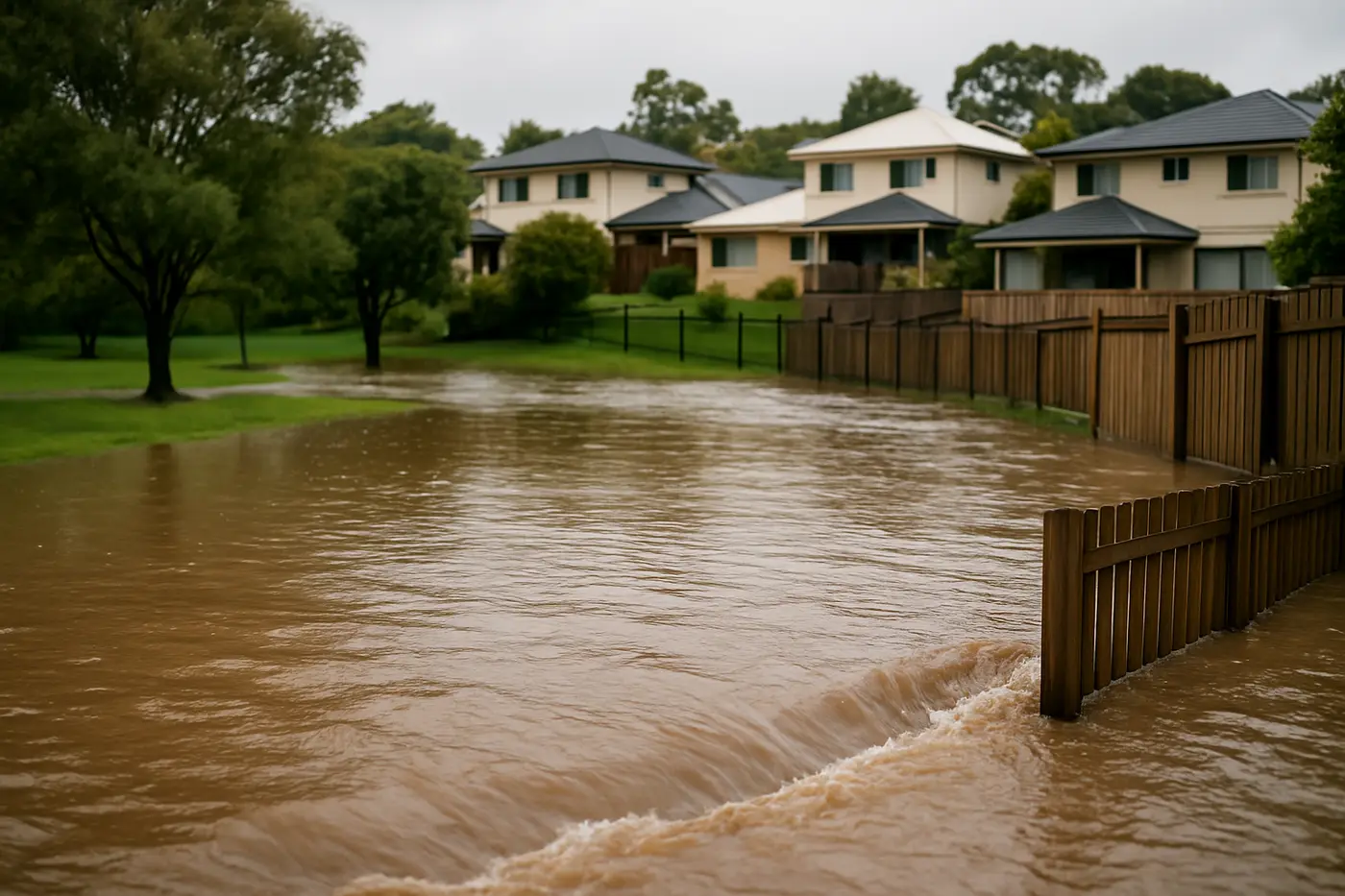
- Flash flooding. Creeks like Enoggera Creek, Kedron Brook, Bulimba Creek, Norman Creek and Moggill Creek rise metres in an hour. Overland flow finds the low points in every estate.
Ex-Tropical Cyclone Alfred in March 2025 added a fourth: days of sustained wind and rain that found weaknesses no afternoon storm had tested. Whatever the season brings, the preparation is the same.
October: the pre-season checklist
Do these before the first storm warning, ideally in October or early November. Most take minutes. The roof items may need a roofer; do not get on a roof yourself.
Roof and gutters
- Clean gutters and downpipes. Check again mid-season if trees overhang.
- Confirm every downpipe connects to a stormwater drain and does not discharge against the house or into the garden beside the slab.
- Look at the roof from the ground with binoculars: lifted sheets, missing ridge screws, cracked or displaced tiles, rust in valleys.
- Check that valley irons and box gutters are clear. Box gutters on flat-roofed extensions are the number one internal ingress point in post-war brick homes.
- Inspect ceiling for existing stains. Photograph them; an insurer will want to know which stains are new.
- Trim branches overhanging the roof.
Ground level and stormwater
- Clear yard drains, grated pits and the channel drain across the garage entry.
- Check that garden beds and paving slope away from the house, not toward it.
- Look for the low point on the block. That is where overland flow will pool and where it will enter if it reaches slab height.
- If your street or block has a history of water, buy sandbags or bagged sand now. They sell out the afternoon of a warning.
- Find your water meter and switchboard, and know how to isolate both.
Documents and insurance
- Read your certificate of insurance. Confirm storm is covered and check whether flood is included, excluded or opted out. Our guide to flood versus storm claims in Queensland explains why this matters.
- Run a FloodWise Property Report for your address if you are in Brisbane City Council’s area, or check Ipswich or Logan council flood maps.
- Photograph every room and the roof from the ground. Store the photos somewhere other than a phone that might get wet.
- Save your insurer’s claims number and your policy number somewhere you can reach without power.
Inside the house
- Move stored items off garage and storeroom floors onto shelves.
- Check air-conditioner condensate drains are clear; a blocked drain pan overflows into the ceiling in humid weather.
- Check the flexi hoses while you are at it. Storm season is also peak humidity season for corrosion.
When the warning comes: the same-day checklist
The Bureau of Meteorology issues severe thunderstorm warnings hours ahead. When one lands for your area:
- Bring loose items inside. Outdoor furniture, trampolines, pot plants and bins become projectiles and block drains.
- Move cars under cover or away from trees and from the low point of the street.
- Charge phones and torches. Power outages are common.
- Put sandbags across doorways that face the low side of the block, and across the garage entry if the driveway slopes down.
- Lift what you can. Rugs, electronics and paper off the floor in low-set rooms.
- Close windows and doors and check that sliding doors are latched; wind-driven rain enters through unlatched doors.
- Turn off and unplug non-essential electronics if lightning is likely.
- Know where you will stand. During a hail storm, stay away from windows.
During the storm: when water is already inside
If water is entering, the priority is safety, then containment, then evidence. Do not attempt repairs during the storm.
| Where water is entering | What to do now | What not to do |
|---|---|---|
| Through the ceiling | Buckets under drips; move contents; switch off lighting circuit if water is near fittings; pierce a bulging ceiling at its lowest point over a bucket | Do not go on the roof or into the ceiling cavity in the rain |
| Around windows and doors | Towels along sills; move furniture back | Do not open windows to “let the pressure out” |
| Under external doors and the garage | Sandbags, rolled towels; move contents up | Do not stand in water near power points |
| Rising from floor wastes or drains | Block wastes with a towel-wrapped plug; keep clear, this is grey or black water | Do not try to clean it up without gloves |
| Overland flow reaching slab height | Move to the highest floor; sandbag; if water is rising fast, leave | Do not drive through floodwater |
Photograph and video as it happens, safely. Water pouring from an overflowing gutter onto a patio and under a door is storm damage caught on camera, and it settles the cause question before an assessor ever asks it.
If the water is deep or rising and the house is at risk, call the SES on 132 500 for storm and flood assistance. For life-threatening emergencies, call 000.
After the storm: the first 24 hours
Once the storm has passed, the water damage clock starts. In Brisbane’s humidity, mould can begin colonising wet plasterboard and timber within 24 to 48 hours.
- Make it safe. Do not restore power to wet circuits until an electrician has checked them. Watch for sagging ceilings.
- Stop further entry. A roofer or make-safe crew can tarp a damaged roof. Keep the invoice; make-safe costs are almost always covered.
- Remove standing water and get air moving. Follow the sequence in our first hour guide.
- Photograph everything before cleaning: water lines, wet ceilings, debris, damaged contents, the roof from the ground, hail on the lawn.
- Lodge the claim. Most insurers accept storm claims online the same day. Ask what make-safe and mitigation they authorise up front.
- Call a restorer if water has gone into ceilings, wall cavities, carpet underlay or under floors. Storm damage restoration in Brisbane typically runs $800 to $4,000 for make-safe and drying, and the assessment produces the moisture map your insurer will want.
- Check the ceiling cavity once it is safe. Wet insulation holds water for weeks and is the most common cause of mould after storm ingress.
Suburb-specific notes
Different parts of Brisbane, Ipswich and Logan face different storm water risks.
- Inner Brisbane (West End, New Farm, Paddington, Toowong): older Queenslanders and post-war homes with box gutters and complex rooflines. Roof ingress is the main risk; low-lying pockets near the river also see overland flow.
- Northside (Chermside, Aspley, Nundah): Kedron Brook and Cabbage Tree Creek flash flooding. Downs Street and Kedron Brook corridors have a long history.
- Southside (Carindale, Holland Park, Mount Gravatt): Bulimba Creek and Norman Creek. 1960s to 80s brick homes with ageing stormwater.
- West (Kenmore, The Gap, Indooroopilly, Jindalee): Moggill Creek and Enoggera Creek, steep blocks with fast overland flow, and river flooding in the low areas.
- Ipswich (Goodna, Redbank Plains, Springfield Lakes): Bremer River and Woogaroo Creek, plus stormwater estates where piped gullies surcharge in intense rain.
- Logan (Springwood, Beenleigh, Shailer Park): Slacks Creek, Scrubby Creek and the Logan River. Beenleigh’s low areas have flooded repeatedly.
Our article on Brisbane creek flooding by suburb covers the flood corridors in more detail.
Key takeaways
- Storm water enters from above (roof, gutters, ceilings) or below (stormwater, overland flow, creeks). Prepare for both.
- Clean gutters and check the roof in October. Confirm downpipes go to stormwater.
- Know your low point, keep sandbags, and know where the meter and switchboard are.
- Check your policy for storm and flood cover and run a FloodWise report.
- When water is entering, contain, cut power near it, and film it. Do not go on the roof.
- After the storm, make-safe, extract, photograph, lodge the claim and start drying within 24 hours.
- Wet ceiling insulation is the hidden problem; have it checked.
Storm season does not have to end with a stripped-out lounge room. An hour in October and a plan for the day of the warning removes most of the risk; a same-day call to a water damage restoration crew removes most of the rest.