- #carpet
- #drying
- #water-damage
- #brisbane
- #underlay
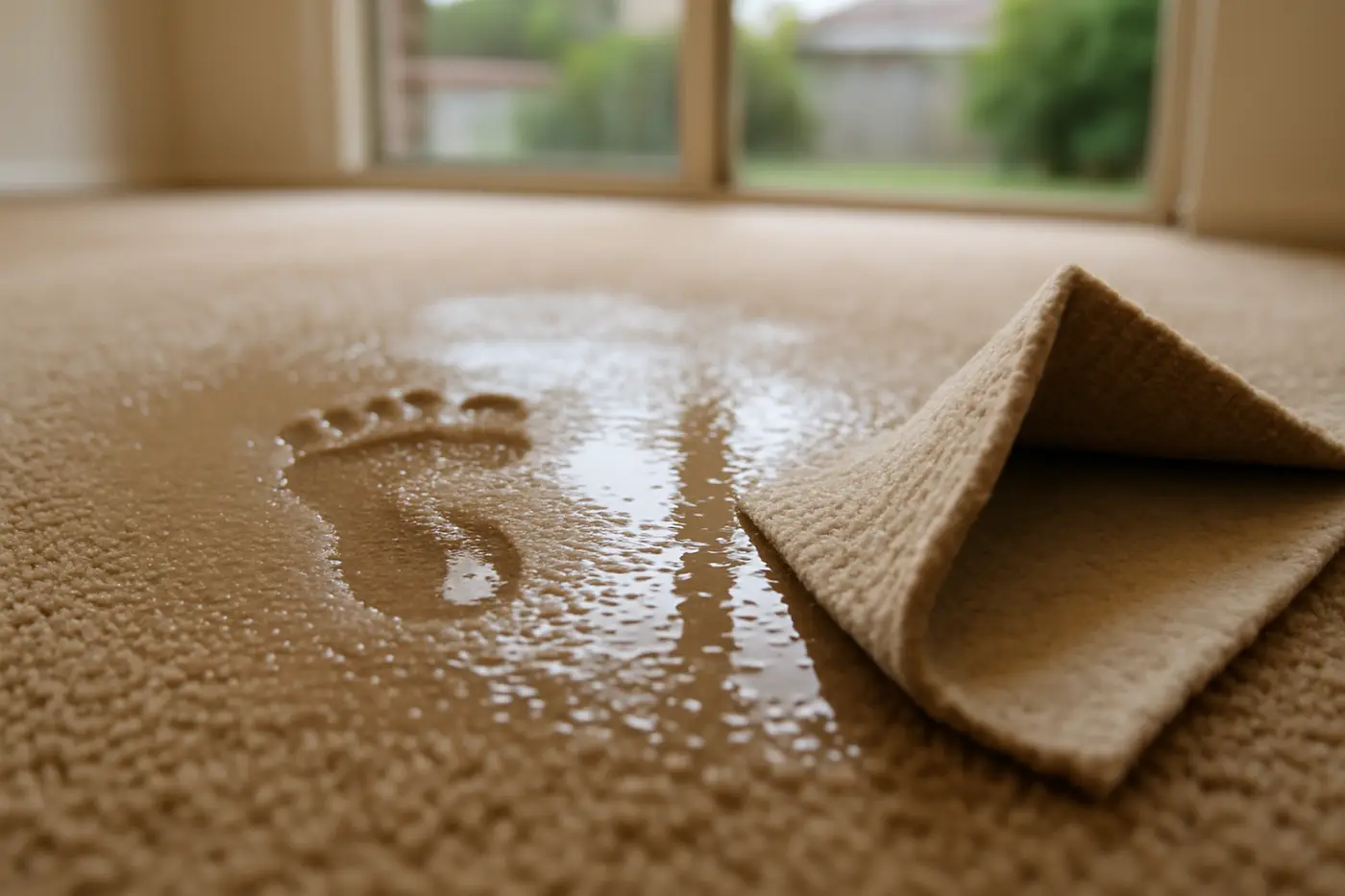
Wet carpet can usually be saved when the water was clean, extraction and drying begin within 24 to 48 hours, and the carpet backing has not delaminated. It should be replaced when the water was grey or black, when it has been wet for more than about three days in Brisbane conditions, or when the backing has separated. The underlay is judged separately and is replaced far more often than the carpet.
That is the short version. On site, a technician runs through a specific sequence to reach the decision, and it helps to know what they are looking at so you can push back if a quote skips the assessment and jumps straight to replacement, or straight to drying.
Question one: what was in the water?
The IICRC S500 standard sorts water into three categories, and the category decides more about a carpet’s future than anything else.
Category 1: clean water. Supply pipes, flexi hoses, hot water systems, a tap left running, rain through a roof that has not picked up much contamination. Carpet wet with Category 1 water is a drying candidate.
Category 2: grey water. Dishwasher and washing machine discharge, aquarium water, toilet overflow with urine but no faeces, roof water that has sat in a dirty ceiling cavity. Carpet may be salvageable with proper extraction and antimicrobial treatment, but the underlay is replaced.
Category 3: black water. Sewage, river or creek flood water, any water that has sat for days and become contaminated. Carpet and underlay are removed and disposed of. This is not a judgement about the carpet’s quality; it is a health decision. Porous materials cannot be reliably sanitised.
Category also drifts with time. Clean water that sits in carpet for three days in a Brisbane summer, feeding bacteria in the underlay, is treated as Category 2 by the time we arrive. This is one reason the “how long” question matters so much.
Question two: how long has it been wet?
Timing is the second gate.
- Under 24 hours: ideal. Extraction recovers most of the water, the underlay can often be dried, and the carpet is at very low risk.
- 24 to 48 hours: still good for the carpet. The underlay is assessed case by case. Mould can begin colonising within this window in Brisbane humidity, so antimicrobial treatment is applied.
- 48 to 72 hours: the carpet is usually still salvageable if the water was clean, but the underlay is replaced and the subfloor is treated. Odour risk rises.
- Beyond 72 hours: replacement becomes the likely outcome. Latex backing degrades, bacterial counts rise, and the cost of drying, treating and deodorising approaches the cost of new carpet in many homes.
A common scenario in Brisbane is the hose that bursts on a Friday night before a weekend away. By Monday, the carpet has been wet for 60 hours in a closed, humid house. The carpet itself often survives; the underlay never does.
Question three: what is the underlay?
Lift a corner of the carpet and look. There are three common types in Brisbane homes.
| Underlay type | Behaviour when wet | Usual outcome |
|---|---|---|
| Foam (polyurethane) | Absorbs water, dries reasonably if floated within a day | Dry if clean and fresh, otherwise replace |
| Rubber crumb | Holds water and odour, slow to dry | Usually replace |
| Felt or fibre | Acts like a sponge, harbours bacteria | Replace |
Underlay is inexpensive relative to carpet and labour. If a technician is uncertain, they replace it. Trying to save $200 of underlay and ending up with a smell that leads to lifting the whole room again is a bad trade.
Question four: what condition is the carpet in?
Even with clean water and fast response, the carpet itself has to pass a few checks.
Delamination. Grip the carpet and try to separate the backing layers. If they peel apart, the latex has failed and the carpet is replaced.
Shrinkage. Some woven and jute-backed carpets shrink as they dry and pull away from the walls. Wool carpets are more prone to this than synthetics. A shrunk carpet can sometimes be re-stretched; badly shrunk, it cannot.
Staining and dye bleed. Furniture stain transfer, rust from metal legs and dye migration from rugs are often permanent. A dried carpet with a rust ring under every leg of the dining table is technically saved but not something you want to live with.
Age and value. A twenty-year-old polypropylene carpet near the end of its life is rarely worth a multi-day drying job. A three-year-old wool carpet almost always is.
What a professional carpet dry-out involves
If the carpet passes those checks, flooded carpet drying in Brisbane runs $250 to $600 per room and follows a fairly standard sequence.
- Moisture mapping. Readings across the room to find the wet boundary, which is usually larger than the visible wet patch, and a reference reading from a dry room.
- Extraction. A truck-mount or portable extractor with a weighted wand or a ride-on extraction tool removes most of the free water from the carpet and underlay. This step matters more than any other; every litre extracted is a litre that does not have to evaporate.
- Lifting and inspection. The carpet is detached from the gripper along one or more edges so the underlay and subfloor can be seen and measured.
- Underlay decision. Dried in place, or cut out and removed.
- Antimicrobial treatment. Applied to the carpet backing, subfloor and, if retained, the underlay.
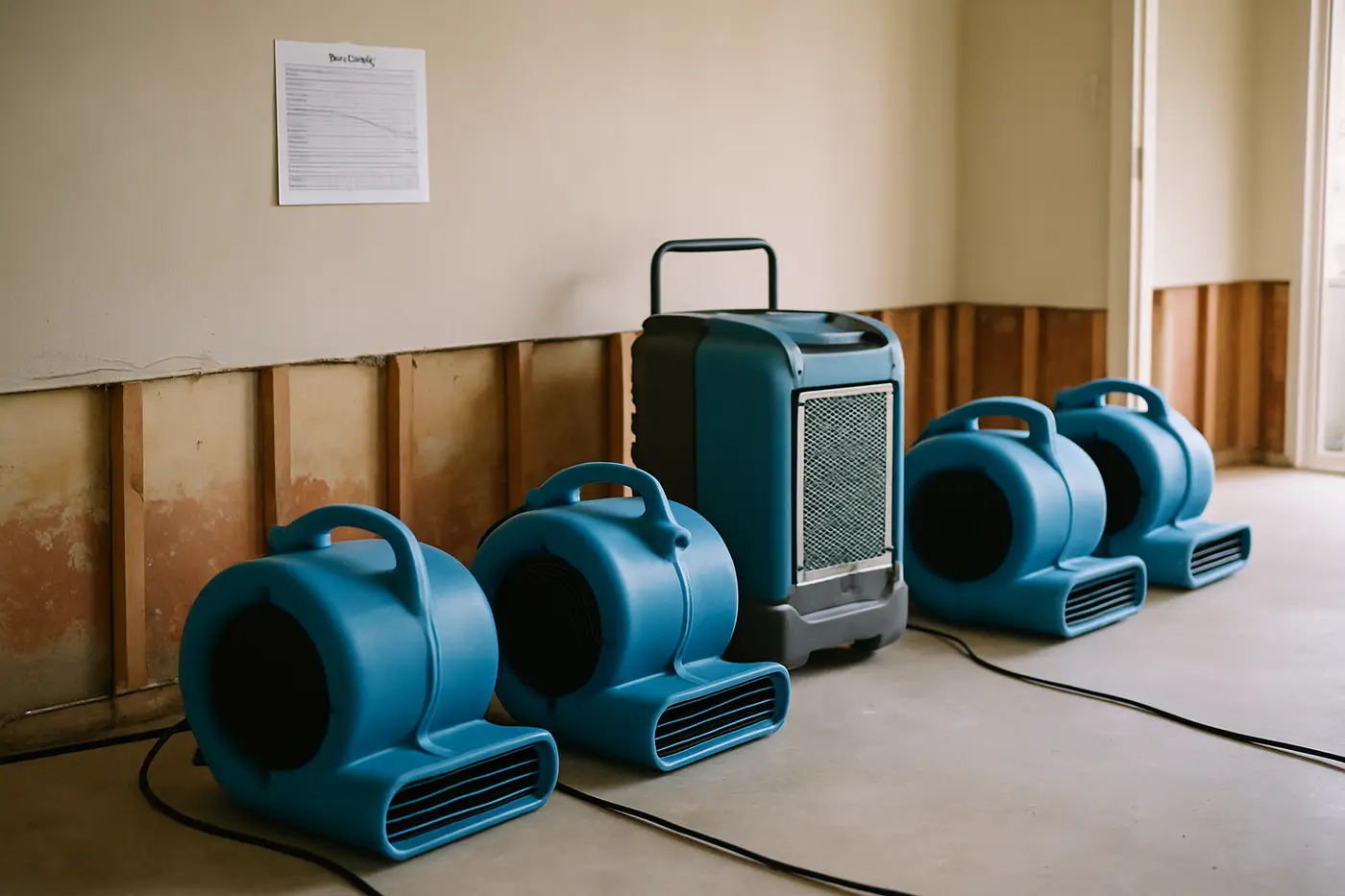
- Floating. An air mover is placed under the lifted carpet edge so air flows beneath the carpet, drying it from both faces. Additional air movers and an LGR dehumidifier are positioned in the room.
- Daily monitoring. Readings repeated until the carpet, underlay and subfloor reach the dry standard, typically three to five days as explained in our guide to how long drying takes.
- Re-lay and clean. The carpet is re-stretched onto the gripper, new underlay fitted if required, and the carpet hot-water extraction cleaned.
The Brisbane factors
Two local conditions push decisions toward replacement more often than the textbook suggests.
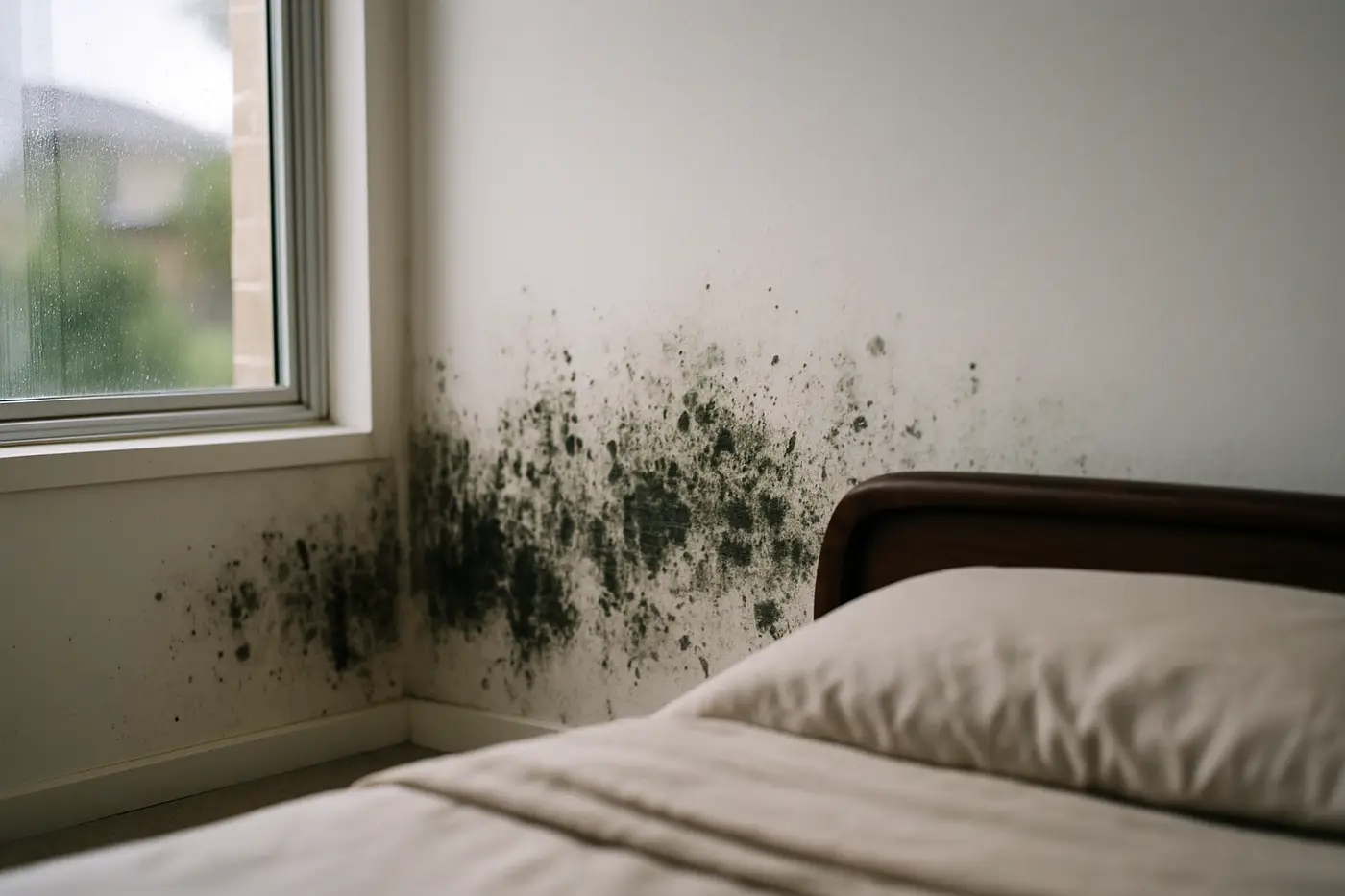
Humidity. Brisbane’s 70 to 80 per cent summer relative humidity slows every stage of drying and shortens the window before mould takes hold. A carpet that would be a comfortable dry in a dry climate is a borderline case here in February.
Slab construction. Most post-1970s Brisbane homes sit on a concrete slab. Water that goes through the carpet and underlay pools on the slab and spreads under the entire room, wetting a far larger area than the spill suggests. Drying the slab is slow, and a carpet re-laid over a damp slab will smell within a fortnight. The subfloor reading is the one that decides when the carpet goes back down.
In Queenslanders with timber floors, the reverse issue applies: water passes through the boards into the subfloor space, and the carpet may dry quickly while the joists below stay wet. The carpet is the least of the problem in that case.
When replacement is the right call
Replacement is not a failure. It is the right decision when:
- The water was Category 3 (sewage, creek, river). No exceptions.
- The carpet has delaminated, shrunk badly or is permanently stained.
- Drying, treatment and re-laying would cost more than a comparable new carpet.
- The carpet was already near the end of its life.
- The occupants have respiratory conditions and the underlay has been wet more than a day.
Insurers accept replacement when the restorer’s report supports it. They also accept drying when it is supported. What they push back on is a decision made without readings.
Key takeaways
- Clean water plus drying within 24 to 48 hours: the carpet is almost always saved.
- Grey water: carpet maybe, underlay no. Black water: both go.
- Beyond 72 hours wet, replacement becomes the likely outcome.
- Underlay is replaced far more often than carpet; it is cheap and it harbours odour.
- Check for delamination, shrinkage and permanent staining before committing to drying.
- Extraction is the step that matters most; evaporation should only have to handle what the extractor could not reach.
- The subfloor reading, not the carpet’s feel, decides when the carpet is re-laid.
If your carpet is wet now, the clock is running. Our flooded carpet drying crews cover Brisbane, Ipswich and Logan, and the assessment will tell you honestly whether it is worth saving.