- #insurance
- #flood
- #storm
- #queensland
- #claims
In Queensland, water that entered your home from rain, wind-driven roof damage, overflowing gutters or a blocked stormwater drain is storm damage, and almost every home policy covers it. Water that escaped from a river, creek, lake or dam is flood, and it is only covered if your policy includes flood cover. Insurers decide which one you have by tracing where the water came from, sometimes with a hydrology report.
That distinction has cost Brisbane households more money than any other line in a policy document. It decided thousands of claims after January 2011 and again after the February 2022 event, and it will decide claims after the next one. Here is how it works.
The standard flood definition
Before 2012, insurers wrote their own definitions of flood, and the results were chaos. Two neighbours in Goodna with identical damage could have opposite outcomes because one policy called creek water “flash flooding” and the other called it “flood”.
After the 2011 Brisbane floods, the federal government introduced a single standard definition that every home, contents, strata and small business policy must use. In plain terms: flood is the covering of normally dry land by water that has escaped or been released from the normal confines of a lake, river, creek, other natural watercourse, reservoir, canal or dam, including one that has been modified.
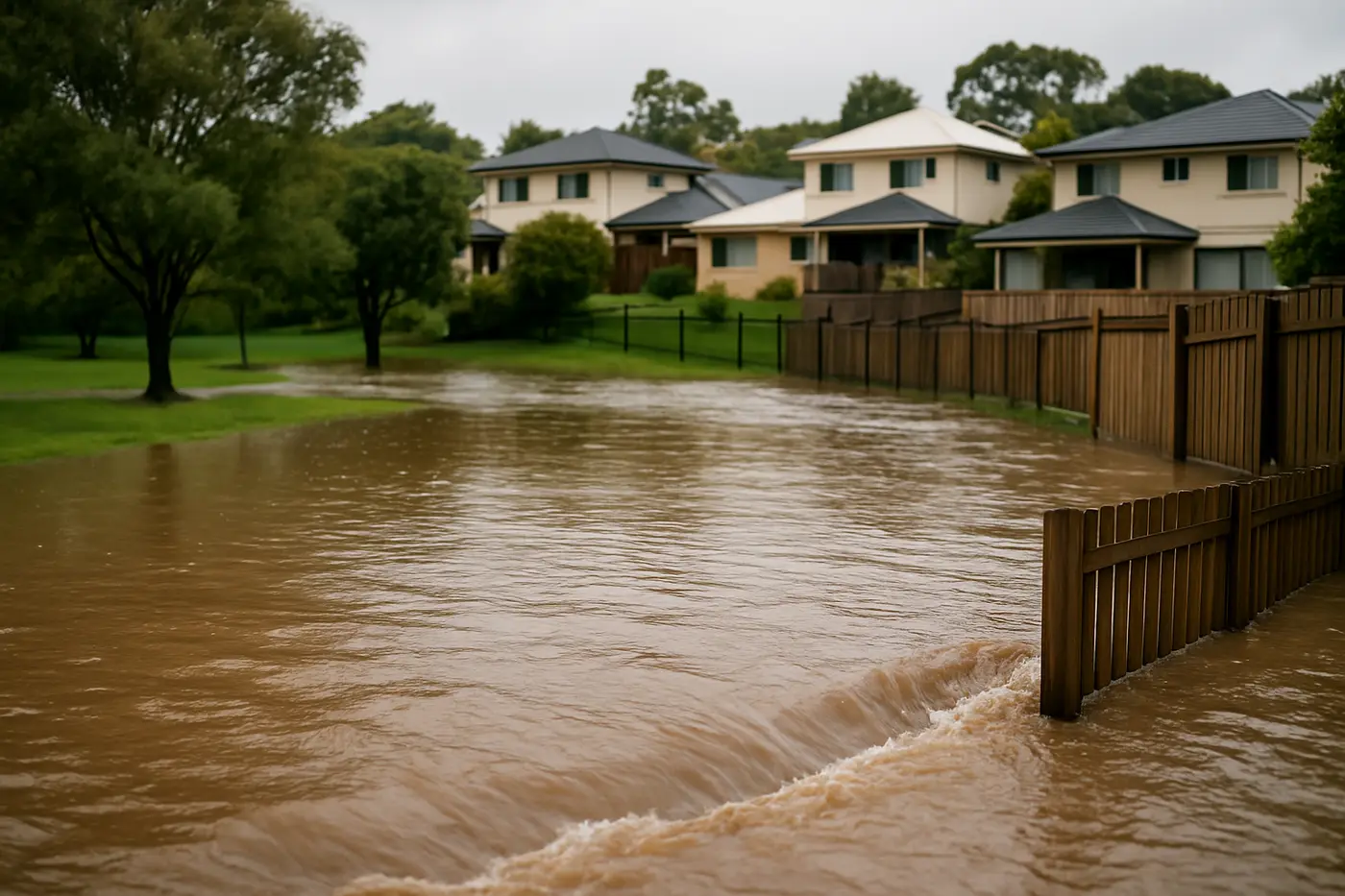
Every word matters. “Escaped from the normal confines” of a “watercourse” is the test. If the water in your house was, an hour earlier, inside Kedron Brook or the Bremer River, it is flood. If it was, an hour earlier, in a cloud, on your roof or in a gutter, it is not.
What counts as storm
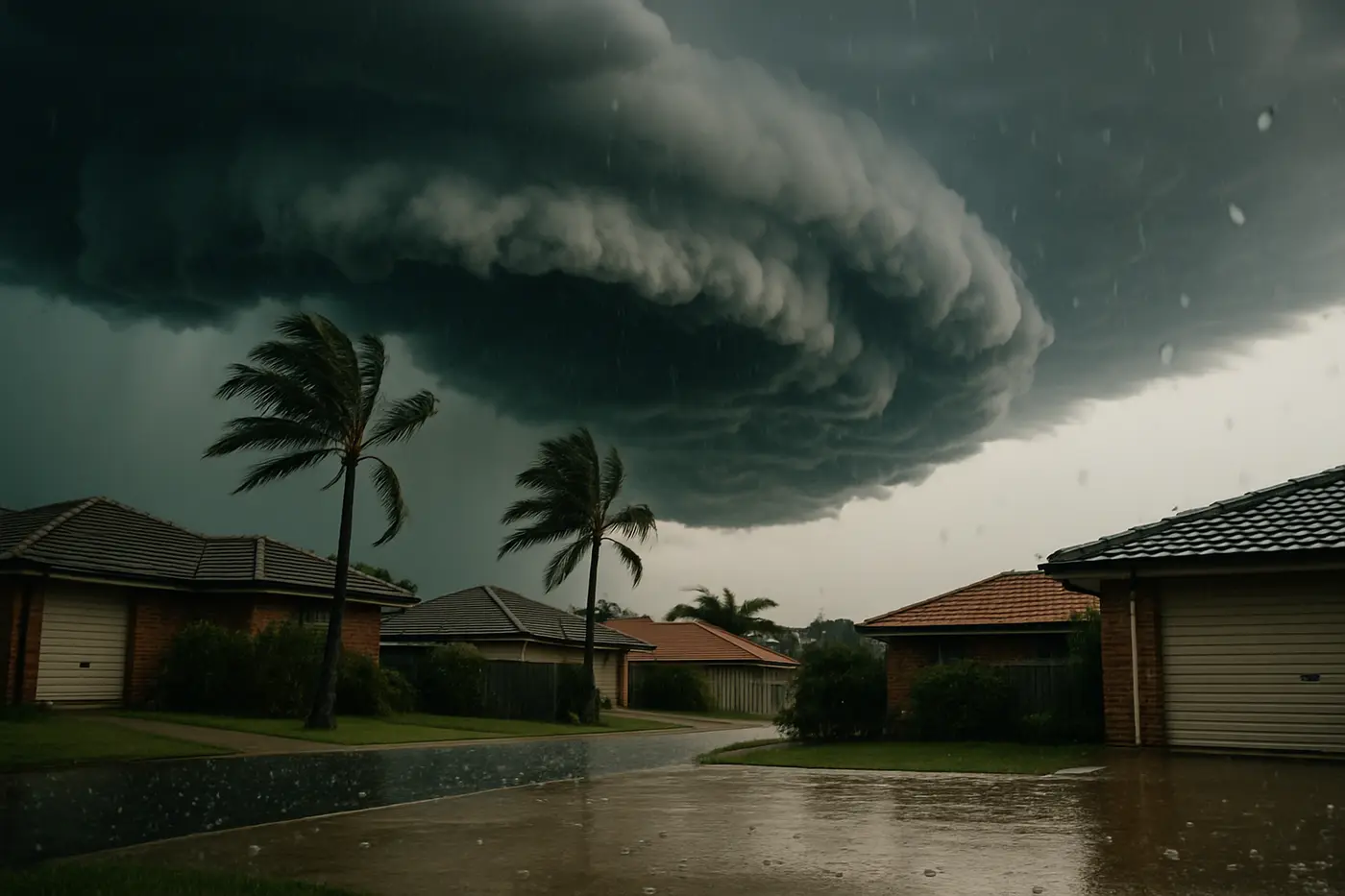
Storm damage is broader than most people assume. Under a typical Queensland policy it includes damage caused by:
- Rain, including rain that enters through roof damage, blown-in windows or under doors.
- Wind, hail and lightning.
- Rainwater run-off across the surface of the ground.
- Water backing up from or overflowing a stormwater drain, gutter or downpipe because the system could not cope with the volume.
- Storm surge in some policies, though this is often listed separately and sometimes excluded, which matters in Redcliffe and other bayside suburbs.
The important pattern is that storm water has not passed through a natural watercourse. It fell, ran, pooled and entered. The 2022 event, when some suburbs recorded around 700 mm over three days, generated both kinds of damage at once, often in the same street.
Where the two overlap
The hard cases are the ones where both happened. Picture a low-set house in Oxley on the evening of a major rain event:
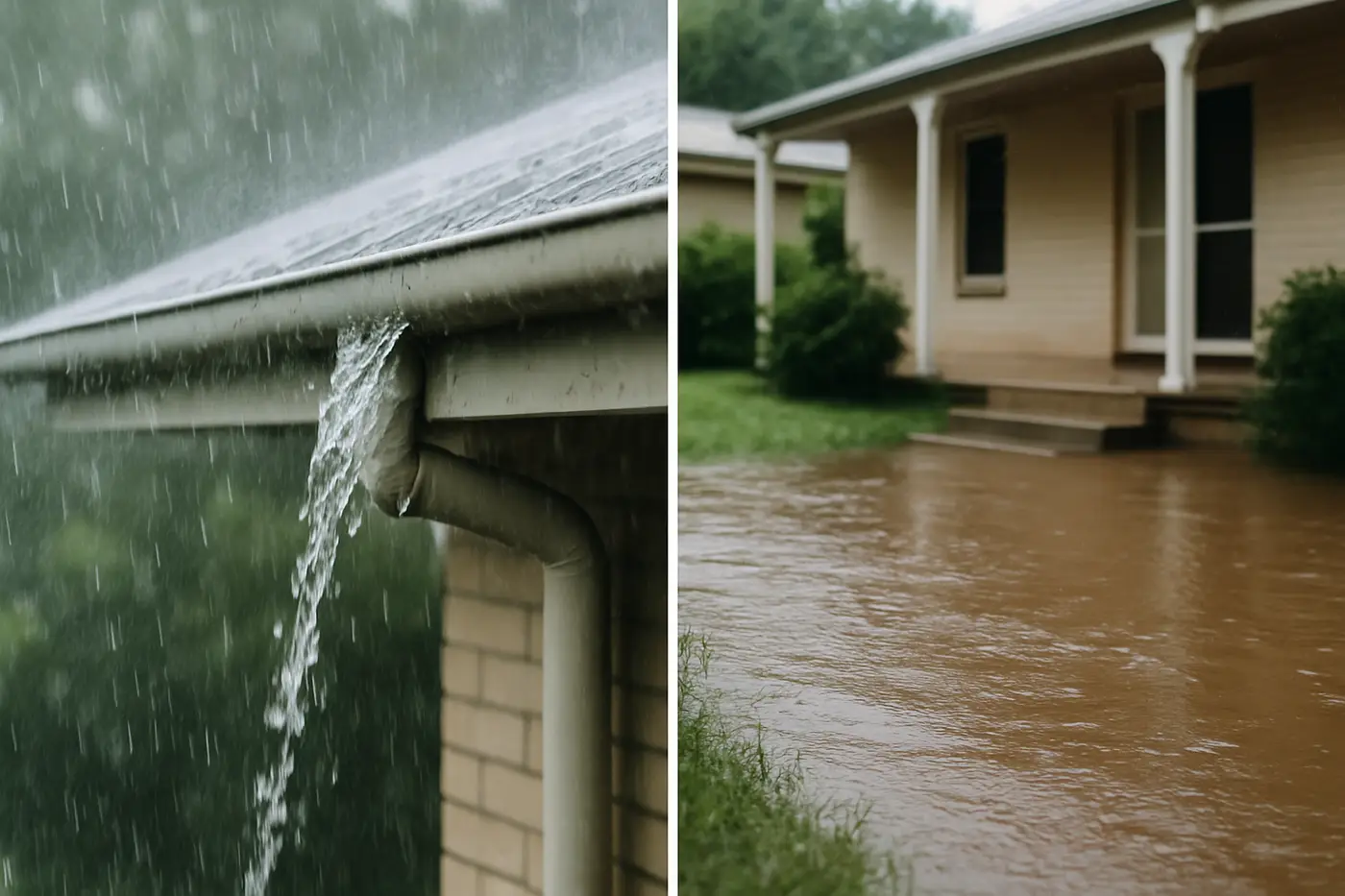
- At 6 pm, the gutters overflow and water sheets down the external walls, entering under the sliding door. This is storm.
- At 9 pm, the stormwater drain in the street surcharges and water pools across the yard to 100 mm against the slab. This is still storm.
- At 2 am, Oxley Creek breaks its banks and the water in the house rises to 600 mm. This is flood.
If the policy excludes flood, the insurer will typically pay for damage attributable to the first two stages and decline the third. In practice, that means they might cover the carpet and skirting boards that were wet at 100 mm but not the plasterboard, kitchen cabinets and power points at 600 mm. Deciding where that line sits is what hydrology reports are for.
How insurers actually decide
When a claim comes in after a major event, the insurer’s process typically runs like this.
Step one: the claim form and your description. How you describe the event matters. “Water came in from the creek” and “water came in during the storm” are both true statements about the same night, but they point the assessor in different directions. Be accurate and complete rather than strategic: describe every way water entered, in the order it happened, with times if you have them.
Step two: the assessor’s visit. An assessor looks at water lines on walls, debris, mud, the direction of staining and the condition of the roof and gutters. Silt and creek debris inside the house point to flood; clean water damage concentrated under a lifted roof sheet points to storm.
Step three: data. Bureau of Meteorology rainfall totals and radar, creek and river gauge heights, and council flood mapping. Brisbane City Council’s FloodWise Property Report and Ipswich City Council’s flood maps show modelled creek and river flood levels for each property, and insurers use them to test whether watercourse flooding was plausible at your address.
Step four: hydrology, if disputed. For large or contested claims, the insurer commissions a hydrologist to reconstruct the event. The report uses survey levels of your floor against gauge data to say, for example, that the creek reached your floor level at 1:40 am, and that any water present before that came from another source.
The evidence that tips it your way
The assessor arrives days or weeks after the event. Your phone was there on the night. That is your advantage.
| Evidence | Why it matters |
|---|---|
| Timestamped photos of the first water entering | Establishes source and time before the creek rose |
| Video of gutters overflowing or roof leaking | Direct proof of storm mechanism |
| Photos of blocked or surcharging street drains | Supports stormwater backup, which is storm |
| Photos of the water line on walls at intervals | Shows how high storm water reached before any flood water |
| Roof and gutter damage photos from the ground | Ties internal water to storm damage above |
| Restorer’s moisture map and water category assessment | Independent record of extent and contamination |
| Neighbours’ accounts and photos | Corroborates timing and sequence |
The single most useful thing you can do is photograph the water’s path as it happens, safely. Water pouring from a downpipe joint onto the patio and under the door is storm damage caught in the act.
Riverine versus flash flooding
Brisbane’s flooding comes in two forms and they land differently under the definition.
Riverine flooding is the slow kind: the Brisbane River, Bremer River and Logan and Albert Rivers rising over hours or days after prolonged rain and dam releases. It is unambiguously flood under the standard definition.
Flash flooding from creeks is fast: Enoggera Creek, Kedron Brook, Bulimba Creek, Norman Creek and Moggill Creek can rise metres in an hour during a supercell. It is still flood, because a creek is a natural watercourse. This surprises people; “flash flood” sounds like storm. Under the definition, it is not.
Overland flow, where rain runs across paddocks, roads and yards without ever being in a defined channel, is storm. The distinction between a creek and an overland flow path can itself be contested, especially in estates like Redbank Plains and Springfield Lakes where former gullies have been piped or landscaped into drainage reserves.
Checking your own cover
Pull out your certificate of insurance and look for the word flood. There are three possibilities:
- Flood included. The distinction still matters for the excess (flood excesses are sometimes higher) but both causes are covered.
- Flood excluded or opted out. You need the water to be storm, and the evidence above becomes critical.
- Flood not offered. Some properties on mapped floodplains cannot buy flood cover at any price. Storm cover still applies.
If you are unsure whether your suburb is a creek or river flood area, our article on which Brisbane suburbs flood and a FloodWise report for your address will tell you.
What the restorer’s report contributes
Insurers do not decide the cause from our report, but they lean on it for the extent, the water category and the timing of mitigation. When our technicians attend a flood or storm damage restoration job, the report records:
- Water category under IICRC S500: Category 1 (clean), 2 (grey) or 3 (black). Creek and river water is always Category 3. Roof rain is usually Category 1 or 2.
- The moisture map with the height of wetting on walls.
- Contamination indicators: silt, sewage odour, debris.
- Photos before any material was removed.
A Category 1 reading concentrated below a roof leak is strong support for a storm claim. Category 3 silt across the floor is harder to argue against. Either way, an accurate report is worth more than a favourable one, because a report that contradicts the hydrology gets discarded and takes your credibility with it.
If the claim is declined
Ask for the decision and its reasons in writing, and request a copy of any hydrology or assessor’s report relied on. Then:
- Lodge an internal dispute with the insurer. They must respond within set timeframes under the General Insurance Code of Practice.
- If unresolved, take it to the Australian Financial Complaints Authority. It is free and binding on the insurer up to the scheme’s limits.
- Consider whether the decision has drawn the storm-versus-flood line in the right place. Partial payment for the storm component is common and worth pursuing even if the flood portion stands.
After major events, legal aid services and community legal centres in Queensland run free insurance clinics, and the Insurance Council’s catastrophe declarations bring additional dispute resources.
Key takeaways
- Flood means water that escaped a river, creek, lake or dam. Everything else is storm.
- Storm is covered by almost every Queensland home policy; flood only if you hold flood cover.
- Creek flash flooding is flood, not storm, under the standard definition.
- Both often happen in one night; insurers can pay the storm portion and decline the flood portion.
- Timestamped photos and video of water entering, taken on the night, are the strongest evidence you can hold.
- Describe every entry point accurately on the claim form; do not simplify.
- A declined claim can be disputed internally and then at AFCA for free.
Whatever the insurer eventually decides, the house needs to be dried and sanitised now, and mitigation costs are covered under both storm and flood claims. Call for flood damage restoration first and let the paperwork follow.