- #drying
- #flooding
- #dehumidifier
- #brisbane
- #humidity
A Brisbane house takes three to five days of continuous structural drying after a clean-water event such as a burst hose, and one to three weeks after creek or river flooding. The timeline depends on how long the water sat, what materials it soaked into, how much air movement and dehumidification is applied, and Brisbane’s humidity. Drying is complete when moisture meters show materials back at their dry standard, not when surfaces feel dry.
That answer frustrates people who want a date, so the rest of this article explains what is happening inside the walls during those days and why cutting the timeline short is the most expensive mistake in restoration.
Extraction is not drying
The first thing to separate is the removal of free water from the drying of absorbed water. A water extraction crew can pull the bulk of standing water out of a carpeted house in a few hours. That is the quick, visible part.
What remains is bound water: moisture that has soaked into carpet fibre, foam underlay, the paper faces of plasterboard, the bottom plates of stud walls, timber floorboards, particleboard and, slowly, concrete. This water cannot be vacuumed. It has to migrate to the surface of each material and evaporate, molecule by molecule, into the air. That is drying, and it is governed by physics rather than effort.
The four things that control drying speed
Restoration technicians talk about the drying process in terms of four variables. Every decision about equipment placement comes back to these.
Temperature. Warm materials release moisture faster than cold ones. The target is usually a room temperature in the mid-to-high twenties. Brisbane obliges for most of the year.
Humidity. Air can only hold so much water vapour at a given temperature. The lower the relative humidity, the more moisture the air can pull from wet materials. This is where Brisbane fights back: summer afternoons at 70 to 80 per cent relative humidity leave the air with very little capacity.
Air movement. A layer of saturated air sits against every wet surface. Air movers blow it away so drier air can take its place. Without air movement, evaporation stalls even in dry air.
Time. Given the first three, the remaining variable is simply how long the process runs. Doubling the equipment does not halve the time; materials release moisture at their own rate.
The technician’s job is to set up the first three so that the fourth is as short as the materials allow, and then to measure daily until the numbers confirm it is done.
What “measured dry” actually means
Every drying job starts with a moisture map. The technician records readings from every affected surface with a pin meter (which measures electrical resistance between two probes pushed into the material) and a non-invasive meter (which reads through the surface without damage), and takes a reference reading from an identical, unaffected material elsewhere in the house. That reference is the dry standard.
Daily monitoring visits repeat the readings at the same points. The job is complete when every point is within a small tolerance of the dry standard. A typical log for a wet plasterboard wall on a slab might look like this:
| Day | Wall base (WME %) | Slab surface (relative) | Room RH % | Dehumidifier output |
|---|---|---|---|---|
| 1 | 38 | 99 | 78 | Set up |
| 2 | 29 | 95 | 52 | 74 L |
| 3 | 21 | 88 | 44 | 51 L |
| 4 | 16 | 79 | 40 | 30 L |
| 5 | 14 | 72 | 39 | 18 L |
| Dry standard | 13 | 70 | – | – |
Two things stand out. The dehumidifier’s output falls each day as the materials give up less water, which is itself a sign the job is nearing the end. And the wall reaches its dry standard on day five even though it would have felt dry to the touch on day three. Pull the equipment on day three and the remaining moisture sits in the bottom plate, where mould finds it.
That log, with photos, is also what your insurer reads. Insurers expect moisture logs, and a job without one is hard to defend if problems appear later.
Typical timelines by scenario
These are the ranges we see across Brisbane, Ipswich and Logan. Individual houses vary.
| Scenario | Typical drying time |
|---|---|
| Burst flexi hose, caught within hours, carpet on slab | 3–4 days |
| Same event, discovered after a weekend away | 4–6 days plus underlay replacement |
| Hot water system leak into laminate flooring | 4–7 days after floor is lifted |
| Roof storm ingress into ceiling and one wall | 3–5 days |
| Solid timber floor, Queenslander, clean water | 7–14 days of controlled drying |
| Creek flooding to 300 mm, black water | 1–3 weeks after strip-out |
| River flooding, house wet for a week | 2–4 weeks after strip-out, slab may take longer |
The last two rows show why flood damage restoration is a different job from a burst pipe. Flood water is Category 3, so carpet, underlay, lower plasterboard and swollen cabinetry are removed before drying starts. What remains, the frame, the slab, the upper walls, dries faster because there is less material holding water, but the house has typically been wet for days before anyone can start.
Why Brisbane is slower than the textbook
Most drying guidance is written for temperate climates. Brisbane’s sub-tropical conditions shift the numbers in two ways.
First, the humidity ceiling. A closed room with wet materials and no dehumidification will rise to 90 per cent relative humidity or more within hours. Opening the windows on a February afternoon swaps that for outside air at 75 per cent, which is barely better. Real drying in summer only happens inside a closed room with a low-grain refrigerant (LGR) dehumidifier pulling the air down to 40 per cent or below. Winter is a different story; a run of dry westerly days can genuinely help, and technicians will use it.
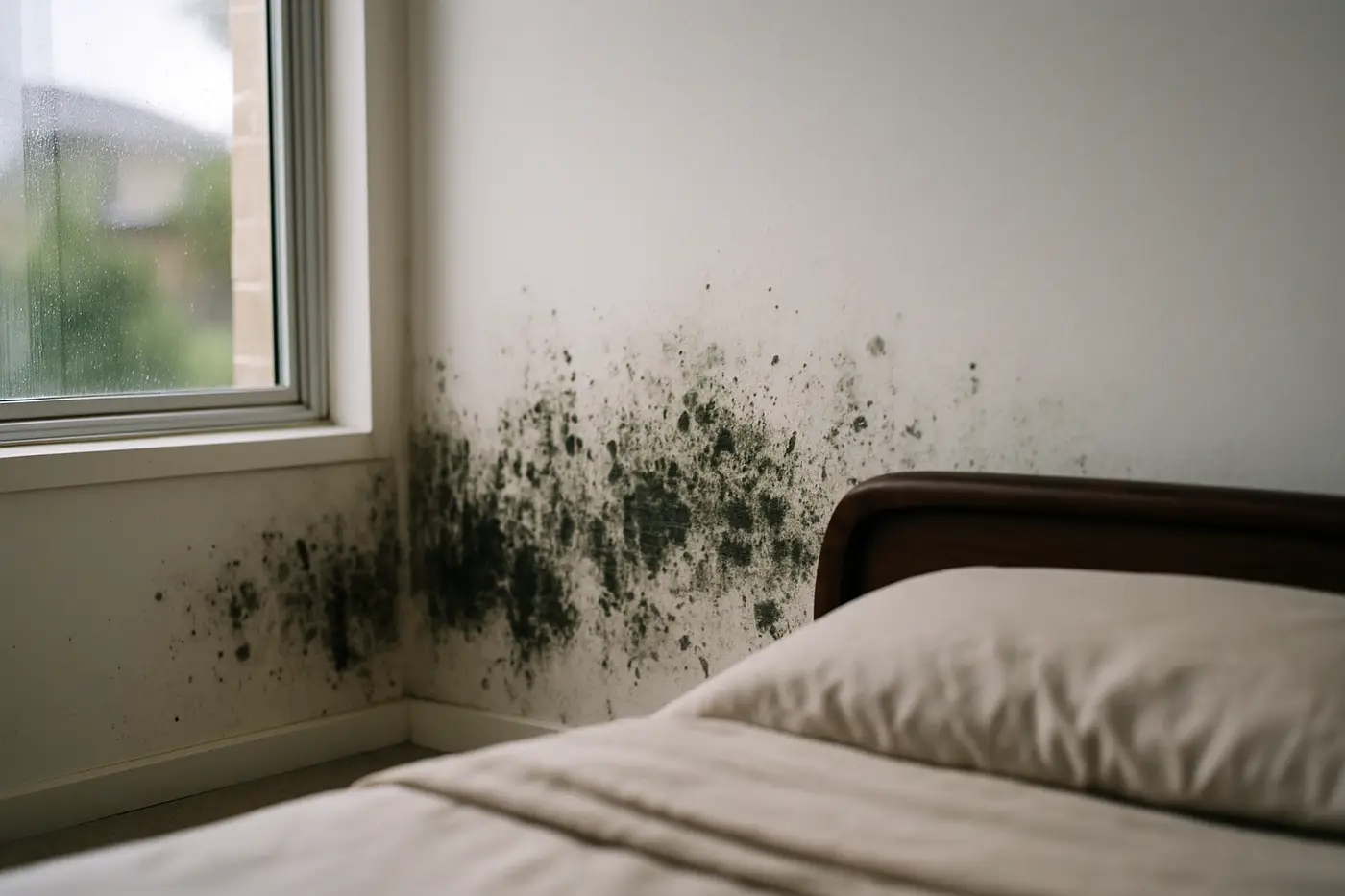
Second, the mould clock. In Brisbane conditions, mould can colonise wet plasterboard and timber within 24 to 48 hours. Every extra day of drying is a day the technician is racing that clock, which is why antimicrobial treatment is applied at the start rather than the end, and why a delayed start changes the job from drying to remediation. Our article on mould after water damage in Brisbane humidity covers what happens when that window is missed.
What the equipment is doing
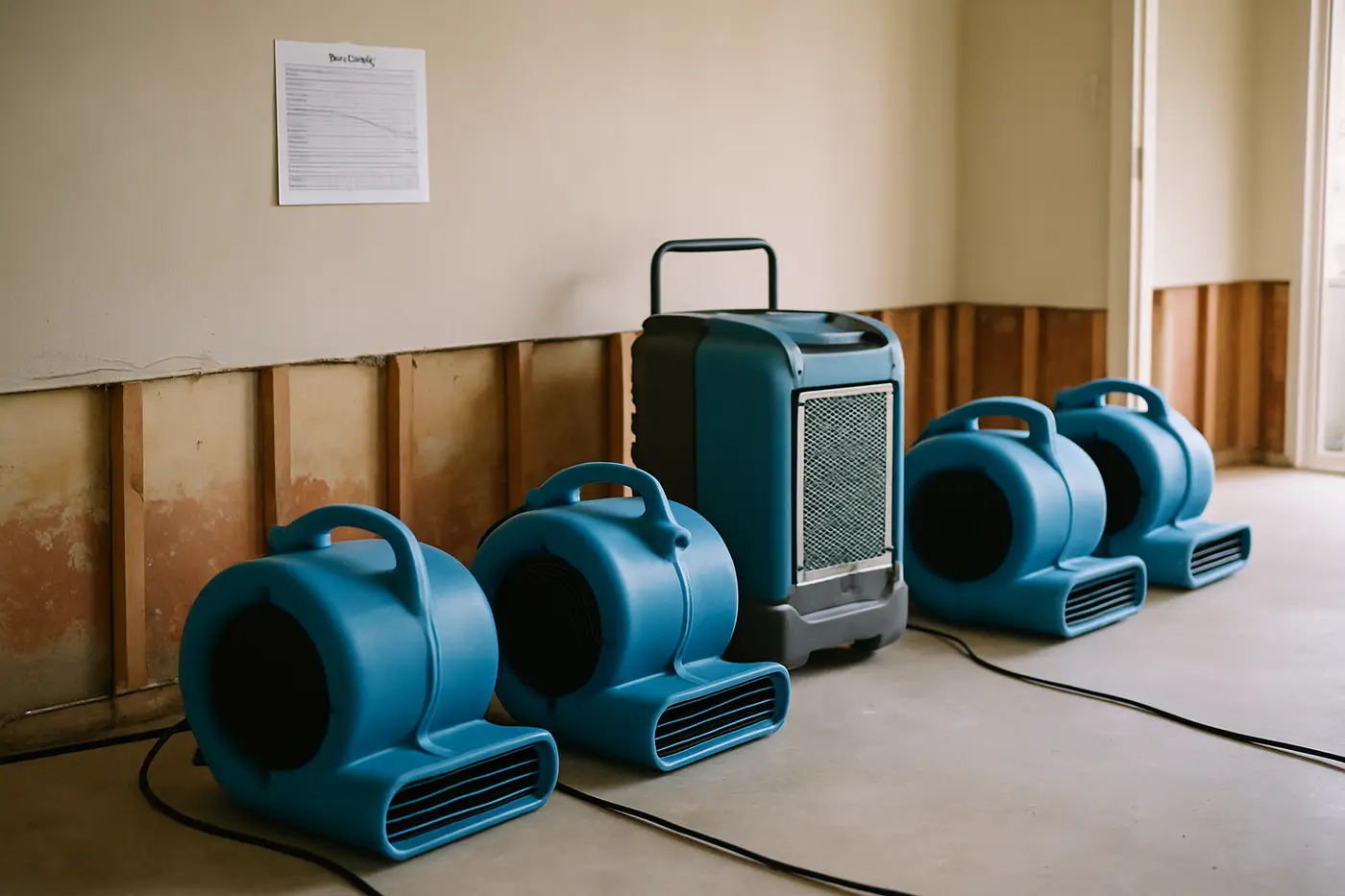
A typical set-up for a wet bedroom and hallway on a slab, clean water, might be:
- Four to six air movers, placed at a low angle along the wet edge of the carpet and pointed at wet walls so air sweeps across the surface rather than into it.
- One LGR dehumidifier, sized to the room volume and the moisture load, ducted or positioned so its dry air output feeds the air movers.
- The room closed, doors shut, air-conditioning off or on a moderate setting.
- Skirting boards removed and small holes drilled at the base of wet plasterboard if wall cavities are wet, so air reaches the framing.
- Carpet floated (lifted at the edge with an air mover blowing underneath) if the underlay is being dried rather than replaced.
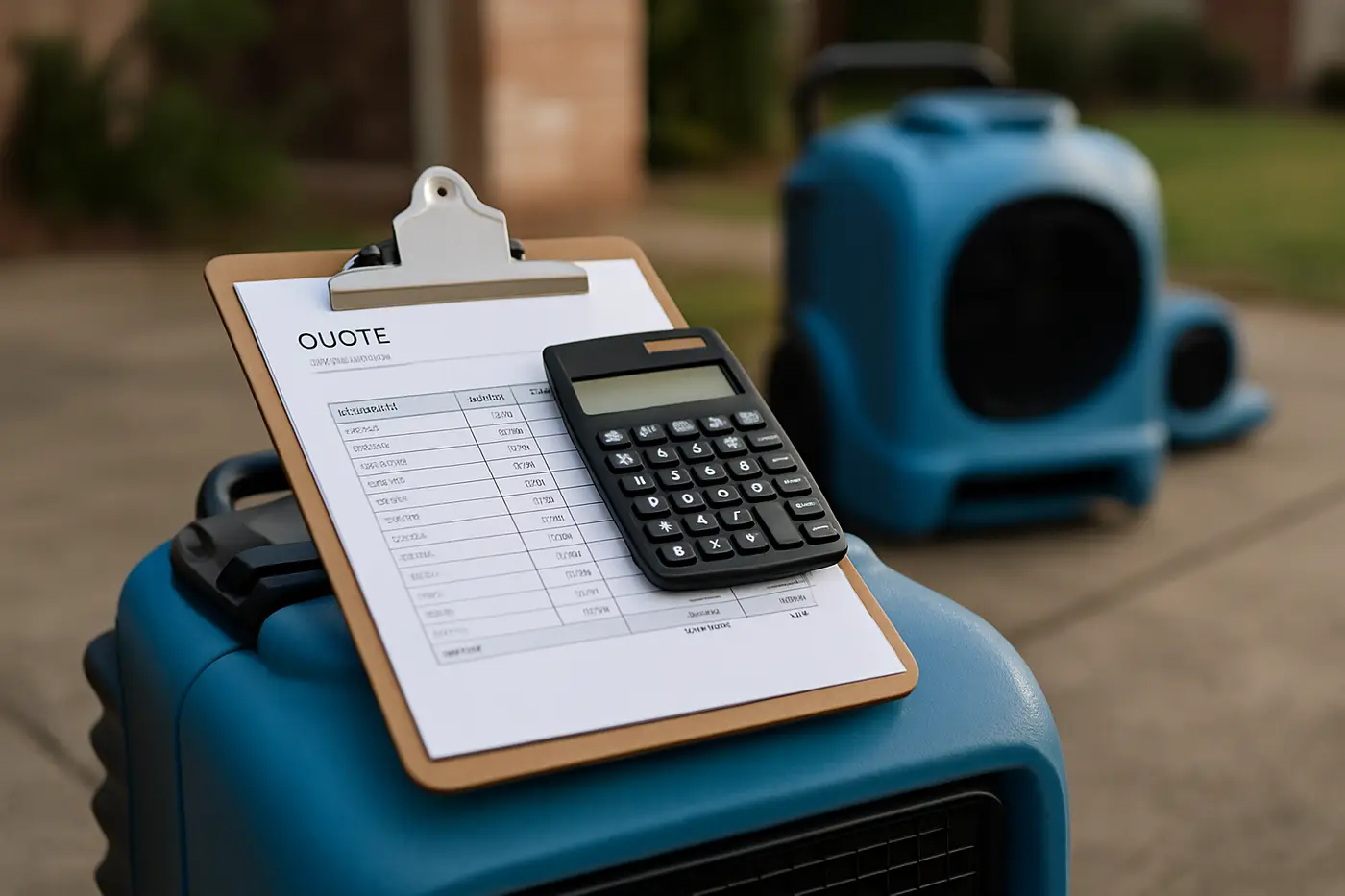
Each unit runs 24 hours a day. Equipment is charged at $80 to $150 per unit per day, so a five-day job with seven units is a significant part of the total, as our 2026 cost guide explains. The temptation to pull equipment early is real, and it is the wrong call.
When materials cannot be dried in time
Some materials do not dry within a reasonable period, or are damaged by the water in ways drying cannot fix.
- Particleboard flooring, common in modern estate homes, swells within hours and does not shrink back. It is replaced.
- Foam underlay wet with clean water for less than a day can be dried; longer, or any contamination, and it goes.
- Plasterboard wet with Category 3 water is cut out to a height above the water line. Wet with clean water, it usually dries in place.
- Insulation in ceilings and walls holds water like a sponge and is generally replaced.
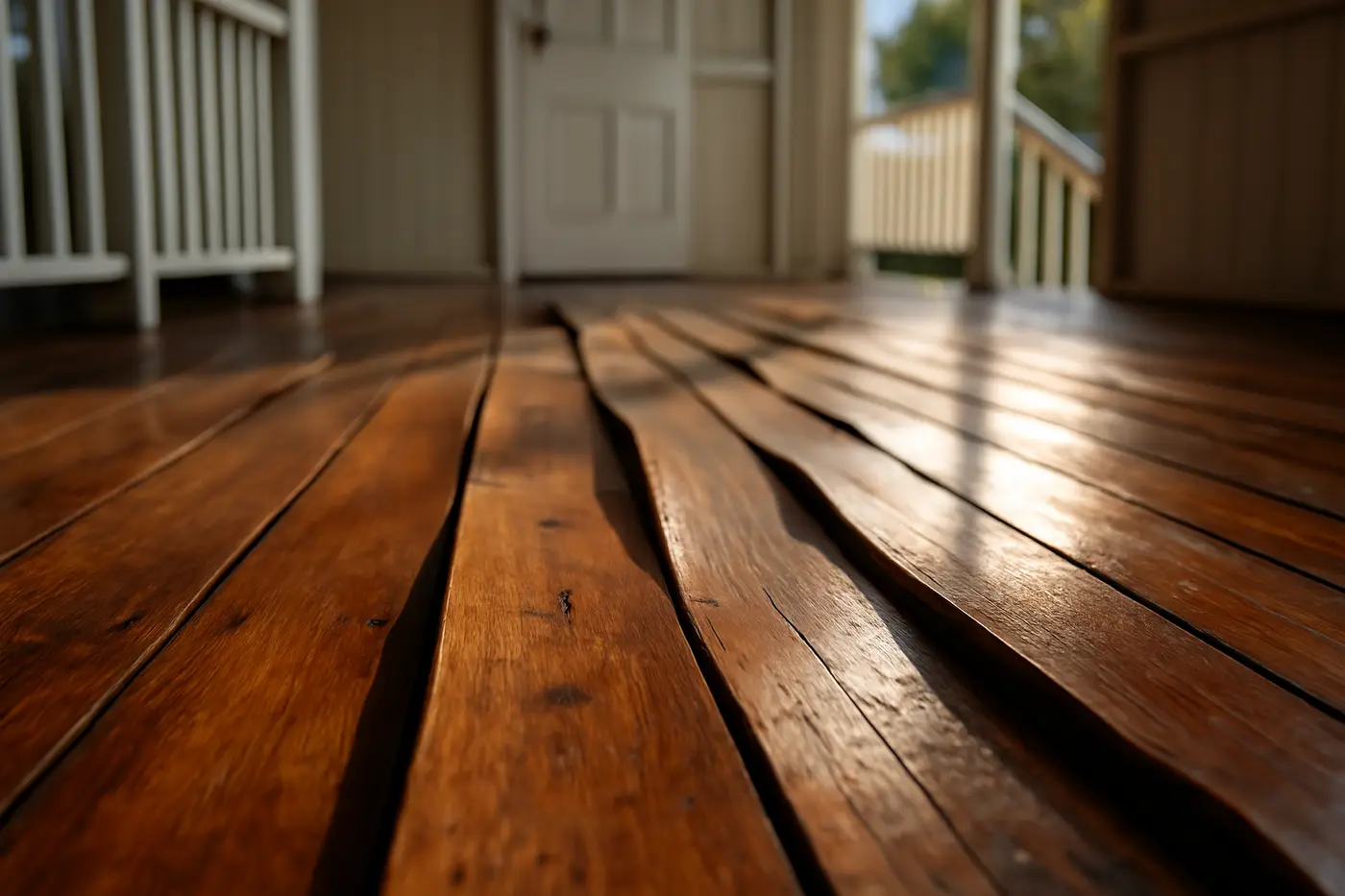
- Solid timber floors can be saved but need slow, controlled drying to avoid cupping; see our guide to Queenslander timber floors.
Removing these early shortens the overall timeline because the remaining materials dry faster with less moisture load in the room.
Key takeaways
- Clean water events: three to five days. Flood: one to three weeks after strip-out. Timber floors: up to two weeks.
- Extraction takes hours; drying takes days. They are not the same thing.
- Drying is complete when meters show materials at the dry standard, not when surfaces feel dry.
- Brisbane humidity means real drying happens in a closed room with a dehumidifier, not with open windows in summer.
- Equipment runs 24 hours a day; switching off overnight resets progress.
- Mould can start within 24 to 48 hours, so drying has to begin the same day.
- Daily moisture logs are your proof for the insurer and your protection against problems later.
If your house is wet now, the timeline starts when the equipment does. Our water damage restoration team covers Brisbane, Ipswich and Logan and sets up the same day wherever possible.