- #cost
- #pricing
- #water-damage
- #brisbane
- #insurance
Water damage restoration in Brisbane costs between $300 and $600 for an emergency assessment, $500 to $2,000 for water extraction, $250 to $600 per room for carpet drying and $2,000 to $6,000 for a full clean-water restoration of two or three rooms. Grey or black water jobs across multiple rooms run $6,000 to $15,000 or more. These are 2026 ranges for Brisbane, Ipswich and Logan.
Below is what sits behind each of those numbers, what makes a job land at the top or bottom of its range, and how insurance changes what you actually pay.
The full 2026 price table
| Service | Typical Brisbane range (AUD) |
|---|---|
| Emergency call-out and assessment (moisture mapping, report) | $300–$600 |
| Water extraction (per job, standard home) | $500–$2,000 |
| Carpet drying and restoration, including underlay assessment | $250–$600 per room |
| Wet floor drying (timber, laminate, tile subfloor) | $400–$1,500 per area |
| Structural drying equipment hire (air movers, LGR dehumidifier) | $80–$150 per unit per day |
| Full restoration, clean water, 2–3 rooms | $2,000–$6,000 |
| Full restoration, grey or black water, multiple rooms | $6,000–$15,000+ |
| Sewage cleanup and sanitisation | $2,500–$8,000 |
| Mould remediation (contained area) | $1,500–$6,000 |
| Storm damage make-safe and drying | $800–$4,000 |
| Contents pack-out and restoration | $1,000–$5,000 |
| Fire and smoke damage restoration | $5,000–$50,000+ (scope-dependent) |
Every reputable restorer in the region will quote on site for free, and most will bill your insurer directly once the claim is approved.
What the assessment fee buys
The $300 to $600 call-out is the line item people question most, so it is worth being clear about what happens in that visit.
A technician walks the affected area with a non-invasive moisture meter, a pin meter for confirming readings in timber and plasterboard, and usually a thermal imaging camera. They map every wet surface against a dry reference reading from an unaffected part of the house, record the temperature and relative humidity inside and outside, and identify the water category and the class of the loss under the IICRC S500 standard.
The output is a moisture map, a photo set and a scope of works. That document is what your insurer’s assessor reads. Without it, you are asking them to take your word that the wall is wet.
If you proceed with the restoration, many companies credit the assessment fee against the job. Ask before you book.
What drives extraction cost
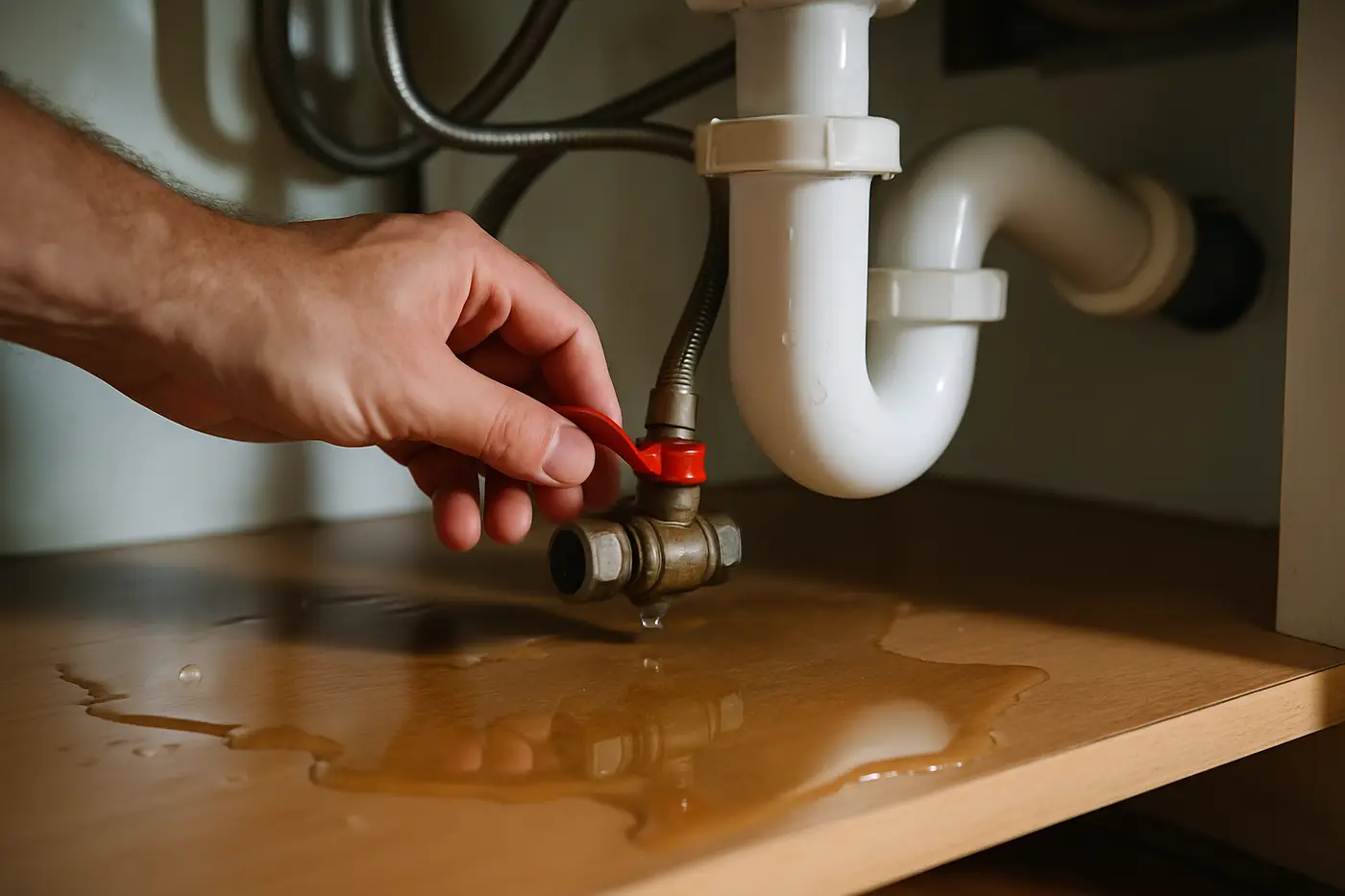
Water extraction is priced on volume and access. A burst flexi hose that has run overnight into a carpeted bedroom and hallway on a slab is a straightforward job at the lower end of the $500 to $2,000 range: a truck-mount or portable extractor recovers most of the free water in an hour or two.
Jobs move toward the top of the range when:
- Water has spread across several rooms or an open-plan living area.
- The floor is a floating laminate or engineered timber that has to be lifted to reach water underneath.
- Access is awkward: a townhouse with no vehicle access to the rear, a highset Queenslander with the wet room upstairs.
- The water is grey or black and every litre has to be handled as contaminated.
Carpet: the per-room figure
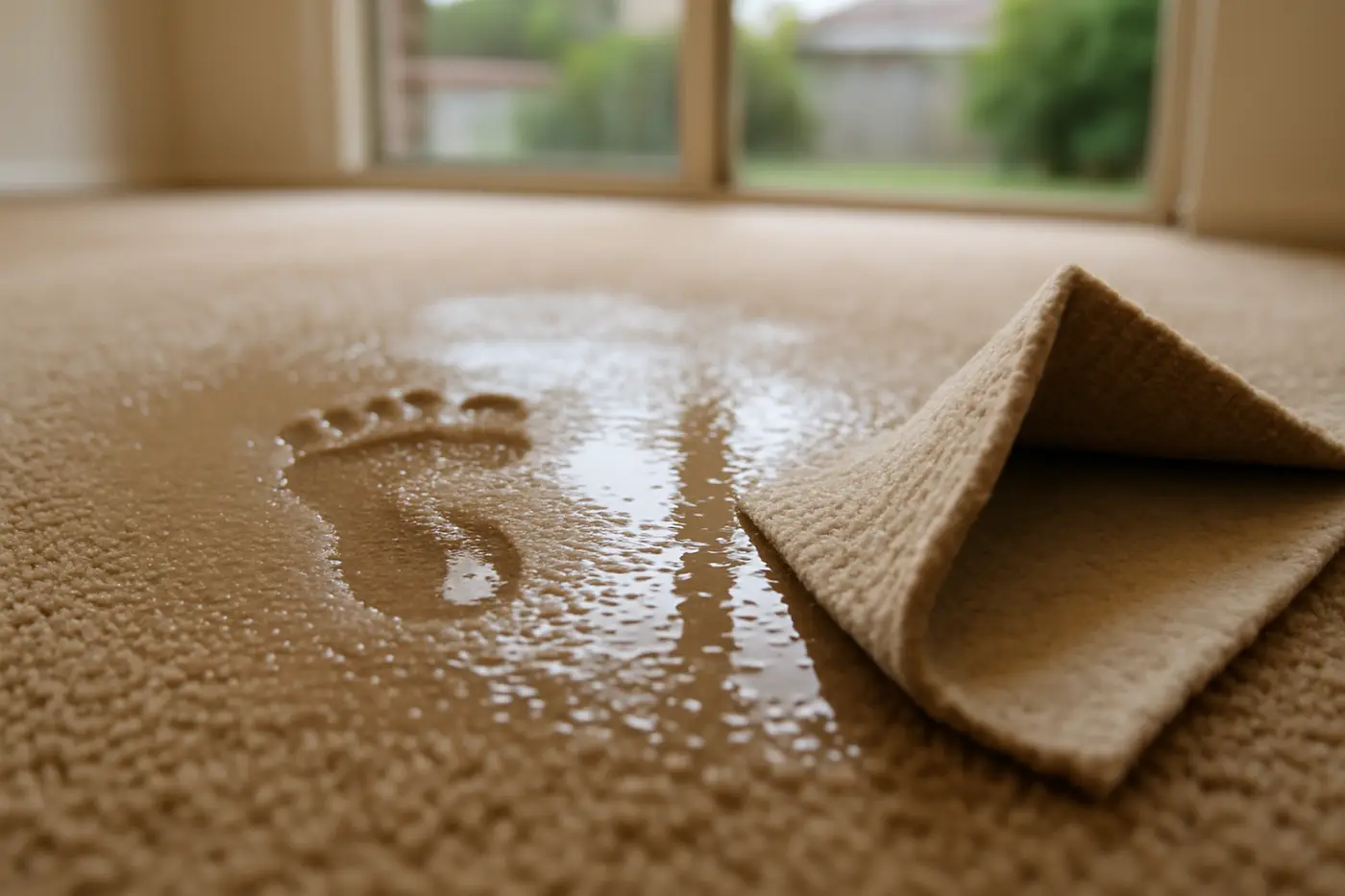
Carpet drying at $250 to $600 per room includes lifting the carpet at the edge, assessing whether the underlay can be saved, extracting from both faces, treating with an antimicrobial and placing air movers and a dehumidifier. The underlay is the swing factor. Foam underlay that has been wet with clean water for less than a day can often be dried; underlay that has been wet longer, or wet with anything other than clean water, is replaced, and that adds material and labour.
The bigger question is whether the carpet is worth drying at all. Our article on whether wet carpet can be saved walks through that decision. As a rule, a five-year-old carpet wet with clean water is dried; a fifteen-year-old carpet wet with sewage is not.
Floors: why timber costs more than tile
The wet floor drying range of $400 to $1,500 per area is wide because floors behave so differently.
Tile on a slab is the cheapest scenario. The tile itself is unaffected; the concern is the slab and any timber or plasterboard sitting on it. Drying is mostly a matter of air movement and dehumidification across the room.
Floating laminate and particleboard sit at the expensive end. Particleboard swells within hours and does not recover; it is usually cut out and replaced rather than dried. Laminate can trap water in the underlay foam and needs to be lifted.
Solid timber floors, the hallmark of a Queenslander, are the most technically demanding. They can be saved with controlled drying, but rush it and the boards cup and buckle. We cover this in detail in our piece on drying Queenslander timber floors without warping.
Equipment hire: the daily line
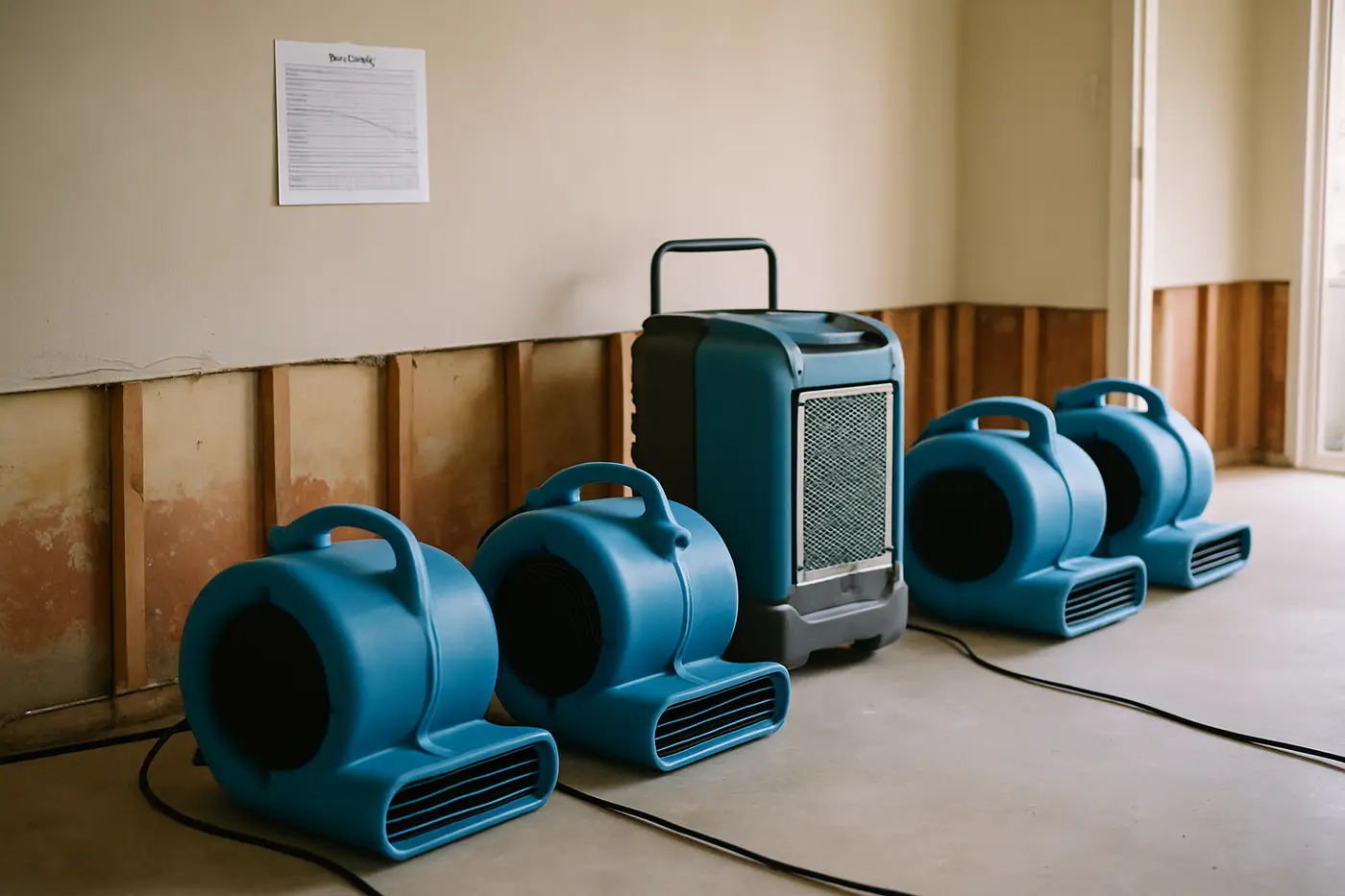
Structural drying equipment is charged per unit per day at $80 to $150. A two-bedroom clean water job typically needs four to eight air movers and one or two low-grain refrigerant (LGR) dehumidifiers running for three to five days. That puts equipment alone at roughly $1,500 to $4,000 on a mid-sized job, which is why it dominates the total.
The number of days is not arbitrary. Drying is finished when materials return to their dry-standard moisture content, measured daily with the same meters used in the assessment, not when the carpet feels dry to the hand. Our guide to how long drying takes in Brisbane explains why humidity stretches that timeline in summer.
Full restoration ranges explained
A “full restoration” bundles assessment, extraction, drying, antimicrobial treatment, removal of unsalvageable materials and the monitoring visits. It does not usually include the rebuild: new plasterboard, painting, replacement carpet or floors. Those are quoted separately, often by a builder rather than the restorer.
Clean water, two to three rooms, $2,000 to $6,000. The classic burst hose or hot water system failure. The house is dried in place with minimal demolition.
Grey or black water, multiple rooms, $6,000 to $15,000 or more. A sewer backflow, a washing machine drain overflow that sat for days, or creek flooding. Porous materials that contacted the water (carpet, underlay, the bottom 300 to 600 mm of plasterboard, particleboard cabinets) are removed and disposed of. Everything remaining is cleaned and treated. Technicians work in protective equipment. Disposal alone can run into the thousands.
Flood damage restoration after a riverine event is nearly always in the second band, and often above it once the house has been wet for a week waiting for the water to recede.
What pushes a quote up or down
| Factor | Pushes cost down | Pushes cost up |
|---|---|---|
| Time before call | Same day | Several days or more |
| Water category | Clean supply water | Sewage, river or creek water |
| Floor type | Tile on slab | Particleboard, laminate, solid timber |
| Spread | One room, contained | Open-plan, multiple rooms, upstairs to downstairs |
| Wall construction | Brick, tile skirting | Plasterboard with timber frame, built-in cabinetry |
| Contents | Few, easy to move | Heavy furniture, paper records, electronics |
| Season | Dry winter westerlies | Humid summer, storm season backlog |
The first row matters most. The cost of water damage rises steeply with every day it sits, because the water keeps moving and mould keeps growing. A job that would have been a $1,500 dry-out on Monday can be a $6,000 remediation by the following week.
How insurance changes what you pay
For a sudden, accidental event, most Queensland home and contents policies cover the restoration up to the sum insured, less your excess. That includes the make-safe and mitigation work in the first days, provided it is documented with photos, moisture logs and invoices. Insurers actively prefer that you mitigate early; it lowers their cost too.
What you pay out of pocket then comes down to:
- Your excess, typically a few hundred to a couple of thousand dollars depending on the policy.
- Exclusions: gradual leaks, lack of maintenance and riverine flood without flood cover are the common ones. Our article on flood versus storm damage claims explains how that line is drawn.
- Betterment: if you upgrade from the carpet you had to something nicer, you pay the difference.
Where the insurer approves, we bill them directly and you only see the excess.
Getting an honest quote
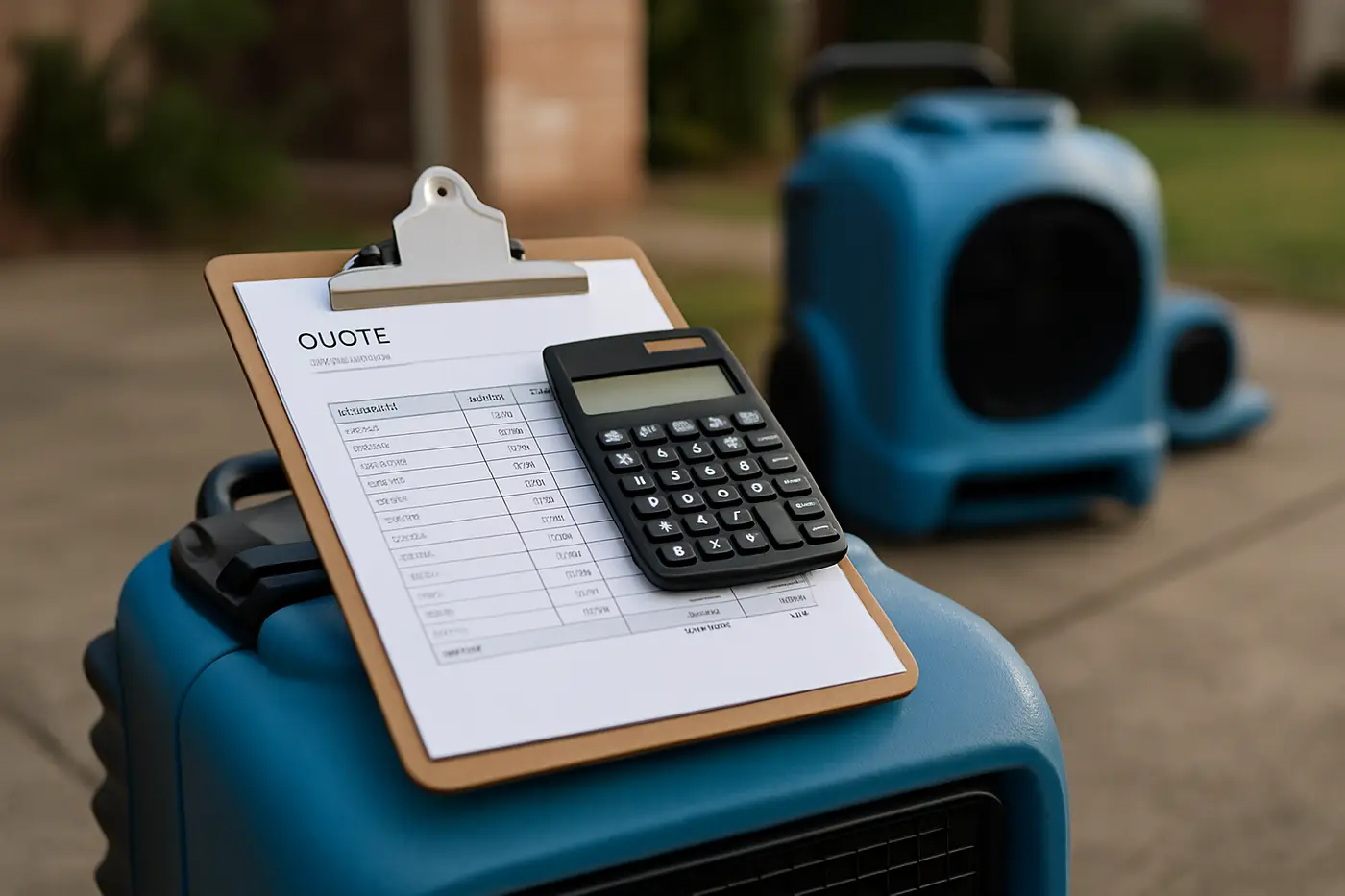
A good restoration quote itemises the assessment, extraction, equipment (units and days), treatment, disposal and monitoring separately. If you receive a single-line figure, ask for the breakdown. If a quote arrives before anyone has put a meter on your walls, treat it with caution; nobody can price a job they have not measured.
Our water damage restoration team quotes on site, free, across Brisbane, Ipswich and Logan, and the quote is built from the moisture map rather than a guess from the doorway.
Key takeaways
- Assessment $300–$600, extraction $500–$2,000, carpet $250–$600 per room, floors $400–$1,500 per area.
- Equipment at $80–$150 per unit per day is the largest single component on most jobs.
- Clean water restorations of two to three rooms land at $2,000–$6,000; grey and black water jobs at $6,000–$15,000 or more.
- Delay is the biggest cost driver. Every day adds spread, swelling and mould.
- Sudden events are usually insured; gradual leaks and uninsured riverine flood are not.
- Insist on an itemised quote based on actual moisture readings.