- #emergency
- #water-damage
- #first-response
- #brisbane
- #insurance
In the first hour after water damage, stop the water at its source, switch off power to the affected rooms, move contents off the wet floor, photograph everything, then get as much water out and as much air moving as you can. Call a restoration company within that hour if water has gone under floors, into carpet underlay or behind walls.
That is the whole sequence in one paragraph. The rest of this article explains why the order matters, what each step looks like in a typical Brisbane house, and the mistakes we see most often when we arrive on site.
Minute 0 to 5: stop the water
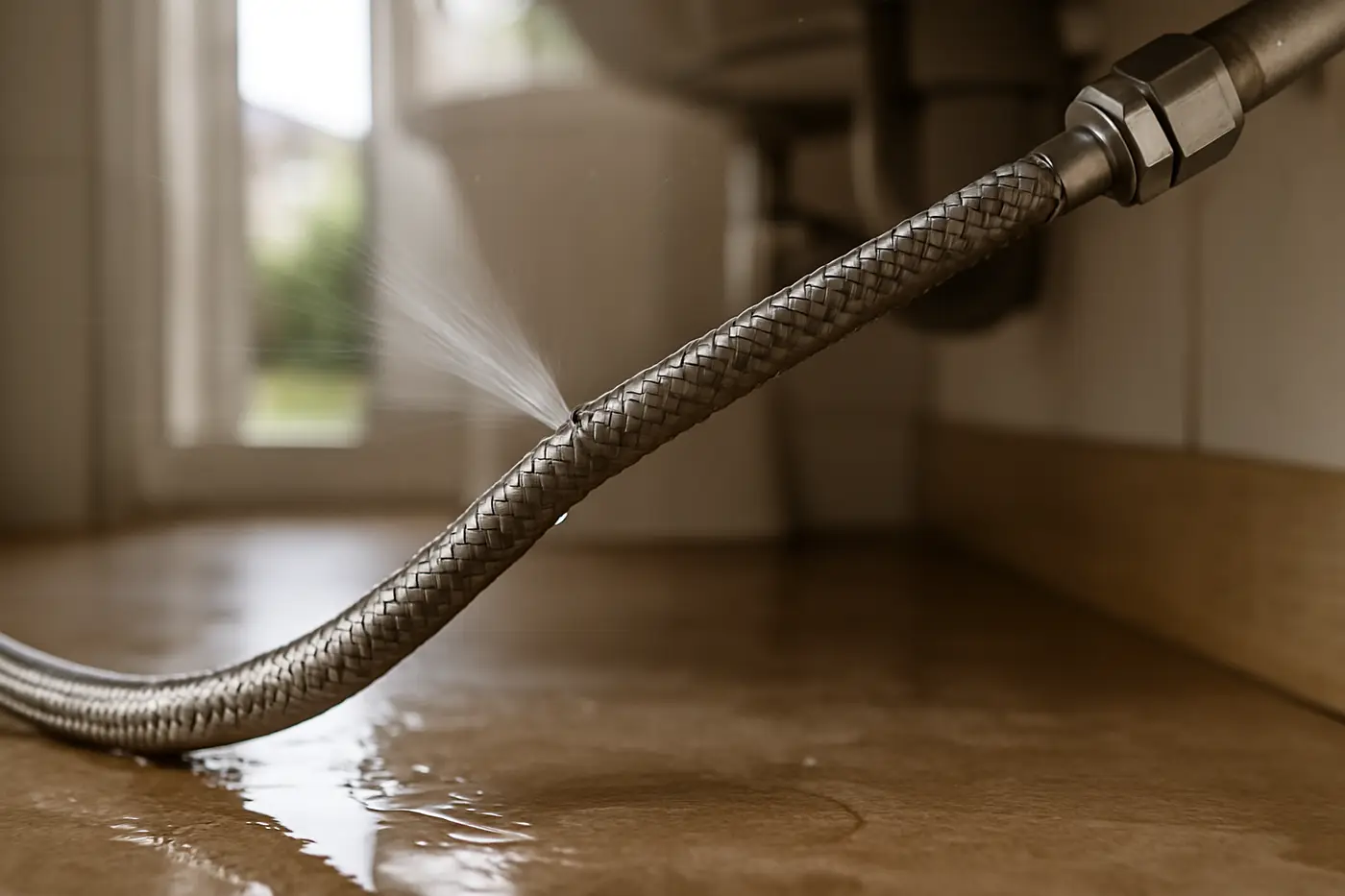
Most domestic water damage in Brisbane comes from inside the house, not from the sky. A burst flexi hose under a vanity, a failed hot water system, a dishwasher inlet or a washing machine drain hose will keep running until someone turns it off.
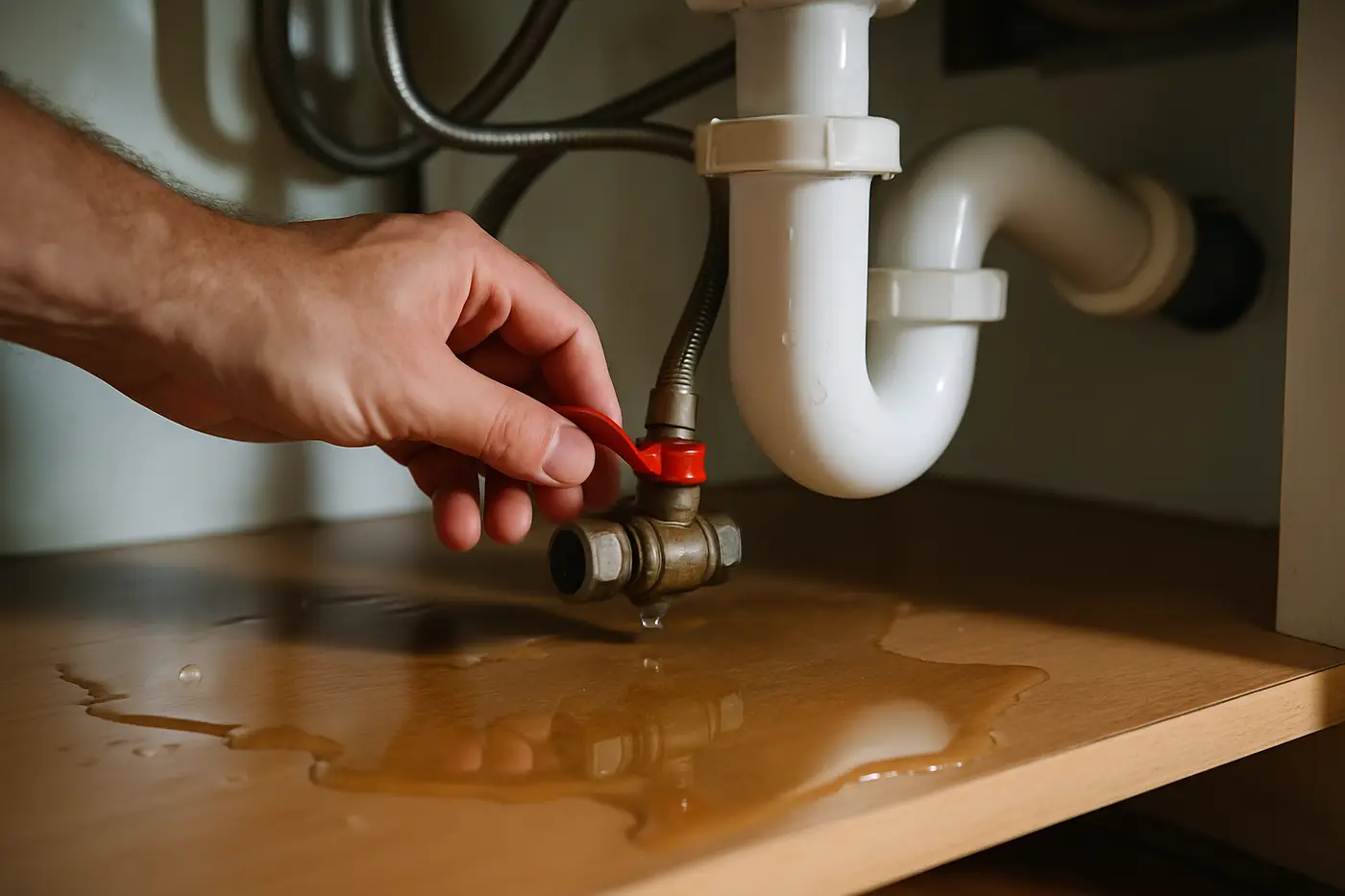
- Find the isolation tap. Every toilet, vanity, laundry tub and dishwasher should have a small quarter-turn tap on the wall behind or beneath it. Turn it clockwise.
- If you cannot find it, turn off the water meter. The meter is usually at the front boundary near the footpath, inside a plastic or concrete lid. Turn the tap on the house side of the meter clockwise until it stops.
- Hot water system leaking? Turn off the cold water inlet on the tank and switch off the electrical isolator or gas supply. A tank that keeps refilling will keep leaking.
- Storm ingress from the roof? You cannot stop rain, but you can catch it. Buckets under drips, towels along window sills and a plastic sheet over furniture buys time. Do not go on the roof.
If the water is coming from a neighbour’s property, a shared wall in a townhouse or a pipe in the ceiling that you cannot isolate, a plumber is the first call rather than a restorer. We can extract water all day, but not while it is still flowing.
Minute 5 to 10: electricity
Water and electricity share more of your home than most people realise. Slab-on-ground houses in estates like Springfield Lakes and North Lakes often have power points 300 mm off the floor; a 20 mm sheet of water across a room is well below that, but water wicks up plasterboard and into wall cavities where cabling runs.
Go to the switchboard and turn off the lighting and power circuits for the affected rooms. If you are not sure which is which, turn off the main switch. Then:
- Do not touch appliances that are sitting in water.
- Do not plug in fans, pumps or extension leads in the wet area until the circuit is confirmed dry and safe.
- If the switchboard itself is wet, or water has entered through a light fitting, leave it alone and call an electrician.
Safety switches trip more often than not, but “more often than not” is not a standard anyone should rely on with a wet floor.
Minute 10 to 20: protect what you can move
Water damage to contents is often more expensive than damage to the building. Work from the most valuable and most absorbent items outward.
- Lift rugs, mats and loose floor coverings and take them outside or into a dry room.
- Move furniture off the wet area. If a lounge or bed is too heavy, put foil, plastic lids or blocks of timber under the legs so timber and metal are not sitting in water. Furniture stain and rust marks transfer into carpet quickly.
- Get paper, books, photos and electronics up high. Paper wicks water in minutes.
- Empty the bottom shelves of wardrobes and linen cupboards in wet rooms; clothing on the floor of a robe becomes a mould incubator.
- Pull the bottom drawers out of vanities and kitchen cabinets that have been sitting in water. Particleboard carcasses swell fast and drawers can jam shut.
Do not throw anything out yet. Even items that are clearly ruined should be photographed in place before they go into a bin or a pile in the driveway.
Minute 20 to 30: document for the insurance claim
This is the step people skip because it feels less urgent than mopping. It is not. Insurers in Queensland decide claims on evidence, and the best evidence is what the house looked like before anyone touched it.
- Take wide photos of every affected room from the doorway, then close-ups of the water source, the extent of the water on the floor, and any damaged contents.
- Video a slow walk-through with the date and time visible on your phone.
- Photograph the failed component: the split flexi hose, the ruptured tank, the cracked drain pipe. Keep the part; the assessor may want to see it.
- Note the time you discovered the water and, if you know it, when it started.
We cover the full paperwork process in our guide to documenting a water damage insurance claim in Queensland. For now, ten minutes with a phone camera is enough.
Minute 30 to 60: extract and ventilate
Now the physical work starts. The aim is not to dry the house in an hour; that takes days. The aim is to remove standing water and slow the migration of moisture into materials that are expensive to replace.
Standing water on hard floors. Squeegee toward a doorway or floor waste. Mop and wring repeatedly. A wet-and-dry vacuum, if you have one, is far better than towels.
Carpet. Blot, do not scrub. Weight towels down on the wettest patches and swap them as they saturate. A domestic vacuum cleaner is not designed for water and can be a shock hazard; do not use one.
Air movement. Open windows and doors if the outside air is drier than inside, which in Brisbane usually means the morning or a dry westerly day, not a humid summer afternoon. Turn ceiling fans on. Set air-conditioning to a moderate temperature on “dry” mode if it has one. Do not blast it cold; cold air carries less moisture away.
Cabinets and wardrobes. Open every door and drawer in the wet area so air reaches the inside surfaces.
What professional equipment does that household gear cannot
When our technicians arrive, the first thing we do is not set up fans. It is measure. A moisture meter and a thermal camera show where water has gone that you cannot see: under a floating floor, through the underlay, into the bottom plate of a stud wall, across a slab under a kitchen kickboard.
The table below shows why a proper water extraction and drying set-up outperforms household efforts in the first 24 hours.
| Task | Household approach | Restoration approach |
|---|---|---|
| Water removal from carpet | Towels, mop | Truck-mount or portable extractor, 90%+ of free water removed |
| Locating hidden moisture | Guesswork | Pin and non-invasive meters, thermal imaging, moisture map |
| Air movement | Pedestal fan (a few hundred m³/h) | Air movers (2,000–4,000 m³/h each), positioned to the wet edge |
| Moisture removal from air | Air-con in dry mode | LGR dehumidifier, 50–90 litres per day |
| Bacterial control | Household cleaner | Antimicrobial treatment matched to the water category |
| Record for insurer | Photos | Daily moisture log, psychrometric readings, photo report |
The difference is not that we work harder. It is that the equipment and the measurement turn a guess into a plan.
When to call a restorer, and when a mop is enough
Not every spill needs a call-out. A litre of water on tiles that you clean up in five minutes is not water damage. The line is crossed when any of these apply:
- Water has been present for more than two or three hours.
- Carpet is wet through to the underlay (press hard; if water rises around your fingers, it is saturated).
- Water has run under a floating timber or laminate floor, or into the gaps of a timber floor.
- Plasterboard walls or skirting boards are wet at the base.
- The water came from a toilet, sewer, washing machine drain or outside flooding. That is grey or black water and needs sanitisation, not just drying.
- You can smell dampness the next morning.
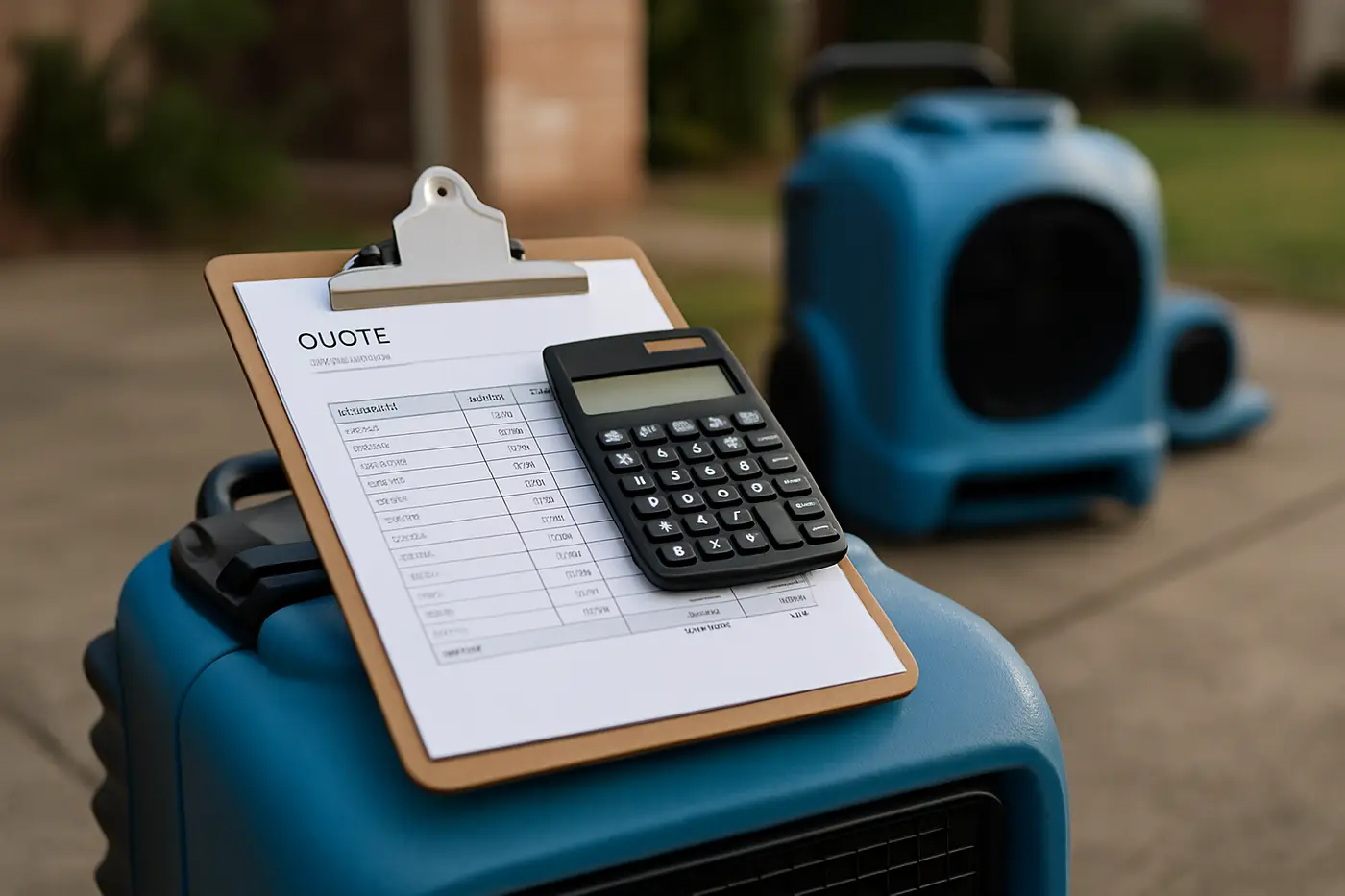
In those cases, an emergency water damage call-out, which in Brisbane typically runs $300 to $600 for attendance, moisture mapping and a report, is a small cost against replacing a floor.
Brisbane conditions change the maths
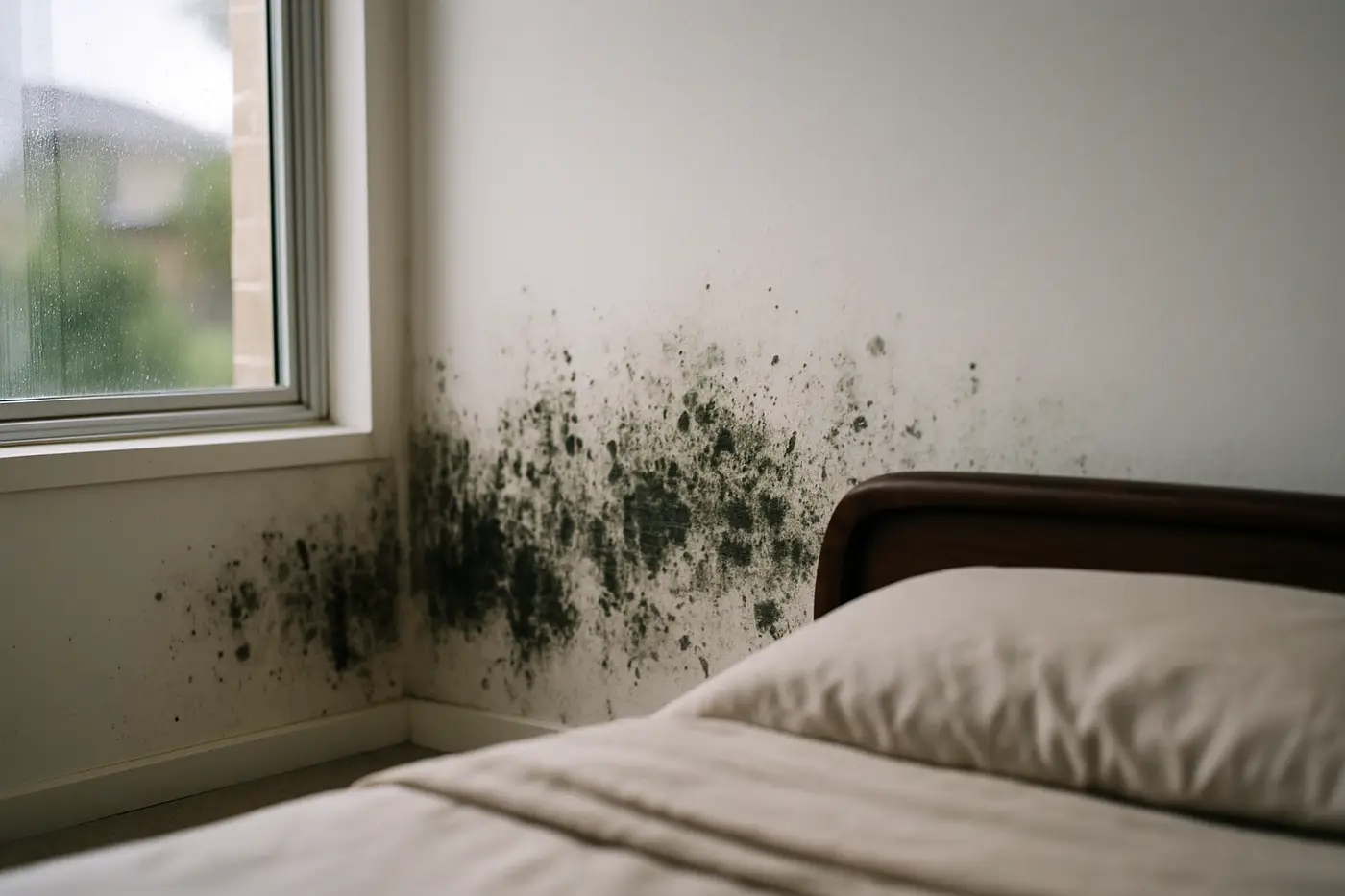
In a dry climate you can leave a wet room for a day and get away with it. Brisbane in summer sits at 70 to 80 per cent relative humidity most afternoons. Air that is already three-quarters full of moisture cannot absorb much more from your carpet, so evaporation slows to a crawl. Meanwhile, the temperature is perfect for mould, which can colonise wet gyprock and timber within 24 to 48 hours.
The housing stock matters too. A Queenslander on stumps will often drain water through the floorboards into the subfloor, which looks like a blessing until the bearers and joists underneath stay wet for weeks. A 1970s brick-and-tile house on a slab has nowhere for the water to go, so it spreads sideways under the carpet and across the whole floor. Modern estate homes with particleboard flooring on a low-set slab are the most vulnerable of all: particleboard swells within hours and does not shrink back.
Key takeaways
- Order matters: source, power, contents, photos, then extraction and air.
- Never walk through water near live power points or a wet switchboard.
- Photograph everything before you move or discard it.
- Blot carpet, do not scrub it, and do not use a domestic vacuum on water.
- Open the house only when outside air is drier than inside.
- If water has gone into underlay, under a floating floor or into walls, call a restorer within the hour.
- Mitigation costs are normally claimable when documented, so keep every receipt.
If you are reading this with wet feet, stop reading, follow the first four steps, then call. Our water damage restoration crews cover Brisbane, Ipswich and Logan and can usually be on site the same day.