Skip to content

Emergency restoration · Brisbane, Ipswich & Logan

Emergency Water Damage Brisbane

Burst pipe at midnight, hot water system let go, storm through the ceiling — 24/7 emergency water extraction and make-safe across Brisbane, Ipswich and Logan, with drying started the same visit.

  • 24/7 Response
  • IICRC S500
  • Insurance Reports
  • Fully Insured
  • Homes & Business

Request Emergency Water Damage Help

Australian format - we'll call or text you back straight away.
Add brief description (optional)
How urgent?

Free on-site assessment and quote. Insurance-ready report. No obligation. Privacy.

What's included

Everything the job needs,scoped from the first visit.

Every emergency water damage job in Brisbane, Ipswich and Logan includes the work below as standard. It is written into the scope before we start, so there are no surprise extras when the invoice arrives.

  • 24/7 response, including nights, weekends and public holidays
  • Phone guidance on stopping the water and isolating power while we travel
  • Emergency water extraction with truck-mount and portable units
  • Make-safe of sagging ceilings, wet electrical areas and slip hazards
  • Moisture mapping and water category assessment on the first visit
  • Drying equipment placed and running before we leave
  • Same-day photo report and scope for your insurer
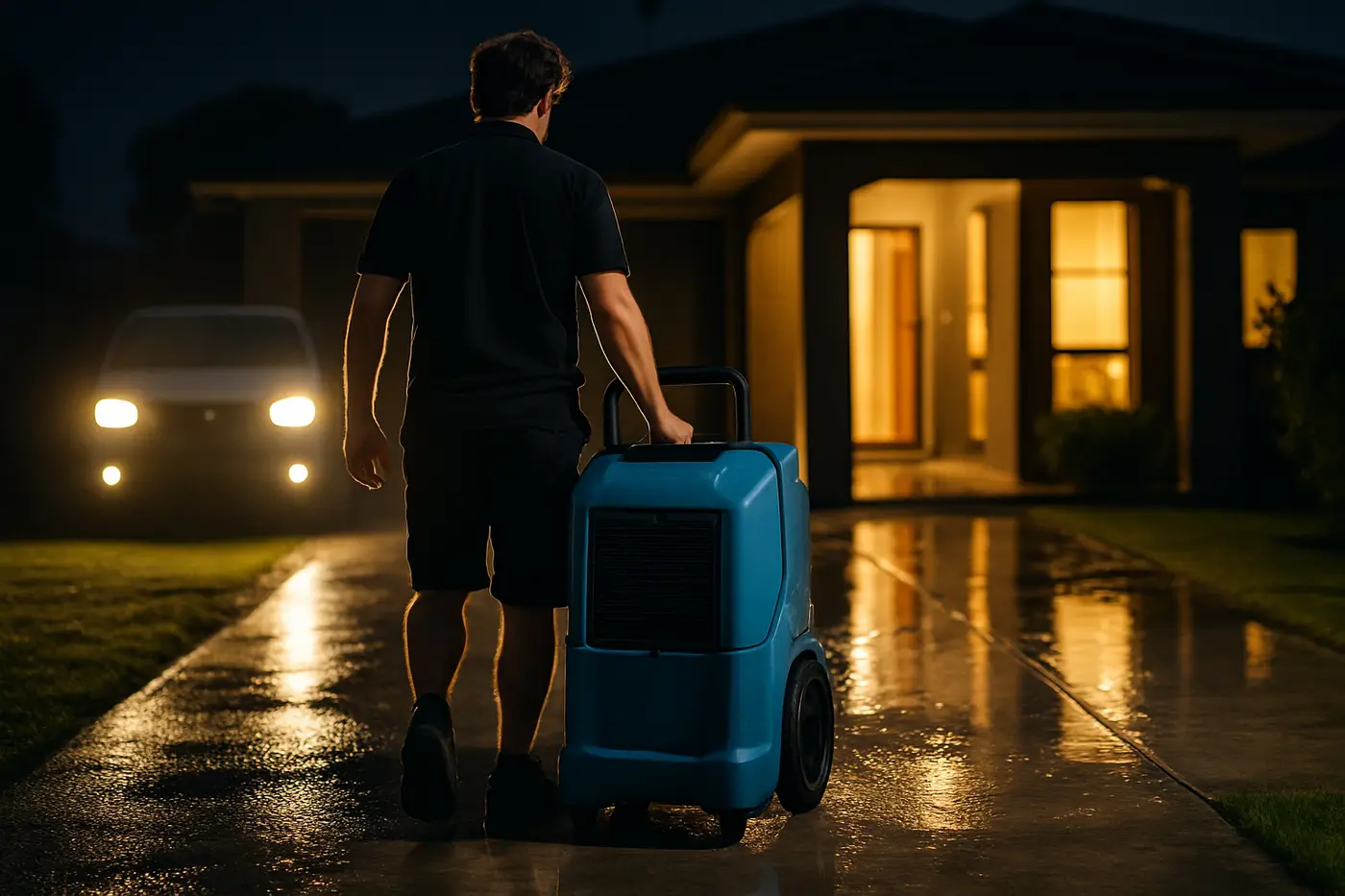
Technician arriving at night with extraction equipment for a burst pipe emergency

Not sure it is urgent?

Send a few photos with the form. A coordinator will tell you whether it can wait until morning or needs a crew tonight.

When to call

Signs you needemergency water damage.

Water moves sideways along bottom plates and under floor coverings, so the wet area is nearly always bigger than the stain you can see. Any of the following is worth a call the same day.

  • Water actively flowing or pooling and you cannot find or stop the source
  • A ceiling that is bulging, dripping or has started to sag
  • Water near the switchboard, power points or light fittings
  • A burst flexi hose, hot water system or washing machine hose
  • Storm water coming through the roof or under the doors right now
  • Water rising in the subfloor or garage after heavy rain
  • A leak discovered after being away — water has been sitting for days

Our process

How emergency water damageruns, step by step.

From the first call to the final moisture reading, you will know what is happening, why, and what your insurer will need at each stage.

  1. Step 1: Call us — any hour

    Tell us what happened, where the water is and whether it is still flowing. We will walk you through the isolator or mains and the switchboard while a crew is dispatched.

  2. Step 2: Extract and make safe

    Bulk water is extracted immediately. Sagging ceilings are drained and propped, wet circuits stay off, and contaminated areas are taped off if the water is grey or black.

  3. Step 3: Map and start drying

    Every affected surface is metered and the water category recorded. Air movers and LGR dehumidifiers are placed to the evaporation load and switched on before we leave the first visit.

  4. Step 4: Monitor, document, restore

    Daily readings until dry standard, then repairs to anything that could not be saved. The photo report, moisture logs and scope go to you or your insurer.

Price guide · AUD, 2026

What emergency water damagecosts in Brisbane.

Ranges from typical Brisbane, Ipswich and Logan jobs. The final quote is given on site after moisture mapping, in writing, before any work starts. Insurance direct billing where the insurer approves.

ItemTypical range
Emergency call-out and assessment 24/7; includes moisture mapping and report, credited against restoration$300–$600
Emergency water extraction Standard home; depends on volume and access$500–$2,000
Structural drying equipment hire Placed on the first visit; typically 3–5 days$80–$150 per unit per day
Storm damage make-safe and drying Ceiling make-safe, extraction and drying after roof or gutter failure$800–$4,000
Full restoration, clean water (2–3 rooms) Where the emergency becomes a full drying and repair job$2,000–$6,000

Ranges cover labour, equipment and disposal for 2026. The number you approve on the written quote is the number you pay; if the scope changes once walls are opened, we stop and re-quote in writing.

Full price guide

In depth

Emergency Water Damage in Brisbane: how the job actually runs.

Water damage is an emergency for a simple reason: the damage keeps happening after the water stops. Gyprock wicks water upward for hours. Underlay holds it against the slab. Timber swells overnight. And in Brisbane’s humidity, mould is establishing in wet materials within 24 to 48 hours. Emergency water damage response is about getting the water out and the drying started before any of that takes hold — at 2 am if that is when the flexi hose let go.

What an emergency water damage call-out involves

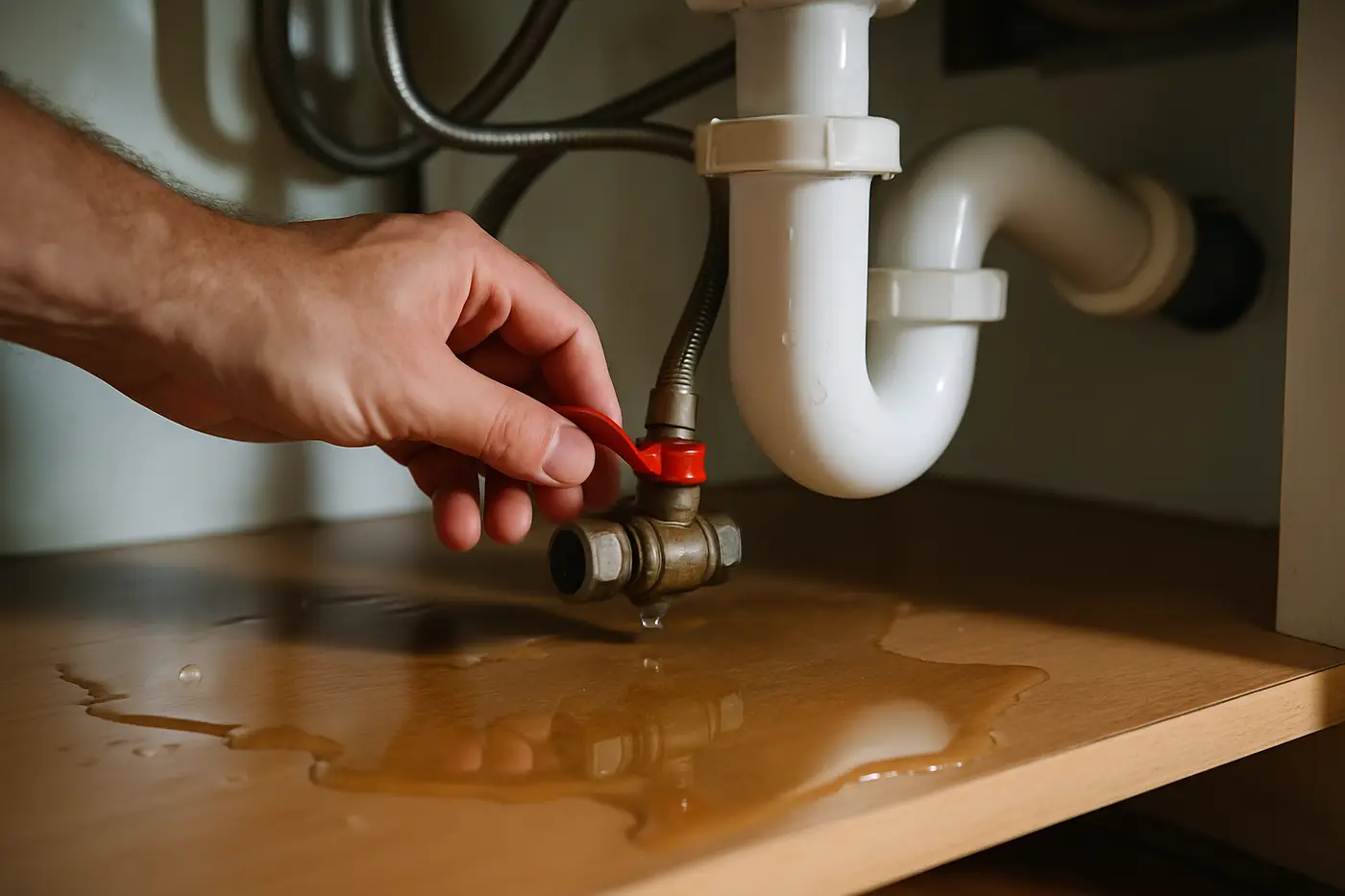
Phone triage. When you call, we ask three things: where is the water, is it still flowing, and where did it come from. Then we walk you through the isolator valve or the mains tap and the switchboard. Most people can stop a domestic leak in under five minutes once they know where the valve is.

Extraction. On arrival, bulk water comes out first with truck-mount or portable extractors. Every litre extracted is a litre that does not have to be evaporated over the following days.

Make-safe. Sagging ceilings are drained and propped. Wet circuits stay isolated. Slip hazards are dealt with. If the water is grey or black — a washing machine discharge, a sewer backflow, stormwater — the area is taped off and treated as contaminated.

Assessment. Every affected surface is metered with pin and non-invasive moisture meters and checked with a thermal camera for hidden migration. The water category and class are recorded, and a drying plan is set.

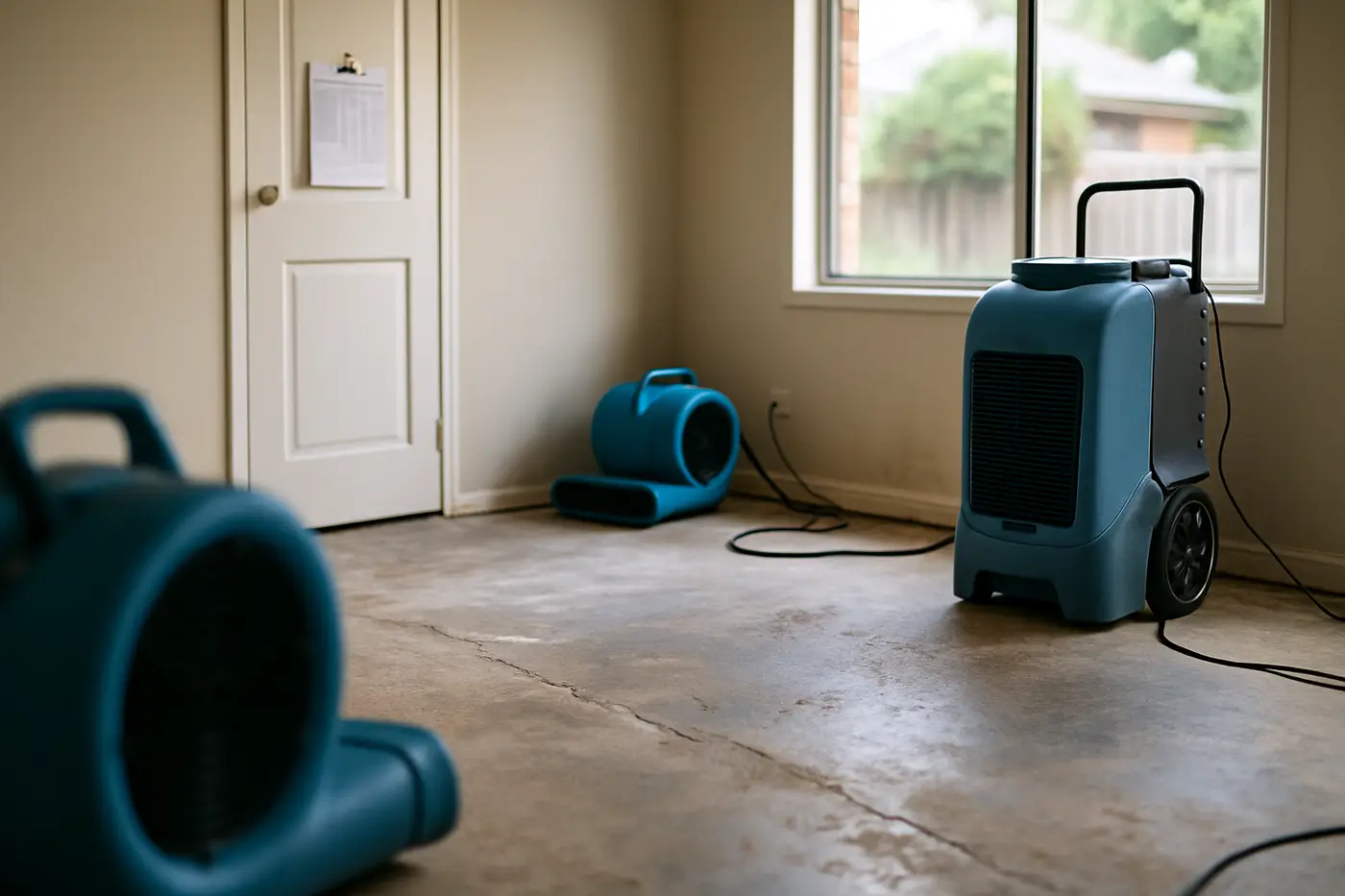
Drying starts on the first visit. Air movers and low-grain refrigerant dehumidifiers are placed to the evaporation load and left running. You are not waiting until the next business day for equipment.

The first hour: what to do before we arrive

  1. Stop the water. Isolator valves are usually under the sink, behind the toilet or at the washing machine taps. The mains tap is at the water meter near the front boundary. Hot water systems have a cold-water isolator on the inlet.
  2. Isolate power at the switchboard for any circuit near the water. If the floor in front of the board is wet, leave it and tell us.
  3. Lift and move. Rugs up, furniture out or on foil, boxes off the floor.
  4. Photograph the water, the cause and the affected rooms. Keep the failed hose or part.
  5. Do not use a household vacuum on water, run the air-con to dry the room, or pierce a sagging ceiling.

Why the first 24 hours matter

The IICRC S500 standard classes water by contamination and notes that Category 1 clean water becomes Category 2 within a day or two as it sits in materials and picks up bacteria. Category 2 becomes Category 3 if left longer. Each step up the scale takes more materials off the “dry and keep” list and onto the “remove and replace” list.

Mould works on a similar clock. Brisbane summer air at 70 to 80 per cent relative humidity means wet gyprock and timber are in mould range from the moment they get wet. Growth is established within 48 hours and visible within a week. Fast extraction and immediate dehumidification are the only reliable way to keep a clean-water loss from becoming a mould remediation job.

Response timeTypical outcome (clean water, 2–3 rooms)
Within 12 hoursCarpet, gyprock and timber mostly saved; 3–5 days drying
24–48 hoursUnderlay replaced, some gyprock cut; antimicrobial needed
3–7 daysCarpet and lower gyprock removed; mould treatment likely
Over a weekStrip-out and mould remediation; rebuild scope

Brisbane, Ipswich and Logan: the emergencies we see most

Flexi hose failures are the number one domestic claim. They fail in every housing type, but they do the most damage in slab homes with carpet and particleboard — the estates at Springfield Lakes and Redbank Plains, and the brick-and-tile suburbs like Aspley, Mount Gravatt and Logan Central — because there is nowhere for the water to go but sideways.

Hot water systems rust through, usually on the tank base, and leak steadily into a laundry or a wall cavity for days before anyone notices.

Storm water between November and March: overflowing box gutters and blocked downpipes send water into the ceiling and down the inside of walls. Ex-Tropical Cyclone Alfred in March 2025 produced this on a regional scale — wind-damaged roofs followed by days of rain.

Air-conditioner condensate lines block and drip into ceilings through the summer, and are often found only when the plaster stains.

Queenslanders in New Farm and Paddington usually fare better in an emergency because water finds its way through the floor to the subfloor, but enclosed under-house rooms turn that advantage into a trap.

Insurance and documentation

Emergency make-safe and mitigation costs are generally covered under Queensland home policies when the cause is an insured event and the work is documented. Our first-visit report includes dated photos, the cause, the water category, moisture readings and the scope — the package insurers expect. If your insurer approves direct billing, we can invoice them. Lodge the claim promptly; the failed part and the first photos are the most important evidence you have.

What an emergency call-out costs

Call-out and assessment is $300 to $600 at any hour and is credited against the restoration if you proceed with us. Emergency extraction is $500 to $2,000 depending on volume. Drying equipment placed on the first visit runs $80 to $150 per unit per day, typically for three to five days. Where a storm has caused the ingress, make-safe and drying runs $800 to $4,000. If the emergency turns into a full restoration across two or three rooms, expect $2,000 to $6,000 for clean water.

If water is in your house right now, stop the source, cut the power, and call. We cover Brisbane, Ipswich and Logan around the clock, and we will tell you what to do in the next ten minutes.

Last updated 18 September 2026
Common questions

Emergency Water Damage, explained.

Straight answers about response times, water categories, drying timelines and what your insurer will expect for emergency water damage in Brisbane.

All questions
How fast can you get to an emergency?

We aim for the fastest realistic response across Brisbane, Ipswich and Logan at any hour. During a major weather event — a supercell across the southside, or a system like ex-Tropical Cyclone Alfred in March 2025 — demand spikes and we triage: active water entry, contaminated water and homes with occupants at risk go first. We will give you an honest window rather than a promise.

What should I do while I wait?

Stop the water, cut power to the wet area, lift what you can off the floor and take photos. Do not use a domestic vacuum on water, do not run ceiling fans if the water might be contaminated, and do not turn on the air-conditioning to dry the room — it recirculates moisture and spreads any contamination. Open windows if the outside air is drier than inside.

Is it really an emergency if the water has stopped?

Yes. The damage does not stop when the flow does. Water wicks up gyprock and into bottom plates, underlay holds it against the slab, and in Brisbane humidity mould is growing within 24 to 48 hours. Clean water also degrades to grey water over the same period. Extracting and starting the drying tonight rather than tomorrow afternoon is the difference between a three-day drying job and a strip-out.

My ceiling is sagging with water in it — what do I do?

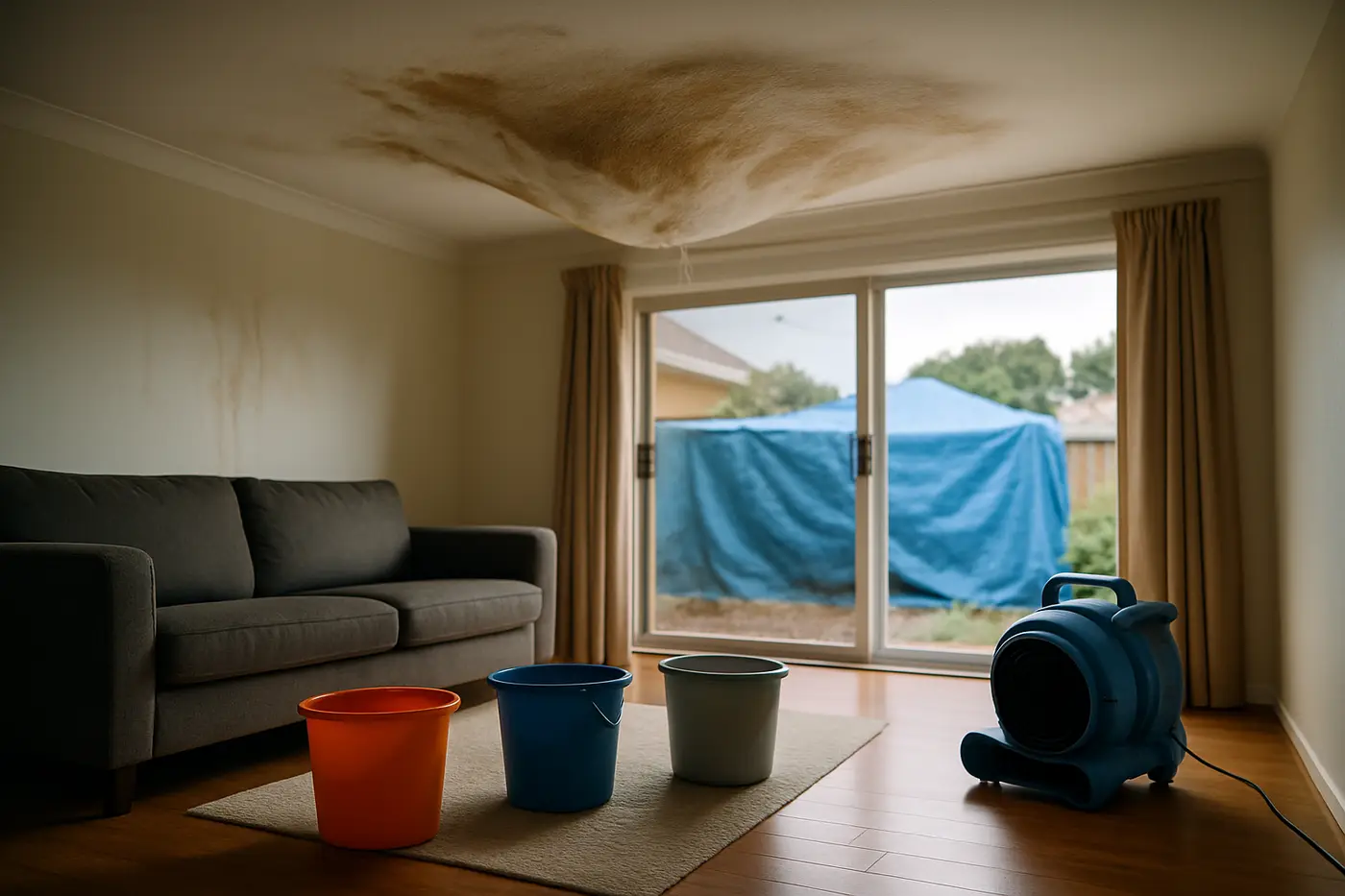
Move everything out from under it, stay out of the room and turn off power to the lights in that area. Do not poke a hole in it. Wet plasterboard can hold a surprising amount of water and the whole sheet can drop. We drain and prop sagging ceilings as part of the make-safe.

Do you do the repair as well or just the emergency work?

Both. The emergency visit is extraction, make-safe, assessment and setting up drying. The same crew monitors the drying and completes repairs to anything that could not be saved — gyprock, skirting, underlay, sections of flooring. One report covers the whole job for your insurer.

Will my insurance pay for the emergency call-out?

Reasonable make-safe and mitigation costs are generally covered under Queensland home policies when the cause is an insured event — a burst pipe, a failed hot water system, a storm — and when the work is documented. Our emergency visit produces the photos, moisture readings and scope that a claim needs. Lodge the claim as soon as you can, and keep the failed part.

What is the most common emergency you attend?

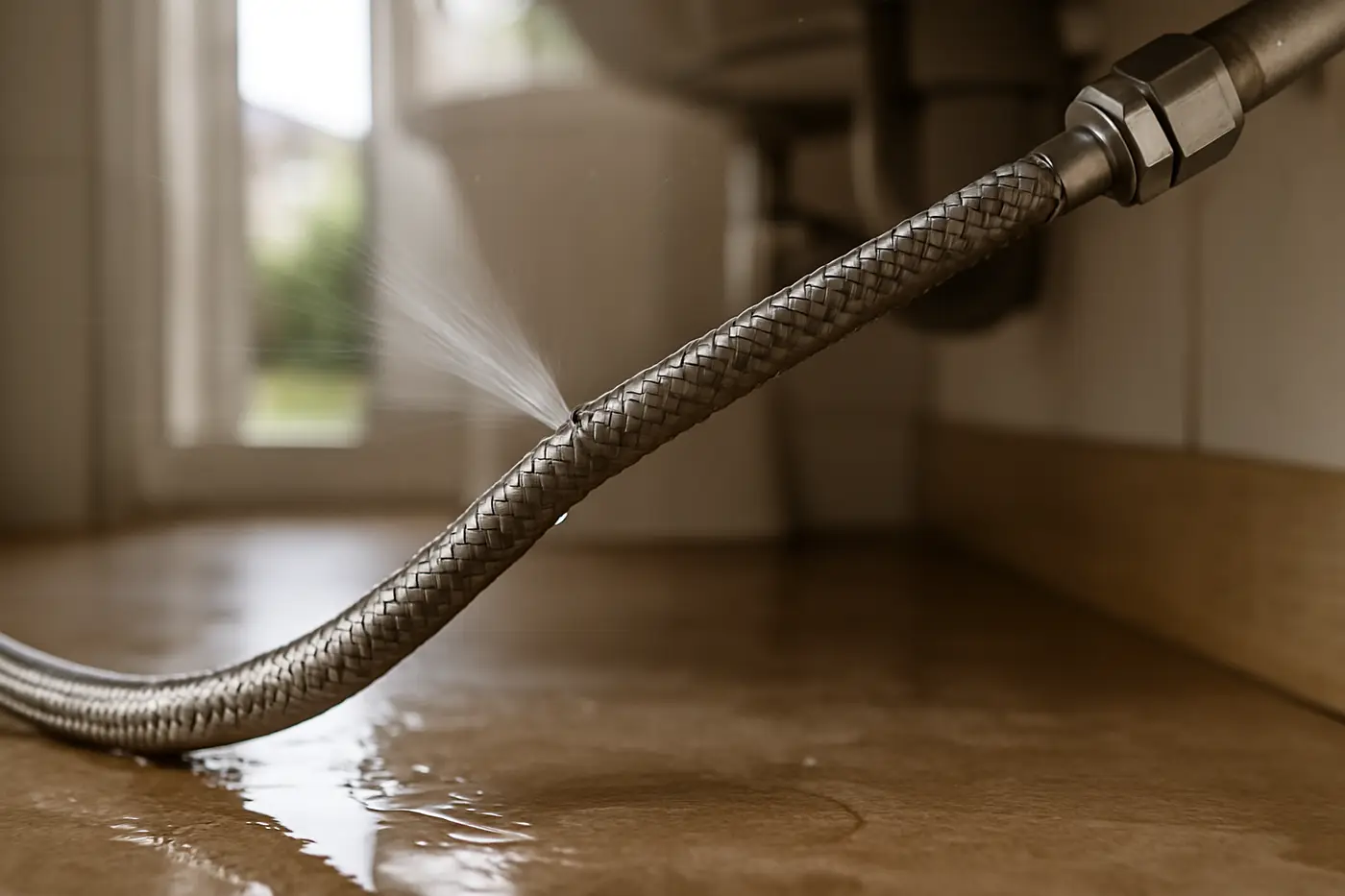
Burst flexi hoses. The braided hoses under sinks, toilets and behind dishwashers fail without warning and can release hundreds of litres an hour. They are the most common domestic water damage claim in Australia. Hot water system failures and washing machine hoses are next, followed by storm water through roofs and gutters between November and March.

Related services

Water rarely stays in one lane. These are the services most often scoped on the same job.

All services
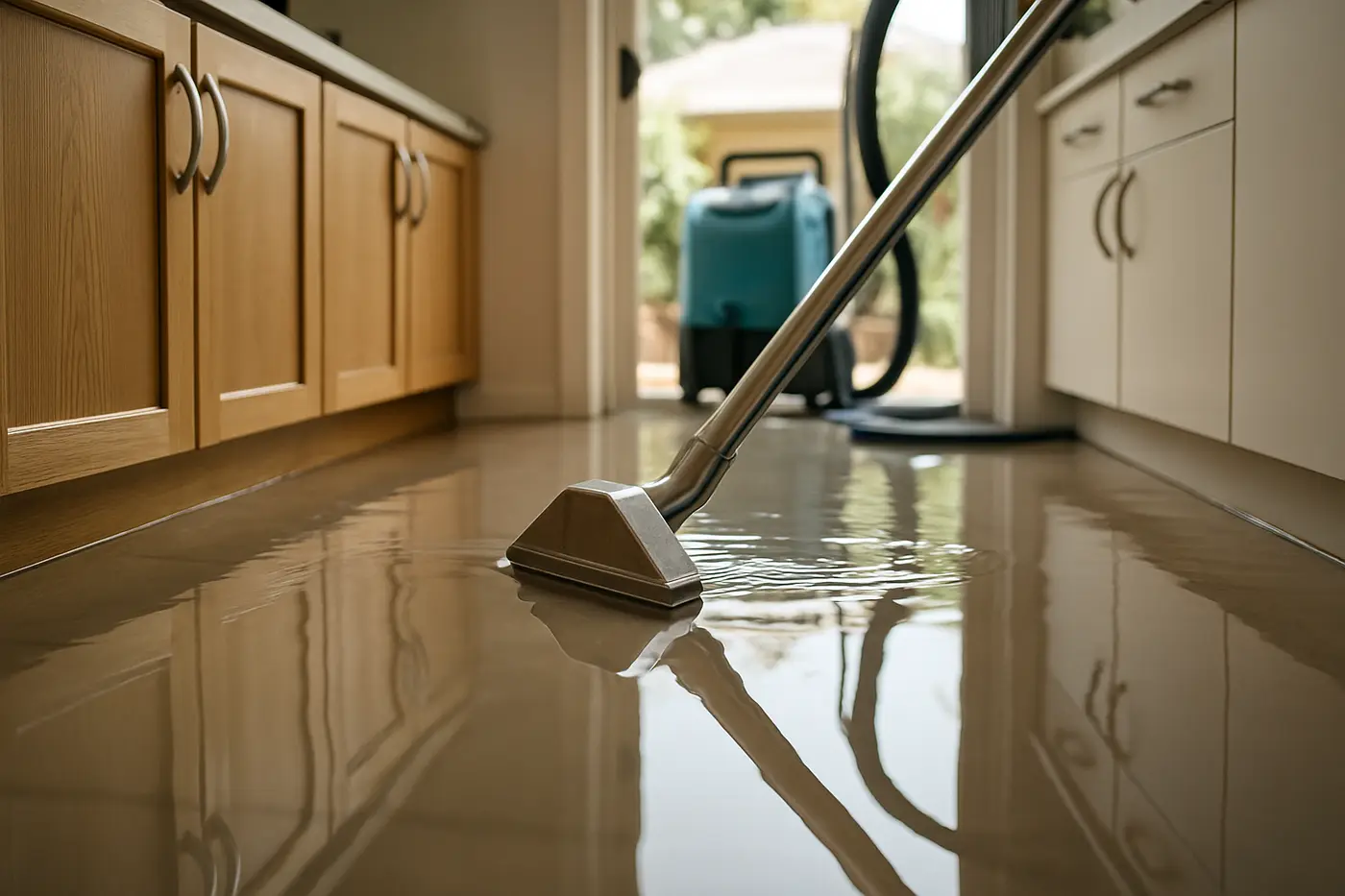
  • Extraction wand pulling standing water from a flooded floor
    01

    Water Extraction

    Professional water extraction and removal services in Brisbane, Ipswich and Logan. Truck-mount and portable extraction, weighted carpet tools and moisture mapping.

    Learn more
  • Air movers and a dehumidifier drying a water-damaged Brisbane living room
    02

    Water Damage Restoration

    IICRC S500 water damage restoration across Brisbane, Ipswich and Logan. Emergency extraction, moisture mapping, structural drying and insurance-ready reports.

    Learn more
  • Tarped roof and drying equipment inside a Brisbane home after a summer storm
    03

    Storm Damage Restoration

    Storm and rain damage restoration in Brisbane, Ipswich and Logan. Make-safe, water extraction after roof leaks and flash flooding, structural drying and claim reports.

    Learn more

Helpful reading

Guides that go withthis service.

Practical, Brisbane-specific reading for the first hour, the drying process, mould risk and insurance claims.

Emergency Water Damage · Brisbane, Ipswich & Logan

Let's take the next step toward drying your property.

Tell us what happened, where the water is and whether it is still active. A restoration coordinator will explain what to do next and what your insurer will need.