Skip to content

Emergency restoration · Brisbane, Ipswich & Logan

Flood Damage Restoration Brisbane

Creek, river and flash flood cleanup for Brisbane, Ipswich and Logan homes — Category 3 water removal, stripping of contaminated materials, structural drying and antimicrobial treatment, with documentation your insurer will accept.

  • 24/7 Response
  • IICRC S500
  • Insurance Reports
  • Fully Insured
  • Homes & Business

Request Flood Damage Restoration Help

Australian format - we'll call or text you back straight away.
Add brief description (optional)
How urgent?

Free on-site assessment and quote. Insurance-ready report. No obligation. Privacy.

What's included

Everything the job needs,scoped from the first visit.

Every flood damage restoration job in Brisbane, Ipswich and Logan includes the work below as standard. It is written into the scope before we start, so there are no surprise extras when the invoice arrives.

  • Pumping and extraction of flood water, silt and debris
  • Removal and disposal of contaminated carpet, underlay, gyprock and insulation
  • Pressure cleaning and antimicrobial treatment of slabs, framing and subfloors
  • Structural drying with air movers and LGR dehumidifiers, logged daily
  • Contents triage — what can be restored, what must go
  • Mould prevention treatment before the rebuild starts
  • Photo, moisture and disposal records for flood insurance claims
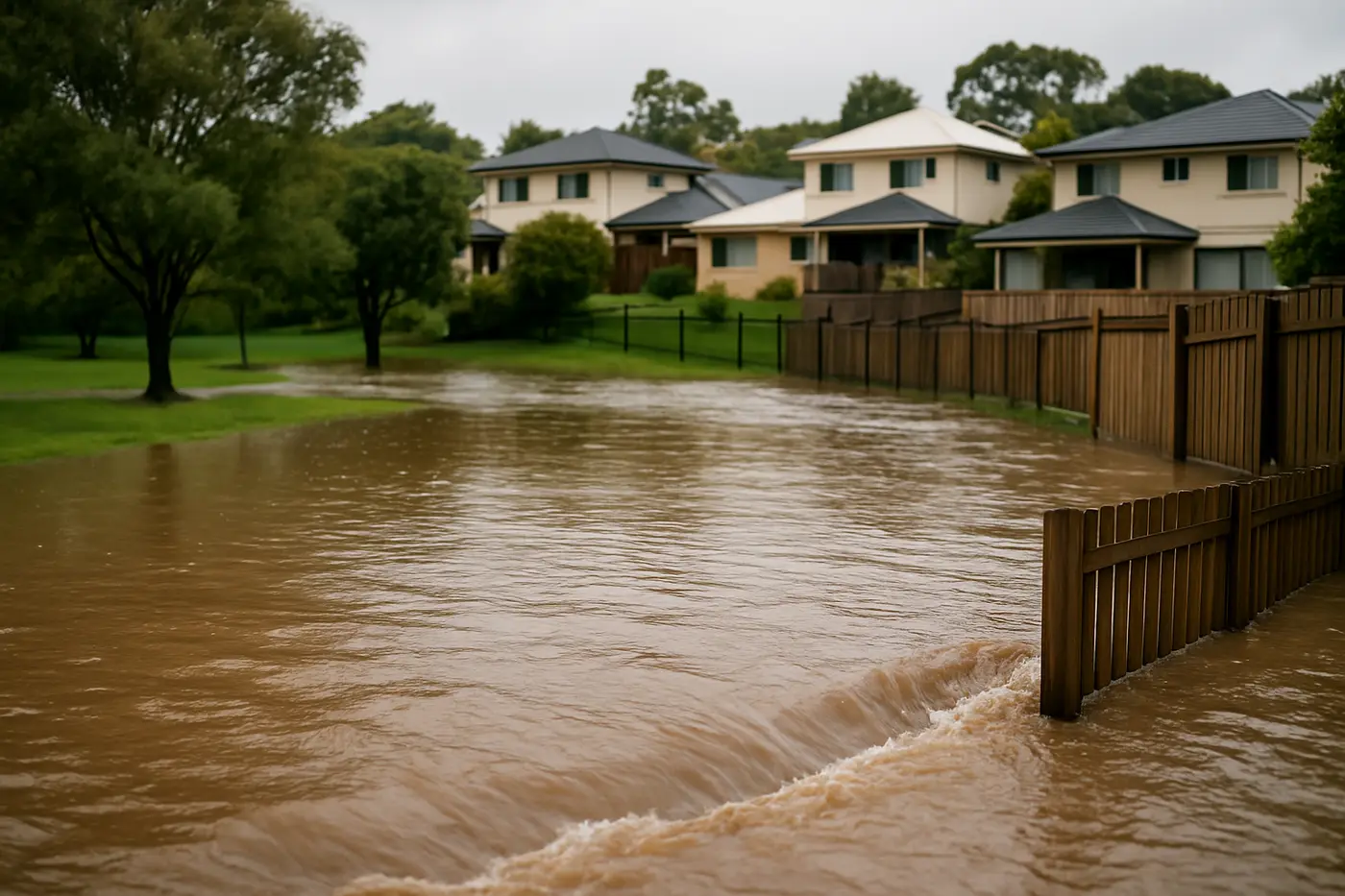
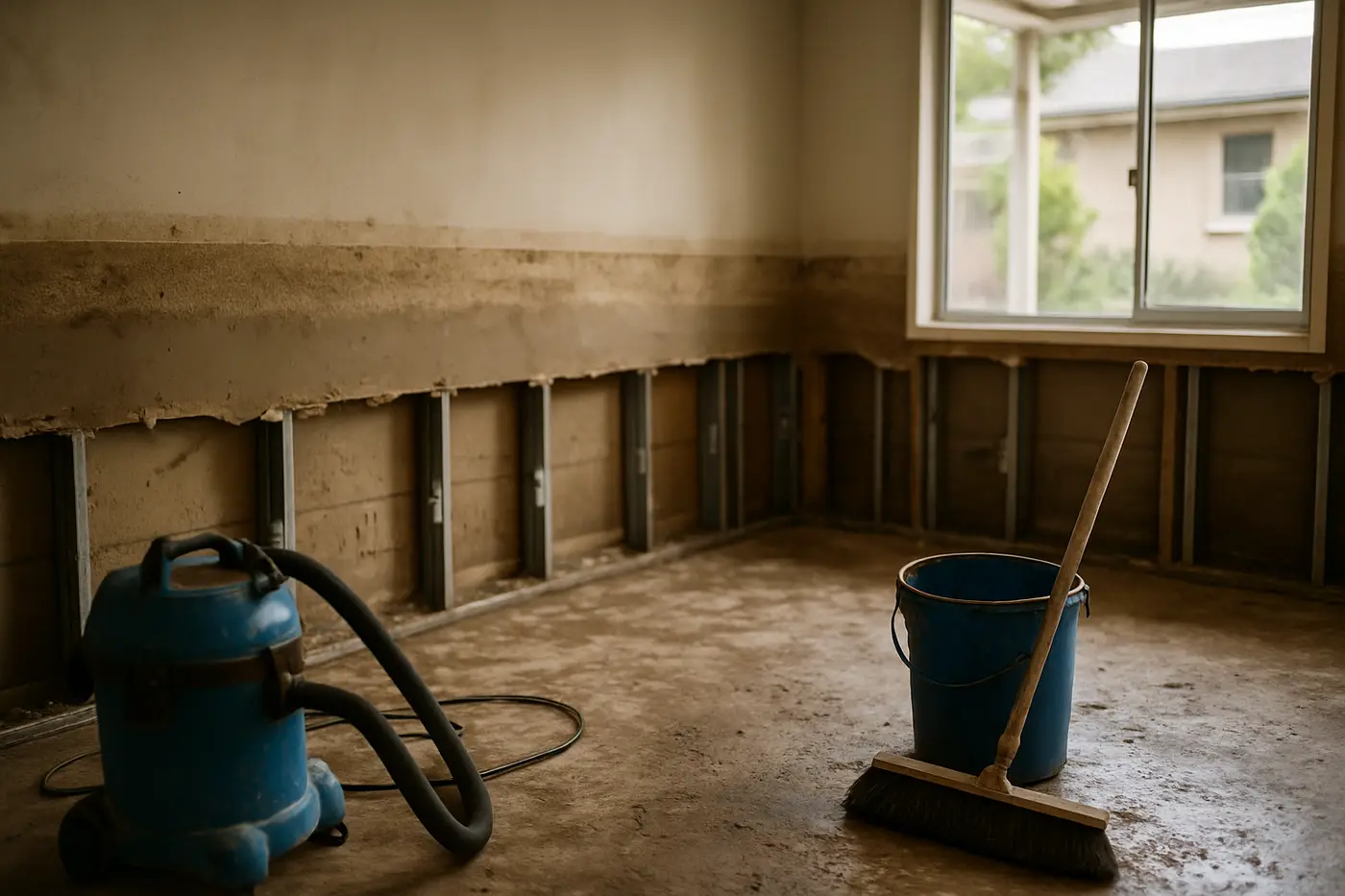
Flood line on the walls of a Brisbane home after creek flooding, cleanup in progress

Not sure it is urgent?

Send a few photos with the form. A coordinator will tell you whether it can wait until morning or needs a crew tonight.

When to call

Signs you needflood damage restoration.

Water moves sideways along bottom plates and under floor coverings, so the wet area is nearly always bigger than the stain you can see. Any of the following is worth a call the same day.

  • Creek or river water has entered the house or the subfloor
  • Stormwater has backed up through the yard and under the doors
  • A brown tide line on walls, cupboards or fences after the water dropped
  • Silt or mud left on floors, in wall cavities or across the slab
  • A sour, earthy smell that lingers after the mop-up
  • Carpet, cabinetry or gyprock that stayed wet for more than a day
  • Mould appearing on skirting or lower walls within a week of the event

Our process

How flood damage restorationruns, step by step.

From the first call to the final moisture reading, you will know what is happening, why, and what your insurer will need at each stage.

  1. Step 1: Make it safe, then make the call

    Wait for the water to recede and for power to be confirmed safe. Photograph the high-water mark before anything is touched, then contact us with the address and what floors were affected.

  2. Step 2: Pump out, strip out

    We remove remaining water and silt, then strip flood-affected porous materials — carpet, underlay, lower gyprock, wet insulation — and bag them for disposal. Everything removed is photographed and listed.

  3. Step 3: Clean, treat, dry

    Slabs, framing and subfloors are pressure cleaned and treated with an antimicrobial. Drying equipment is placed to the evaporation load and moisture readings are logged daily until dry standard is reached.

  4. Step 4: Clearance and rebuild

    You receive a drying certificate, moisture logs and disposal records. We can carry out the reinstatement or hand the scope to your insurer's builder.

Price guide · AUD, 2026

What flood damage restorationcosts in Brisbane.

Ranges from typical Brisbane, Ipswich and Logan jobs. The final quote is given on site after moisture mapping, in writing, before any work starts. Insurance direct billing where the insurer approves.

ItemTypical range
Emergency call-out and assessment Moisture mapping, category assessment and written scope$300–$600
Flood water extraction and pump-out Standard home; silt removal adds time$500–$2,000
Full restoration, black water (multiple rooms) Strip-out, sanitisation, drying and disposal; rebuild quoted separately$6,000–$15,000+
Structural drying equipment hire Flooded homes typically need 7–10 days of drying$80–$150 per unit per day
Contents pack-out and restoration Salvageable furniture cleaned and stored off site$1,000–$5,000
Mould remediation (if drying was delayed) Per contained area, to IICRC S520$1,500–$6,000

Ranges cover labour, equipment and disposal for 2026. The number you approve on the written quote is the number you pay; if the scope changes once walls are opened, we stop and re-quote in writing.

Full price guide

In depth

Flood Damage Restoration in Brisbane: how the job actually runs.

Brisbane has a long memory for floods. January 2011 and February 2022 put the same river suburbs underwater — West End, Toowong, Indooroopilly, Jindalee, Goodna, central Ipswich — and the creek catchments in between flood more often than the river does. In February 2022 some suburbs recorded around 700 mm of rain in three days, and Kedron Brook, Enoggera Creek and Bulimba Creek were in houses well before the river peaked. Flood damage restoration is what happens after the water leaves and before the rebuild begins, and it is the stage most people get wrong.

What flood damage restoration involves

Flood water is Category 3 under the IICRC S500 standard: grossly contaminated, the same classification as sewage. That single fact drives everything. Porous materials that have absorbed Category 3 water cannot be cleaned to a safe standard, so the job is not “dry the house” but “strip, clean, treat, dry, rebuild”.

Pump-out and extraction deals with what is left after the water recedes: pooled water in low rooms, the subfloor, and the silt that holds it.

Strip-out removes carpet and underlay, the lower section of gyprock, wet insulation, particleboard flooring and cabinetry that sat in the water, and any soft furnishings. Everything is photographed, listed and bagged for disposal — the list becomes part of the claim.

Cleaning and antimicrobial treatment follows. Slabs, timber framing, subfloor bearers and joists are pressure cleaned to remove silt and then treated. Silt is the enemy here: it hides contamination and moisture, and when it dries it becomes airborne.

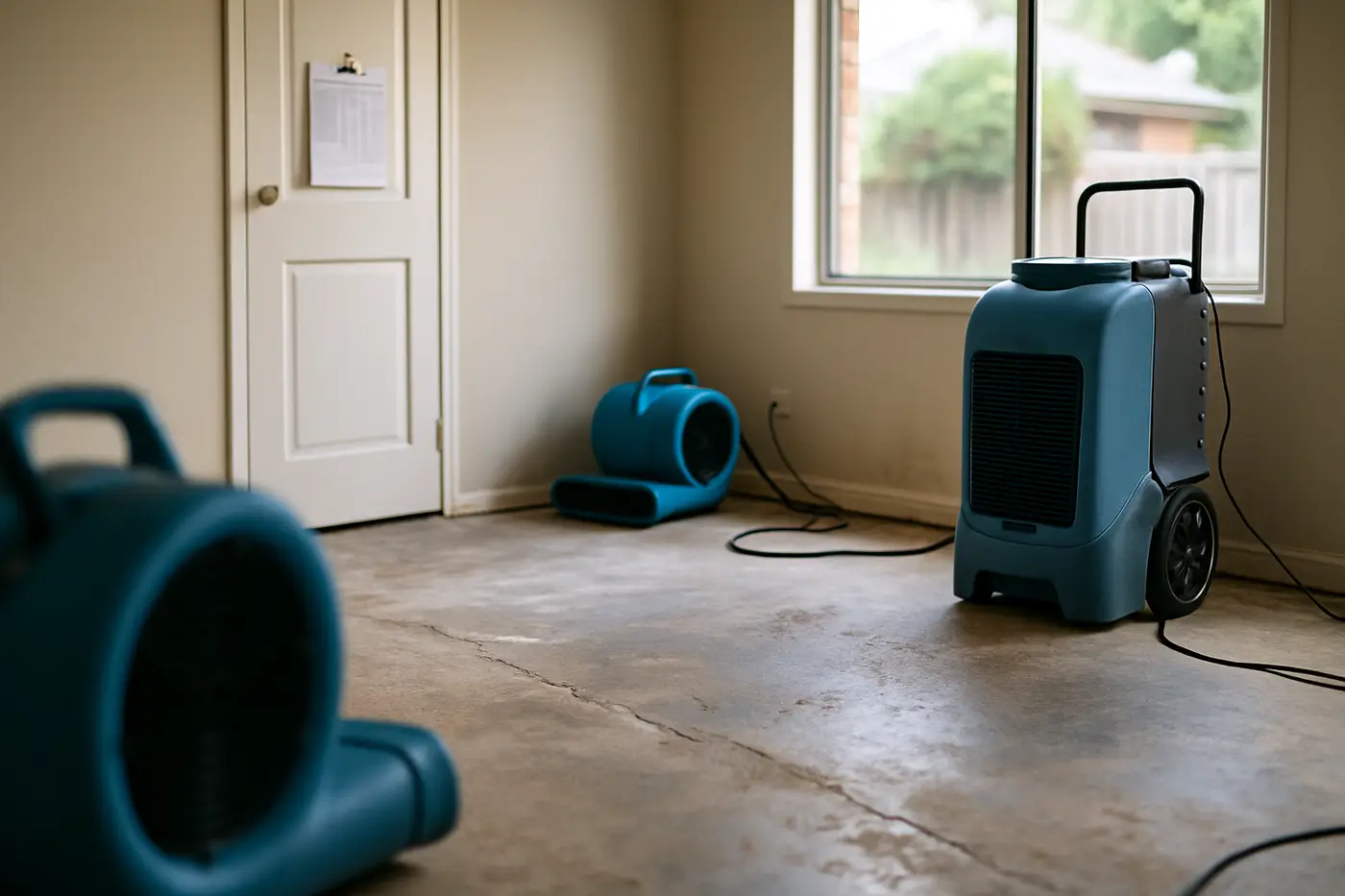
Structural drying then runs seven to ten days on a typical flooded home, with air movers and LGR dehumidifiers sized to the load and readings logged daily.

Rebuild starts only when moisture readings meet dry standard. Closing walls early over damp framing is the most expensive mistake in flood recovery.

Flood cleanup versus water damage cleanup

Burst pipe (Cat 1)Creek or river flood (Cat 3)
CarpetOften dried and keptAlways removed
GyprockDried in place if fastCut 300–600 mm above tide line
Timber framingDriedCleaned, treated, dried
ContentsMostly keptPorous items disposed of
Typical drying3–5 days7–10 days
Typical cost$2,000–$6,000$6,000–$15,000+

The first hours after the water drops

  1. Do not go back in until it is safe. Flood water hides open drains, debris and displaced snakes. Power must be confirmed off at the meter, and if water rose above the power points an electrician has to clear the house before it is re-energised.
  2. Photograph the tide line on walls, fences and cupboards, and the outside of the house showing where the water came from. The path of the water is what decides flood versus storm on your claim.
  3. Open the house up. Doors, windows, under-house access. Airflow starts drying and slows mould.
  4. Move what is salvageable to a dry area. Hardwood furniture, sealed containers and metal items usually survive. Mattresses, upholstered lounges and particleboard do not.
  5. Wear gloves, boots and a P2 mask for anything you handle.
  6. Contact us and your insurer the same day. Mitigation costs are generally covered when documented, and the documentation starts with those first photos.

Insurance and the flood definition

Since the Insurance Council of Australia adopted a standard definition in 2012, “flood” means water escaping the normal confines of a river, creek, lake, dam or stormwater channel. Everything else — rain through a damaged roof, run-off crossing your block — is storm, and storm is covered on almost every policy. Flood cover is optional on many Brisbane policies and often carries a higher excess or is excluded on properties with a flood history.

Where a claim gets contested is the path of the water. If Norman Creek came up through the stormwater drain and across your yard, is that flood or stormwater run-off? Our reports record the source, the entry point and the tide line, and we log every moisture reading and every item removed. That record is what the assessor works from, and it is what protects you if the first decision is wrong.

Brisbane, Ipswich and Logan: flood corridors and housing

River suburbs. West End, New Farm, Toowong and Indooroopilly mix raised Queenslanders with post-war brick and modern apartments. The Queenslanders generally fare best — hardwood floors and VJ boards clean and dry — while ground-floor apartments and enclosed under-house rooms take the worst of it.

Creek catchments. Kedron Brook and Cabbage Tree Creek on the northside, Bulimba and Norman Creeks on the southside, Moggill and Enoggera Creeks in the west. Creek floods rise and fall in hours, so the water is in the house for less time, but it carries more silt and debris and it often arrives with a storm that has also damaged the roof.

Ipswich and the Bremer. Central Ipswich and Goodna have a mix of Queenslanders and 1960s–80s brick homes on slab. The Bremer peaks later than the Brisbane rain, which catches people out. Springfield Lakes and Redbank Plains are newer estates where the risk is flash flooding and stormwater surcharge rather than the river, and particleboard floors on low-set slabs swell fast.

Logan. Beenleigh and Shailer Park sit on the Logan and Albert Rivers; Logan Central and Springwood drain to Slacks and Scrubby Creeks. Brick-and-tile homes on slab dominate, which means slow drying under tiles and wet bottom plates behind the gyprock.

Why the drying takes as long as it does

A flooded slab home is Class 4 drying under S500 — the materials are holding a lot of water and releasing it slowly. Concrete can hold water for weeks. Timber framing that reached 30 per cent moisture content has to come down below 18 per cent before it is safe to close in, and in Brisbane’s 70 to 80 per cent summer humidity that does not happen with open windows alone. Air movers keep the surface evaporating, LGR dehumidifiers pull the moisture out of the room air, and we read the framing with pin meters every day until the numbers are right.

What flood damage restoration costs

A flooded home with multiple rooms affected by Category 3 water typically costs $6,000 to $15,000 or more to strip, clean, treat and dry, before any rebuild. The drivers are the floor area affected, how high the water rose, how long the house sat wet before work started, the housing type (tile over slab is slowest), and how much contents work is involved. Call-out and assessment is $300 to $600.

After a major event, restoration crews across South East Queensland are stretched, and the homes that get attention first are the ones that have already been made safe, opened up and documented. Do those things today and get in touch — we cover Brisbane, Ipswich and Logan.

Last updated 08 September 2026
Common questions

Flood Damage Restoration, explained.

Straight answers about response times, water categories, drying timelines and what your insurer will expect for flood damage restoration in Brisbane.

All questions
What is the difference between flood damage and storm damage for insurance?

Since 2012 Australian insurers use one standard flood definition: water escaping from the normal confines of a river, creek, lake, dam or stormwater channel. Rain coming through the roof, or run-off flowing across your yard before it reaches a waterway, is storm damage and is covered by almost every home policy. Rising creek or river water is flood, and is only covered if you hold flood cover. Our report records the source and path of the water, which is what the assessor uses to decide the claim.

Can flood-damaged carpet be saved?

No. Carpet and underlay that have been in Category 3 water are removed and disposed of under the IICRC S500 standard, regardless of how new they are. The contamination cannot be reliably washed out of the backing and underlay, and the health risk is not worth it. The same applies to mattresses, upholstered furniture and particleboard cabinetry that sat in flood water.

How high do you cut the walls?

Gyprock is cut a minimum of 300 mm above the tide line, and more often 600 mm or to the next sheet joint, because water wicks up through the paper facing well above the visible mark. Insulation behind it is removed to the same height or higher if it is wet. Timber framing is kept, cleaned and treated unless it is rotten.

How long does a flooded house take to dry?

Usually seven to ten days once the strip-out is done, longer for double brick or for slabs under tile. Homes that sat closed up for a week before work started take longer because mould has already colonised the framing and has to be dealt with first. Every day of delay in the first week after a flood adds cost.

Do you deal with the silt and mud?

Yes. Silt is the part people underestimate: it holds contamination, it holds water, and once it dries it becomes airborne dust. We remove it from slabs, wall cavities and subfloors, pressure clean the surfaces and treat them before drying equipment goes in.

Which Brisbane suburbs are most exposed to flooding?

The Brisbane River corridor — West End, New Farm, Toowong, Indooroopilly, Jindalee, Goodna and central Ipswich — flooded in both January 2011 and February 2022. Creek catchments such as Enoggera Creek, Kedron Brook, Bulimba Creek, Norman Creek and Oxley Creek flood more often but more briefly. Logan and Beenleigh sit on the Logan and Albert Rivers. A Brisbane City Council FloodWise Property Report or Ipswich City Council flood map shows your property's exposure.

Should I start cleaning before you arrive?

Removing standing water and opening doors and windows for airflow is helpful once it is safe to enter. Photograph the high-water mark and the damage first. Leave the strip-out to us unless you have the protective gear, because disturbing contaminated gyprock and silt without a mask is a health risk, and an assessor needs to see what was removed and why.

Can you restore a flooded Queenslander?

Often, and better than most housing types. Hardwood floors and VJ walls are solid timber, which cleans and dries far better than gyprock and particleboard. The subfloor is open to airflow. The risks are enclosed under-house rooms, which flood first and dry last, and older electrical work in the subfloor.

Related services

Water rarely stays in one lane. These are the services most often scoped on the same job.

All services
  • Air movers and a dehumidifier drying a water-damaged Brisbane living room
    01

    Water Damage Restoration

    IICRC S500 water damage restoration across Brisbane, Ipswich and Logan. Emergency extraction, moisture mapping, structural drying and insurance-ready reports.

    Learn more
  • Tarped roof and drying equipment inside a Brisbane home after a summer storm
    02

    Storm Damage Restoration

    Storm and rain damage restoration in Brisbane, Ipswich and Logan. Make-safe, water extraction after roof leaks and flash flooding, structural drying and claim reports.

    Learn more
  • Technician in full PPE removing contaminated materials after a sewage backflow
    03

    Sewage Cleanup

    Sewage damage repairs and cleanup across Brisbane, Ipswich and Logan. Category 3 black water removal, contaminated material disposal, sanitisation and drying.

    Learn more

Helpful reading

Guides that go withthis service.

Practical, Brisbane-specific reading for the first hour, the drying process, mould risk and insurance claims.

Flood Damage Restoration · Brisbane, Ipswich & Logan

Let's take the next step toward drying your property.

Tell us what happened, where the water is and whether it is still active. A restoration coordinator will explain what to do next and what your insurer will need.