In depth
Flooded Carpet Drying in Brisbane: how the job actually runs.
Flooded carpets are the most common water damage call we get in Brisbane, and the one where fast action changes the outcome most. A carpet extracted and drying within a few hours of a burst flexi hose is usually back down and clean by the end of the week. The same carpet left squelching under a towel for three days in January is a replacement job, and often a mould job as well.
What flooded carpet drying involves
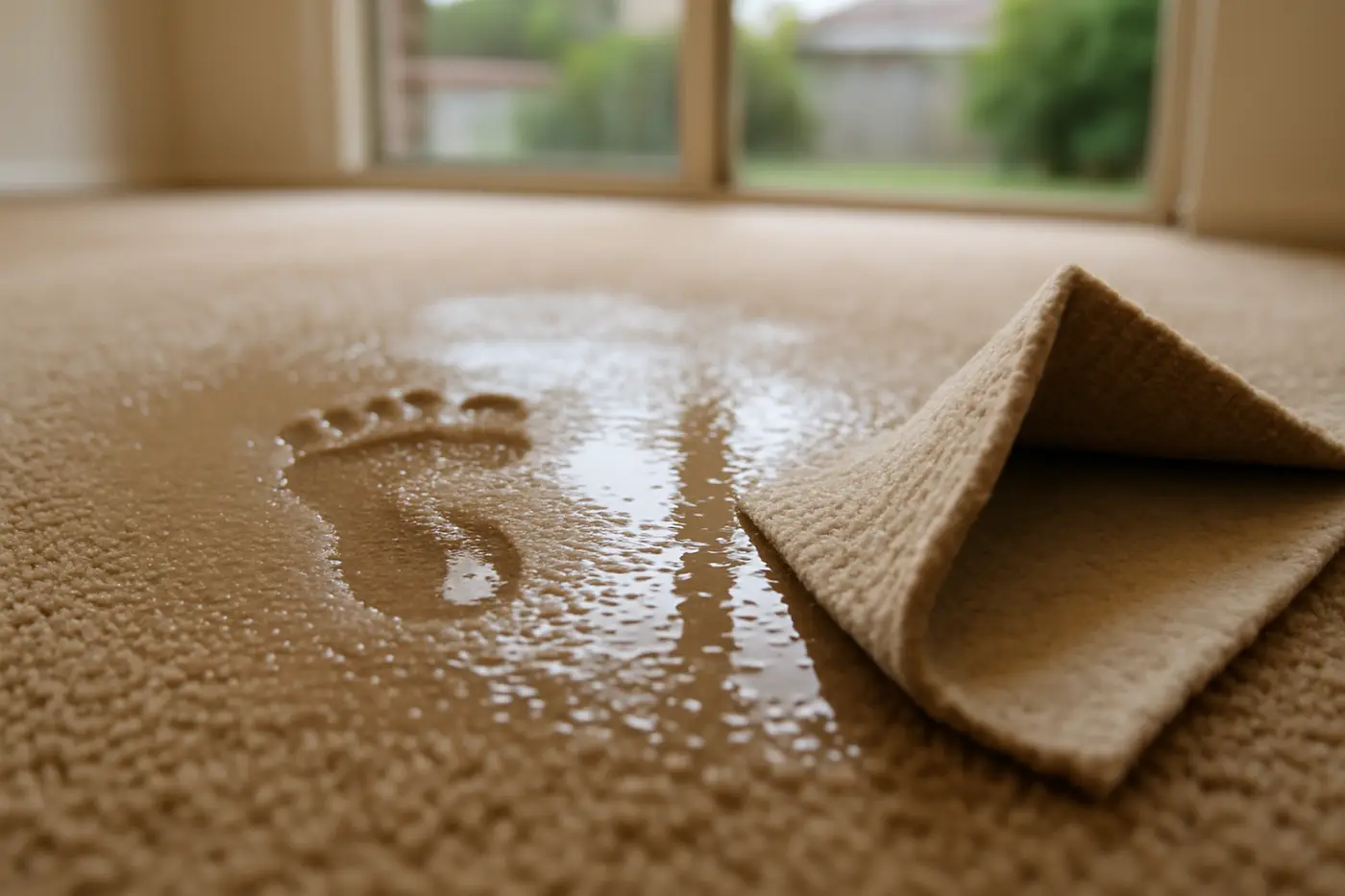
Carpet is three layers — pile, backing and underlay — sitting on a slab or a timber floor. Water goes straight through the pile, sits in the backing and soaks into the underlay, which holds several times its own weight in water. Drying the pile alone does nothing.
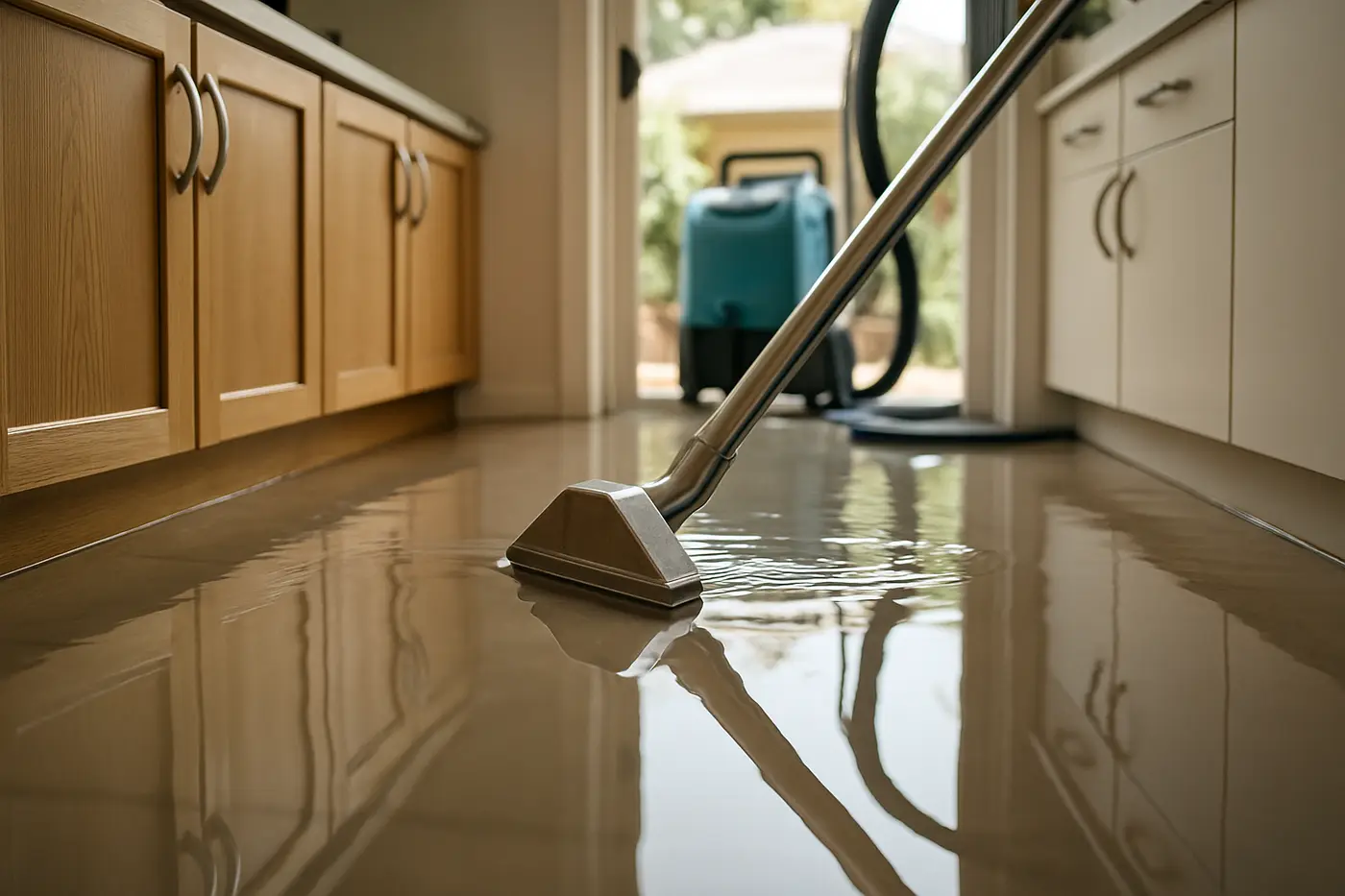
Extraction uses weighted tools that compress the carpet and underlay against the floor while the vacuum runs, pulling water from all three layers and the surface beneath. Done properly, extraction removes most of the water before a single dehumidifier is switched on.
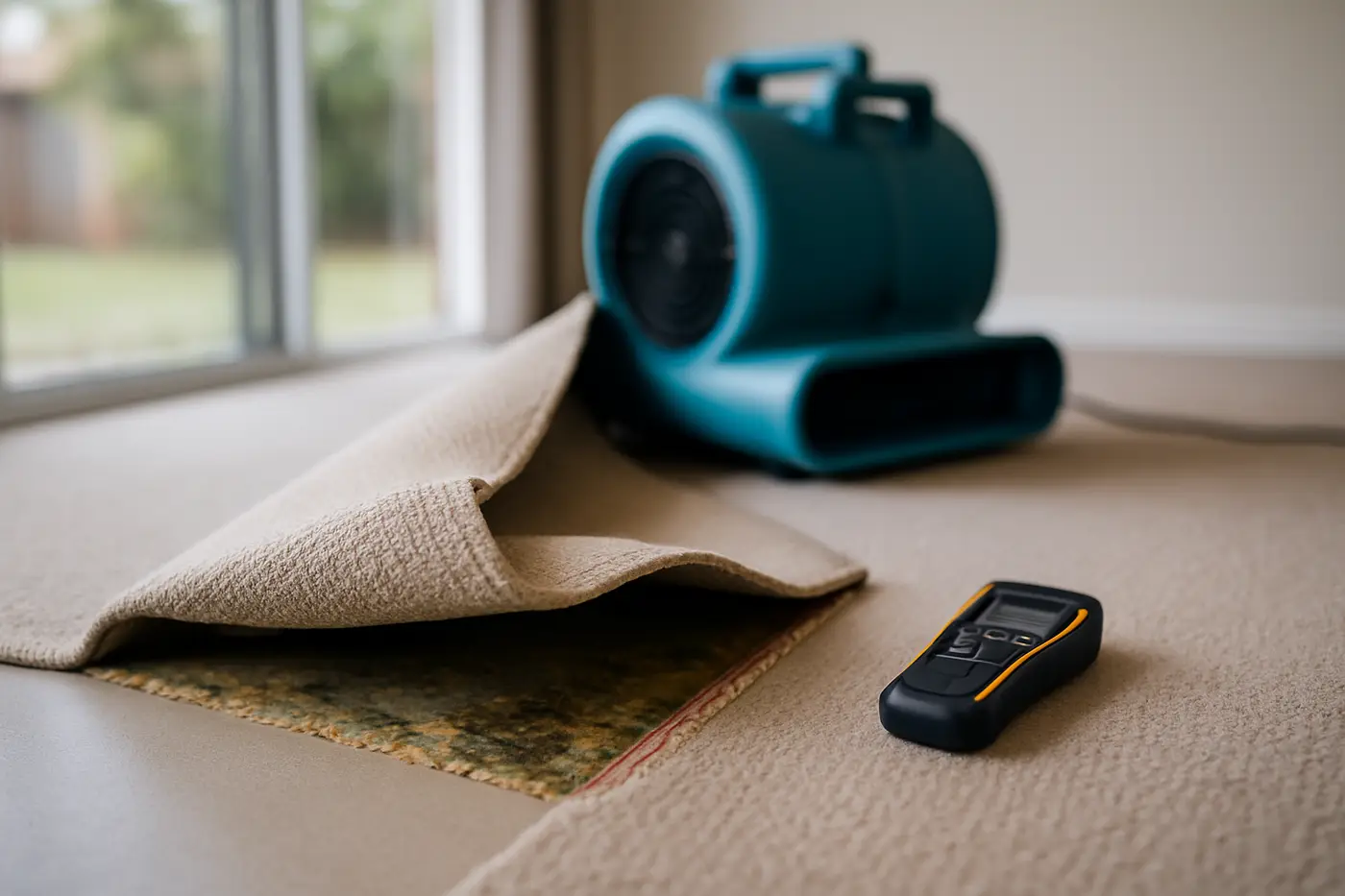
Assessment follows. We meter the carpet, underlay and subfloor, check whether the backing is delaminating, and confirm the water category. Category 1 (clean) carpet under 48 hours old is saved. Category 2 (grey water from a washing machine or dishwasher) is a judgement call with antimicrobial treatment. Category 3 (sewage, creek, stormwater) is removed under the IICRC S500 standard without exception.
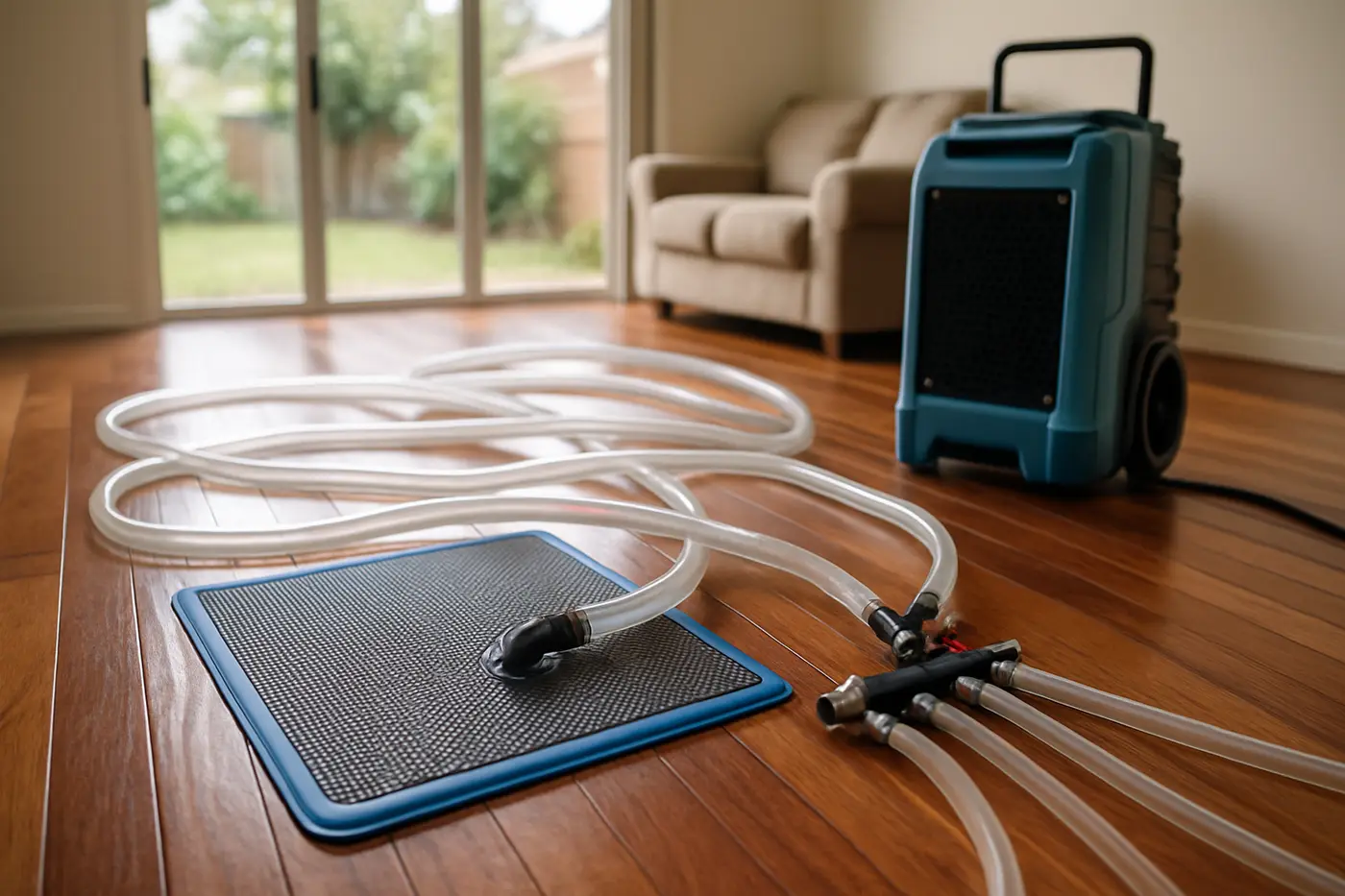
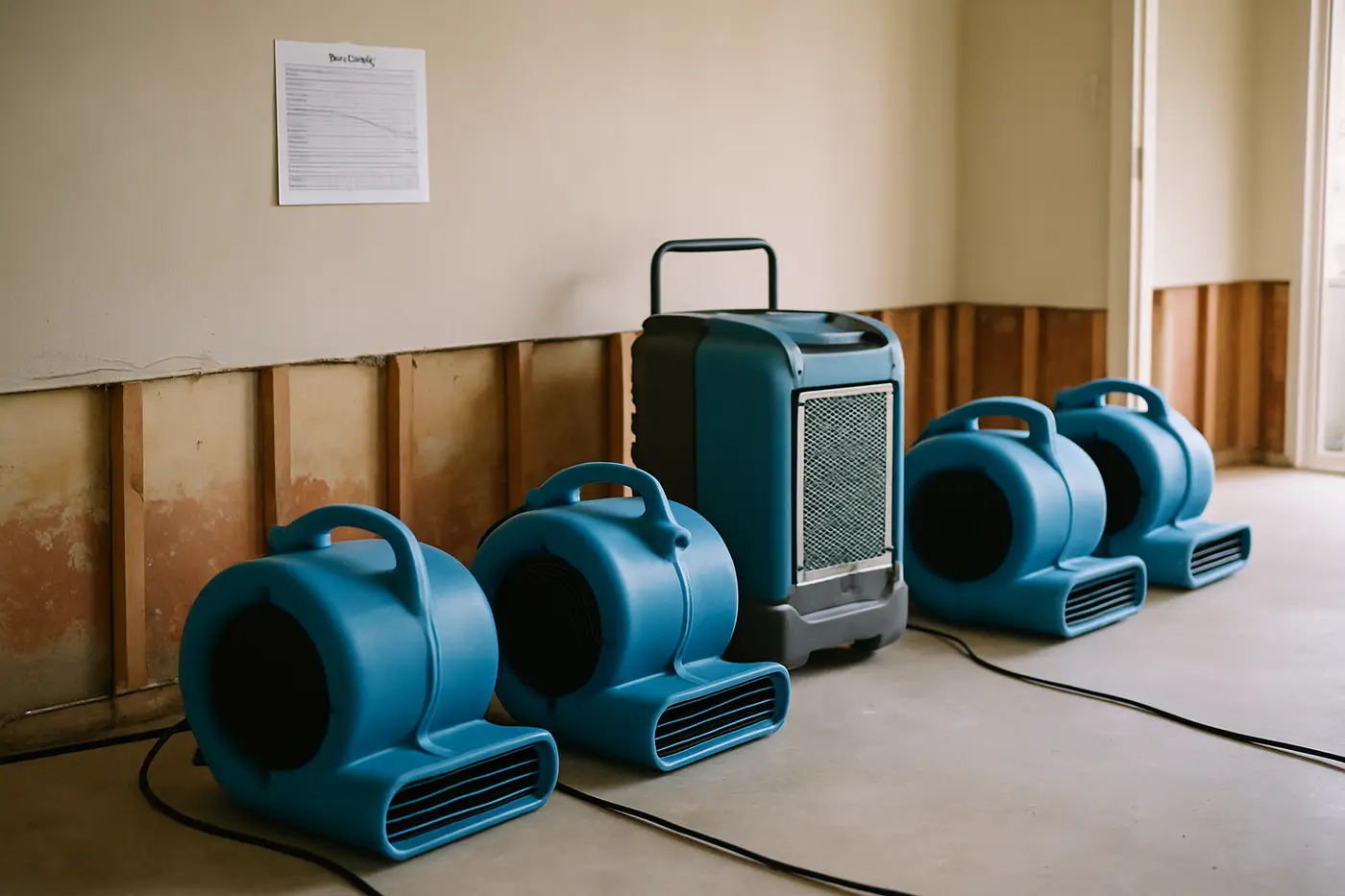
Drying is either float drying — the carpet is lifted along one edge and an air mover inflates it so backing and subfloor dry at once — or a full lift, with the underlay removed and the carpet rolled back. An LGR dehumidifier controls the room so the moisture leaving the carpet does not just sit in the air.
Re-lay and clean finishes the job: new underlay if needed, re-stretch, hot water extraction clean and antimicrobial treatment.
Save or replace: the honest comparison
| Situation | Our usual call |
|---|---|
| Clean water, under 48 hours, backing intact | Dry and keep |
| Clean water, 2–4 days, closed room | Often replace — mould in backing |
| Grey water (appliance discharge) | Dry with antimicrobial, case by case |
| Black water (sewage, creek, stormwater) | Remove and dispose |
| Any water, carpet already delaminating | Replace |
| Wet carpet over timber floor | Lift carpet, save the floor first |
Replacement carpet in a standard bedroom is not expensive. If drying would cost more than the carpet is worth, we will say so at the assessment.
Why drying carpet takes days, not hours
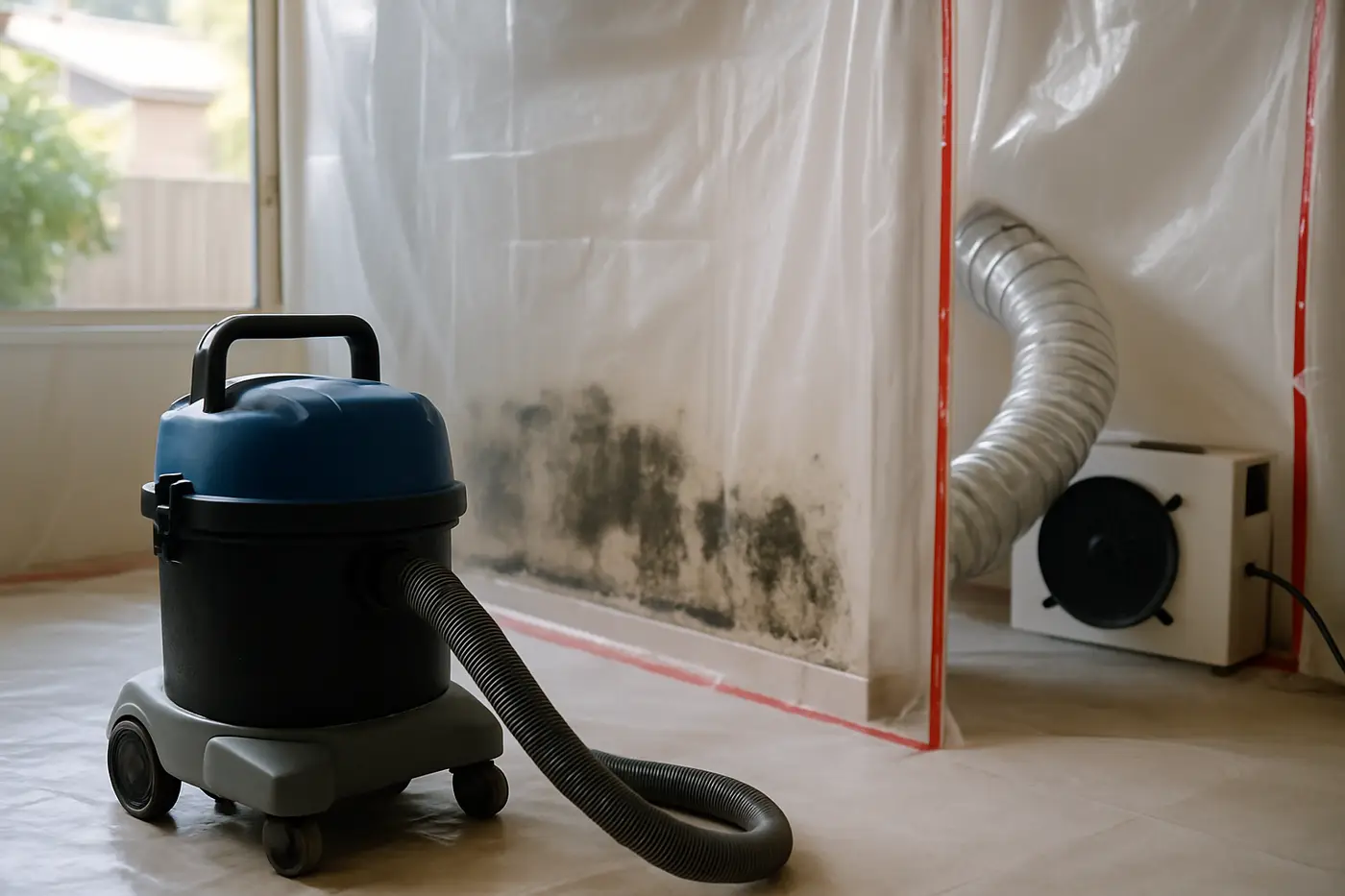
In a Brisbane summer the room air is already at 70 to 80 per cent relative humidity. Water evaporating from the carpet has nowhere to go, so the carpet stays damp and the humidity feeds mould on the walls above it. The fix is a closed drying chamber: air movers keep air moving across and under the carpet to drive evaporation, while an LGR dehumidifier pulls 30 to 60 litres a day back out of the air. We log the carpet, underlay and subfloor readings each day and pull the gear once everything is at dry standard — typically two to four days.
The subfloor matters as much as the carpet. A slab that reads wet under a dry carpet will wick moisture back up within a week. A timber floor left damp under carpet cups, then rots. We dry the floor, not just what sits on it.
The first hour with wet carpet
- Turn off the water at the isolator or mains.
- Cut power to the room if water is anywhere near power points.
- Move furniture out or put foil or plastic under the legs — timber and metal legs leave permanent stains in hours.
- Pull rugs and anything cardboard off the carpet.
- Do not use a domestic vacuum, and do not turn on the ceiling fan if the water may be contaminated.
- Send us photos with the cause and the time it happened.
Brisbane, Ipswich and Logan carpet jobs
Brick-and-tile homes on slab across Chermside, Aspley, Carindale, Sunnybank and Springwood are the classic carpet-on-slab job. Float drying works well, and the slab dries in place.
Kenmore, The Gap and Indooroopilly have more split-level and timber-floored homes where carpet sits over hardwood or particleboard. Here the carpet comes up quickly so the floor can be saved.
Springfield Lakes and Redbank Plains estates use particleboard sheet flooring under carpet in bedrooms. Particleboard that swells cannot be dried back, so early extraction is the difference between saving the floor and replacing it.
Queenslanders in Paddington, New Farm and Ipswich often have carpet laid directly over hardwood. The timber survives if we get in early; the carpet is secondary.
Common causes across all of them: burst flexi hoses, hot water systems, washing machine hoses, and storm water overflowing internal gutters and running down inside the wall to the carpet edge.
Insurance and documentation
Sudden escape of liquid is covered on most Queensland home policies, and that includes the carpet, underlay and the drying. Assessors want to see the cause (keep the failed hose), photos before the carpet was lifted, and moisture readings that show the drying was necessary and finished. We provide all of it. Where the carpet is replaced, our report states why — category, time wet, delamination — so there is no argument about whether drying was attempted.
What carpet drying costs
Carpet drying and restoration runs $250 to $600 per room, covering extraction, drying, antimicrobial treatment and re-stretch. Underlay replacement is extra and depends on the area. Where several rooms or the slab are wet, a whole-home extraction is $500 to $2,000 and equipment hire runs $80 to $150 per unit per day. Call-out and assessment is $300 to $600 and comes off the bill if you proceed.
If your carpet is wet right now, the best thing you can do is extract early. Call us and we will tell you what to do while we are on our way to Brisbane, Ipswich or Logan.
Last updated 15 September 2026