In depth
Mould Remediation in Brisbane: how the job actually runs.
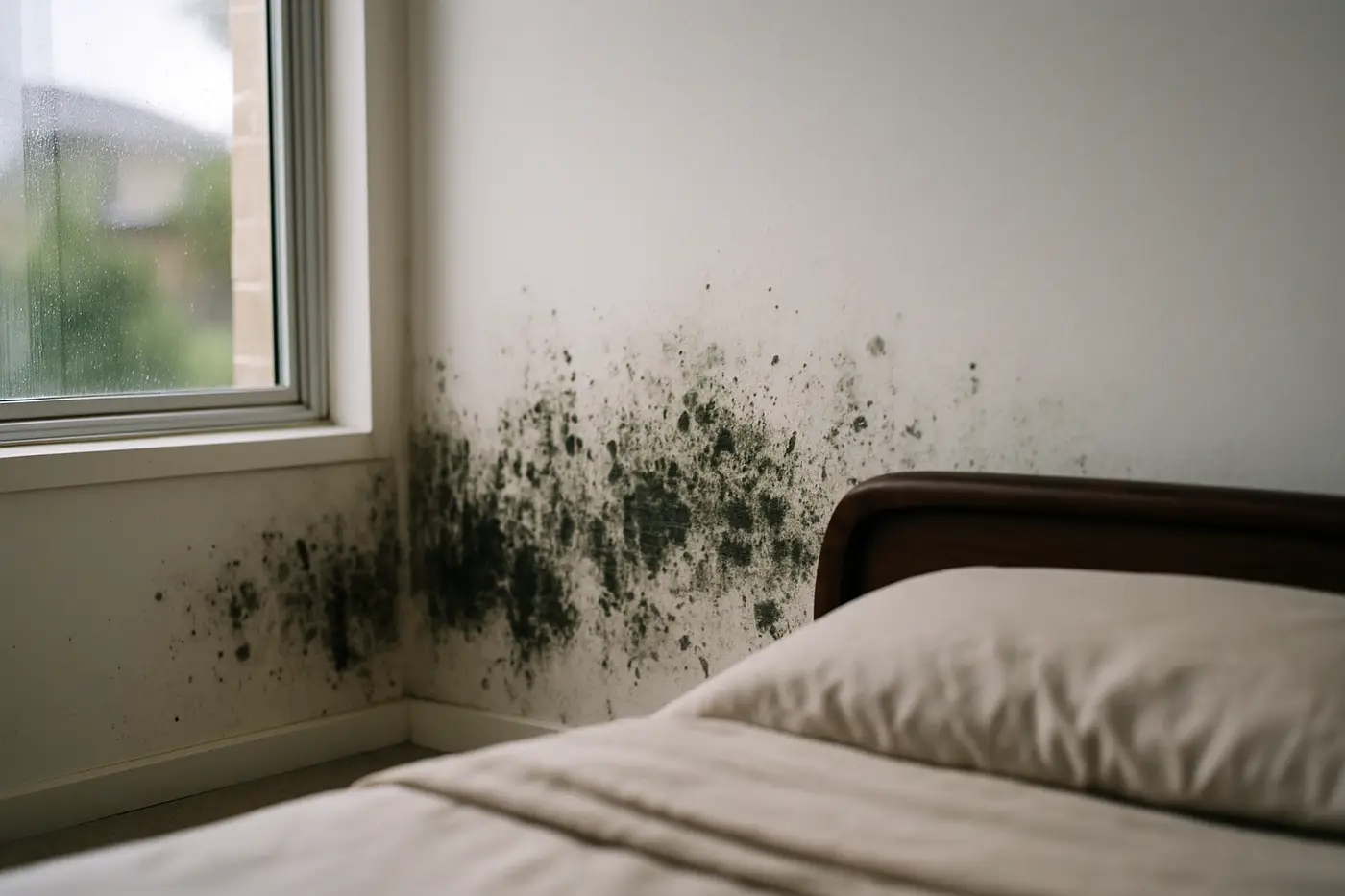
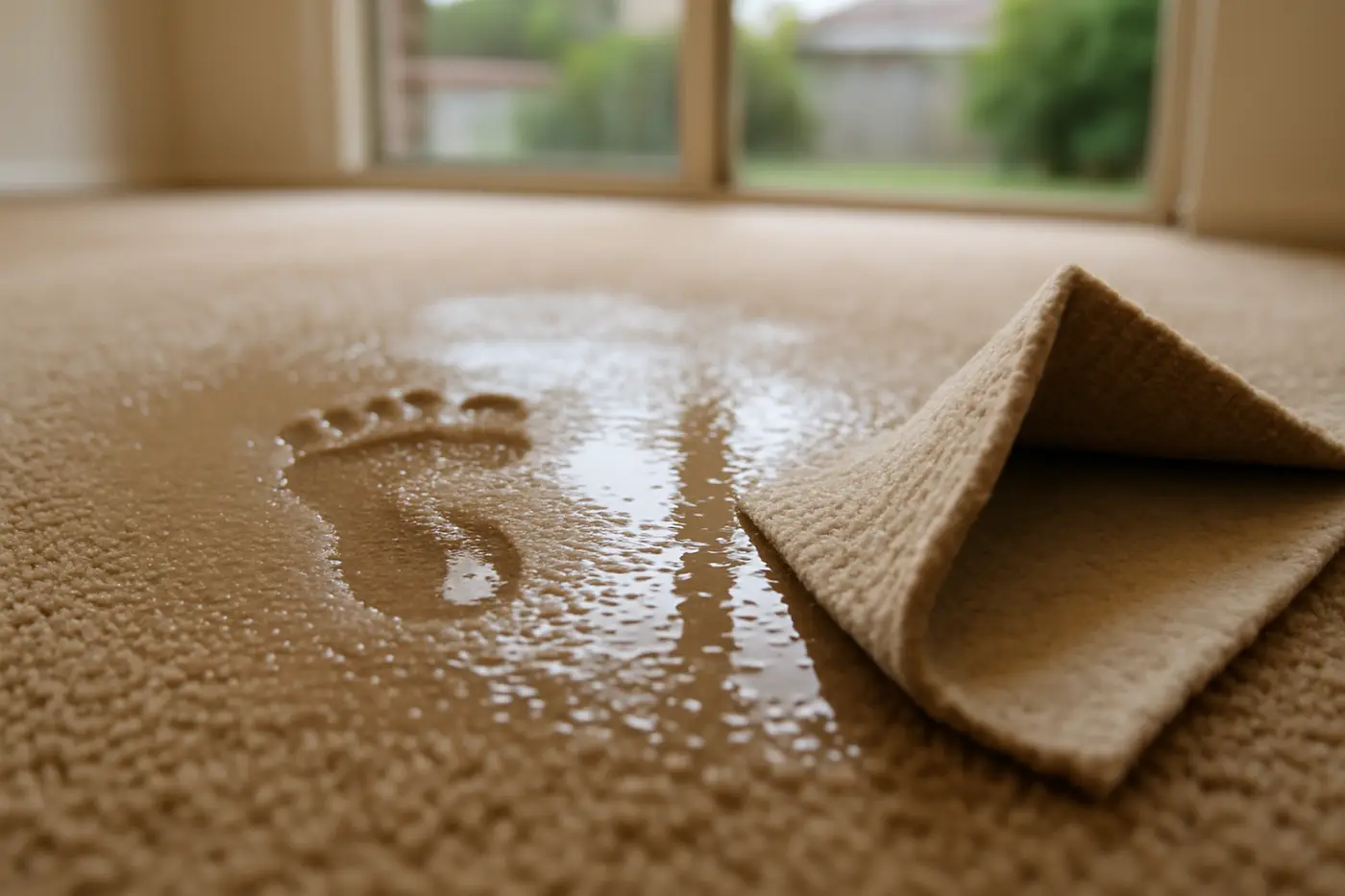
Mould is the second half of almost every water damage story in Brisbane. A leak dried with a fan and a towel, a flood cleaned up but never properly dried, a ceiling stain painted over — a few weeks later there are black spots on the skirting and a smell that will not leave. Mould remediation is not cleaning. It is finding the water, removing what has been colonised, and getting the building dry enough that it cannot grow back.
What mould remediation involves
The IICRC S520 standard sets out the approach, and it starts with a question rather than a scrubbing brush.
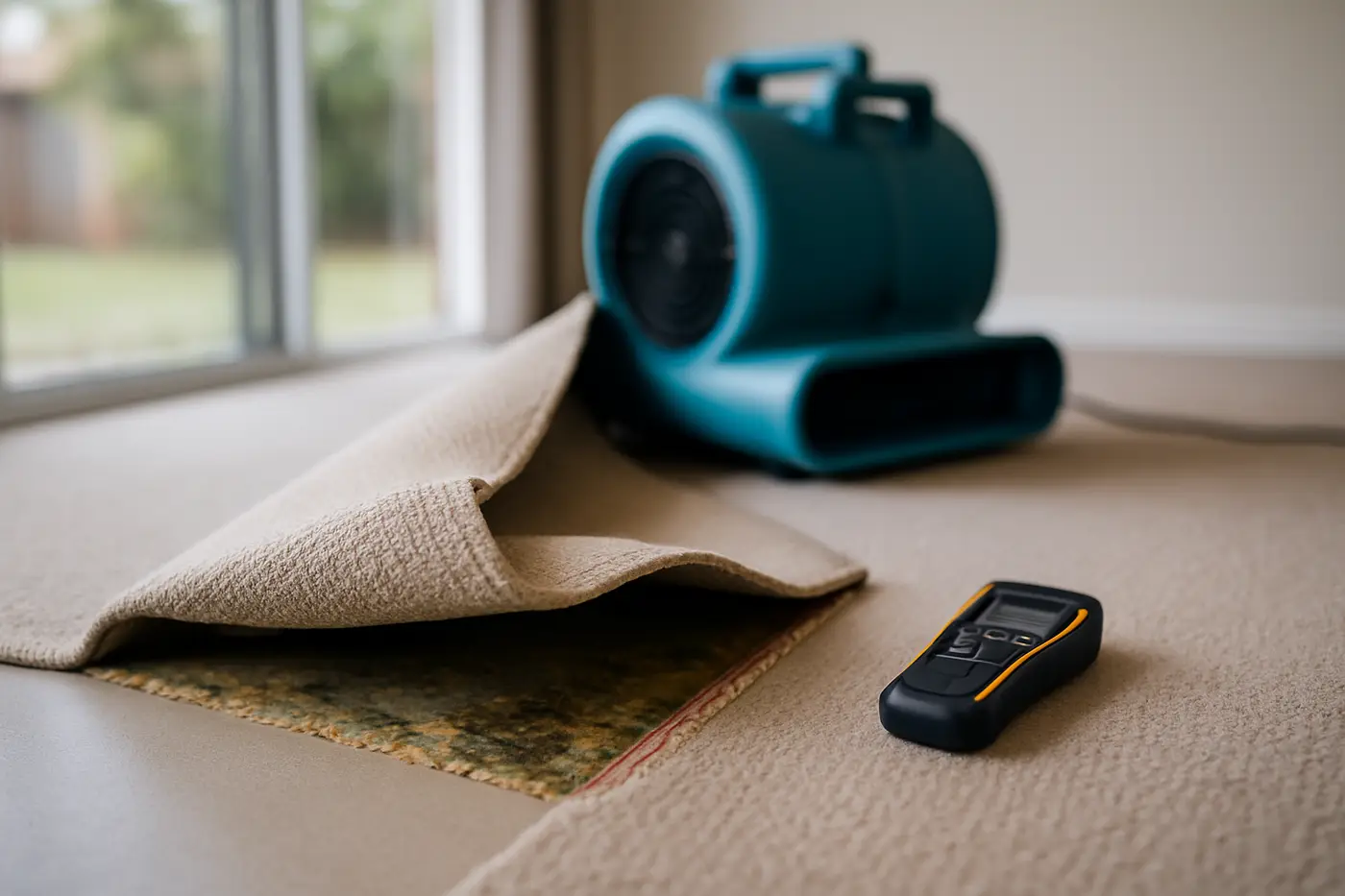
Where is the water coming from? Mould is a symptom. Every job begins with a moisture investigation: pin and non-invasive meters on walls, floors and ceilings, a thermal camera for hidden wet areas, and a look at the plumbing, the roof, the stormwater and the ventilation. A leaking shower recess, a slow flexi hose, a blocked air-conditioner condensate line and a wet subfloor all look the same from the wall side.
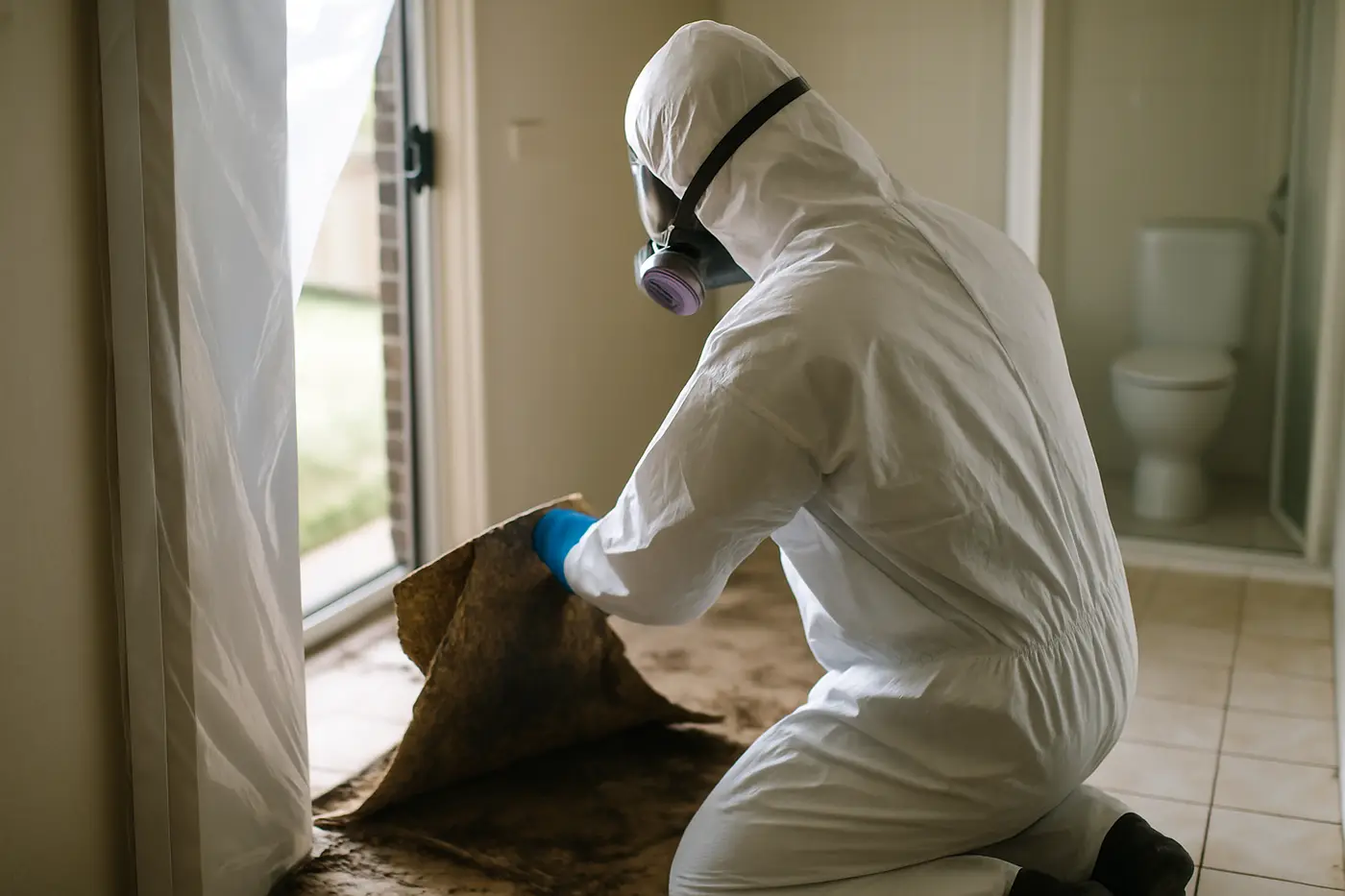
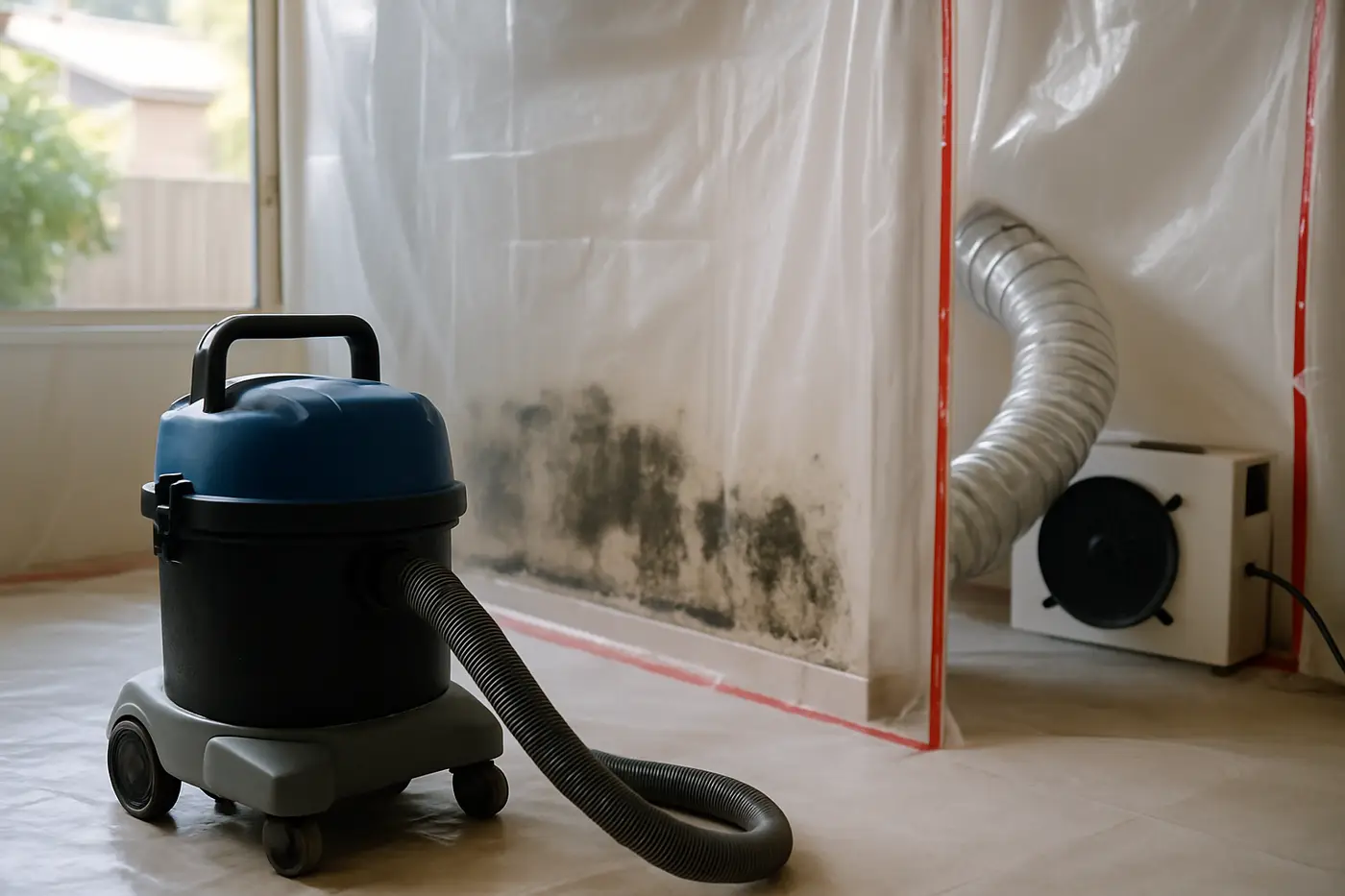
Containment. The affected area is sealed with plastic sheeting and put under negative pressure with a HEPA air scrubber. Disturbing established mould releases enormous numbers of spores; containment keeps them out of the rest of the house and the filter takes them out of the air.
Removal. Porous materials with established growth — gyprock, insulation, carpet and underlay, particleboard, MDF skirting — are cut out and bagged inside the containment. Growth on timber framing and hardwood floors is removed by HEPA vacuuming and cleaning, and in heavier cases by abrasive methods, because the timber itself is usually sound.
Treatment. Cleaned surfaces are treated with an antimicrobial. This is a finishing step, not a substitute for removal.
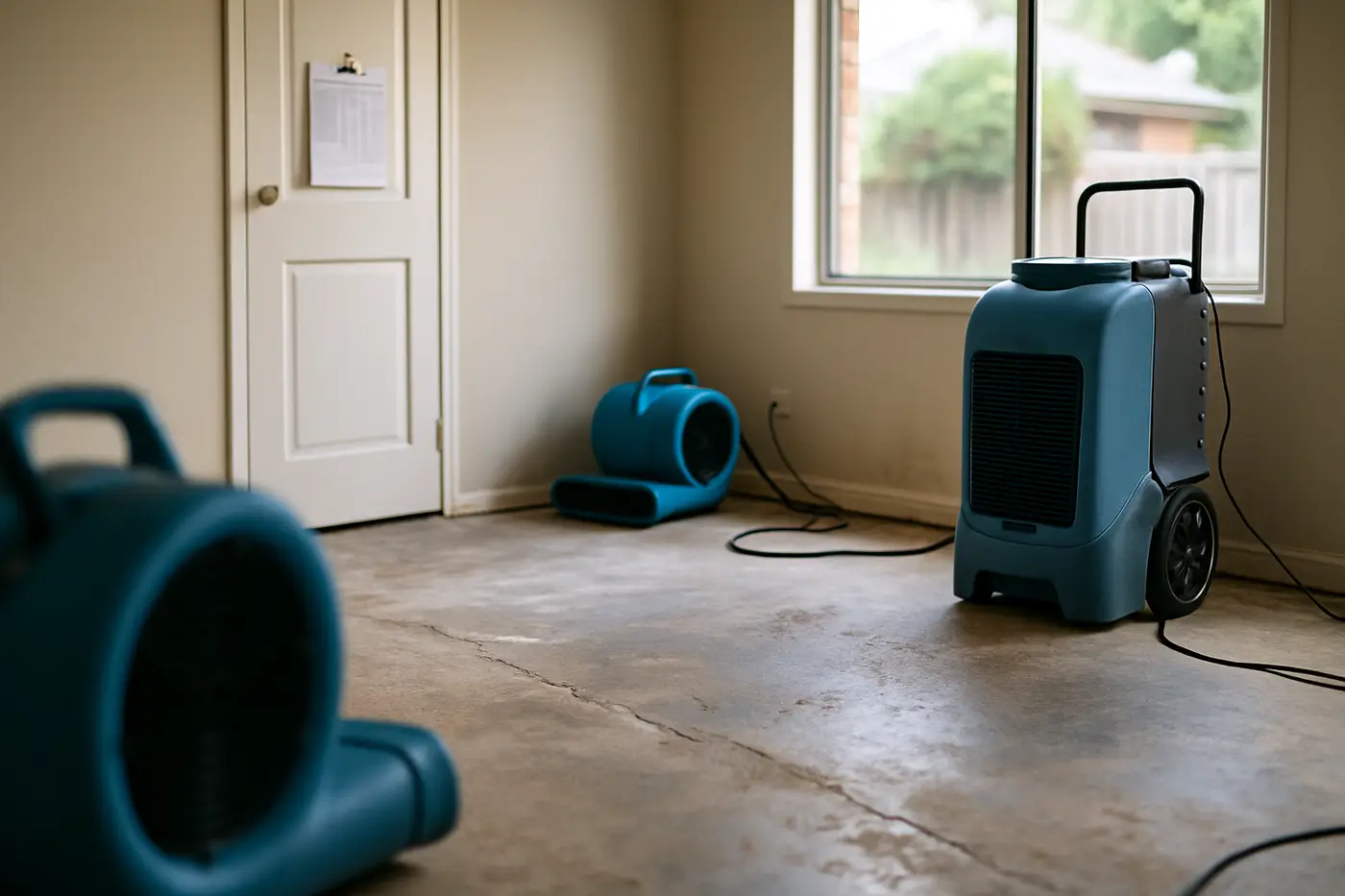
Drying. Air movers and LGR dehumidifiers bring the framing, slab or subfloor down to a moisture content that will not support growth. This is the step most DIY and cheap remediation jobs skip, and it is the reason the mould returns.
Verification. Moisture readings are taken across the area and compared to unaffected reference materials. Reinstatement follows.
The science: why Brisbane gives you 48 hours
Mould needs three things: moisture, food and warmth. In Brisbane, two of the three are always present. Summer relative humidity runs 70 to 80 per cent, temperatures sit in the high twenties, and the building itself — gyprock paper, timber, carpet backing, dust — is food. The only variable is moisture in the material, and a leak or flood supplies it.
Timber above roughly 18 to 20 per cent moisture content supports growth. Dry timber in a Brisbane house sits at 10 to 14 per cent. Gyprock that has been wet through will support growth on the paper facing until it is fully dry, which without dehumidification can be weeks. Spores are always present in the air; they simply germinate when the material is wet enough. That is why the IICRC S500 water standard aims to have materials drying within 24 to 48 hours, and why a job left for a week is a different job.
Clean or remove?
| Surface | Small area, clean water, caught fast | Established growth or Cat 2/3 water |
|---|---|---|
| Tiles, glass, sealed benchtops | Clean with detergent | Clean, treat |
| Painted gyprock | Surface clean and monitor | Remove and replace |
| Timber framing | Clean, treat, dry | HEPA vacuum, abrasive clean, treat, dry |
| Hardwood floor | Clean, dry | Sand or abrasive clean after drying |
| Carpet and underlay | Dry with antimicrobial | Remove |
| Particleboard, MDF | Rarely saved | Remove |
| Insulation | Remove if wet | Remove |
Where mould jobs come from in Brisbane, Ipswich and Logan
Water damage that was under-dried. The most common source. The carpet was extracted but the underlay stayed; the ceiling was patched over wet insulation; the wall was closed at 22 per cent. The flood suburbs — Toowong, Indooroopilly, Goodna, Beenleigh — saw a wave of this after 2022.
Slow leaks. Shower recesses, flexi hoses weeping rather than bursting, hot water systems dripping into a cavity, air-conditioner condensate lines blocked through summer. Common in the 1960s–80s homes across Holland Park, Sunnybank and Springwood with original plumbing.
Subfloors. Queenslanders in Paddington, Kenmore and central Ipswich with enclosed subfloors, poor drainage under the house or ground water after wet weather. The floor above stays damp from below and mould appears on the underside of the boards and the bottom of built-ins.
Condensation and ventilation. Wardrobes on external walls, bedrooms on the south side, bathrooms without exhaust fans, units kept closed with the air-conditioner on all summer. No leak — just humid air on cool surfaces with no airflow.
Insurance and documentation
Mould that grew as a direct result of a covered event, reported promptly, is usually part of that claim. Mould from long-term leaks, condensation or maintenance is usually excluded. The evidence is the moisture investigation: what the source was, when it started, and what was done. Our report covers the source, the extent, everything removed and why, moisture readings before and after, and photos. For rentals, it is the document that settles who is responsible.
What mould remediation costs
Mould remediation for a contained area — a bedroom, a bathroom and hallway, a section of subfloor — runs $1,500 to $6,000, covering containment, removal, treatment, drying and verification. Larger losses where a water damage job was left too long and several rooms need drying and replacement move into the $2,000 to $6,000 full restoration bracket or above. Drying and air filtration equipment runs $80 to $150 per unit per day. The moisture investigation and call-out is $300 to $600, credited against the work. Reinstatement of removed gyprock and skirting is quoted separately.
If mould is showing in your home in Brisbane, Ipswich or Logan, resist the bleach. Find the water, remove what is colonised, dry the building, and it stays gone.
Last updated 19 September 2026