Skip to content

Emergency restoration · Brisbane, Ipswich & Logan

Sewage Cleanup Brisbane

Sewer backflow, overflowing toilets and septic failures handled as Category 3 black water — safe removal, disposal of contaminated materials, sanitisation and structural drying across Brisbane, Ipswich and Logan.

  • 24/7 Response
  • IICRC S500
  • Insurance Reports
  • Fully Insured
  • Homes & Business

Request Sewage Cleanup Help

Australian format - we'll call or text you back straight away.
Add brief description (optional)
How urgent?

Free on-site assessment and quote. Insurance-ready report. No obligation. Privacy.

What's included

Everything the job needs,scoped from the first visit.

Every sewage cleanup job in Brisbane, Ipswich and Logan includes the work below as standard. It is written into the scope before we start, so there are no surprise extras when the invoice arrives.

  • Containment of the affected area to stop cross-contamination
  • Extraction of sewage and black water with dedicated equipment
  • Removal and disposal of contaminated carpet, underlay, gyprock and contents
  • Cleaning and sanitisation of slabs, framing, subfloors and hard surfaces
  • Antimicrobial treatment and odour control
  • Structural drying with air movers and LGR dehumidifiers
  • Disposal records, photos and scope for your claim
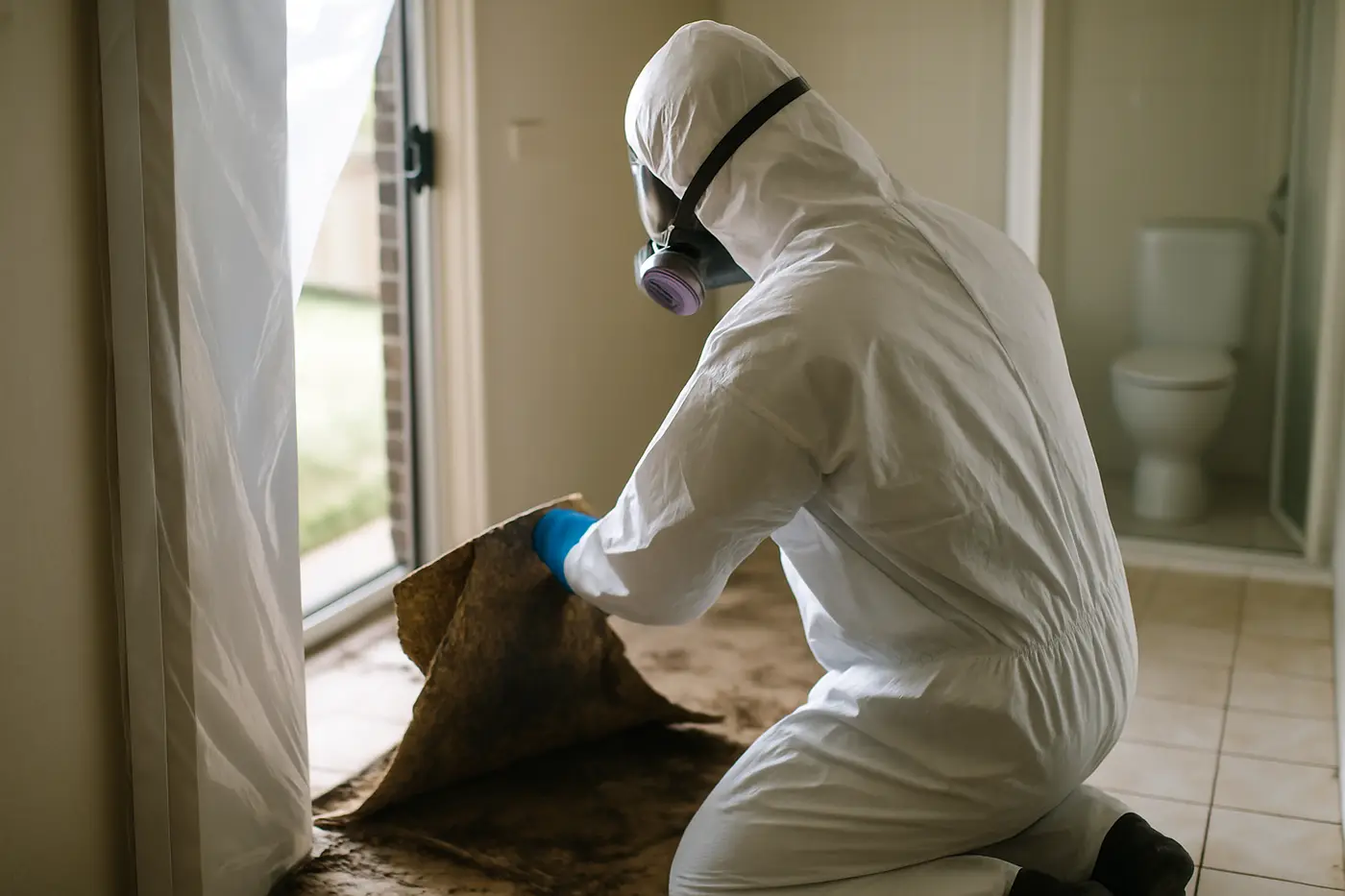
Technician in full PPE removing contaminated materials after a sewage backflow

Not sure it is urgent?

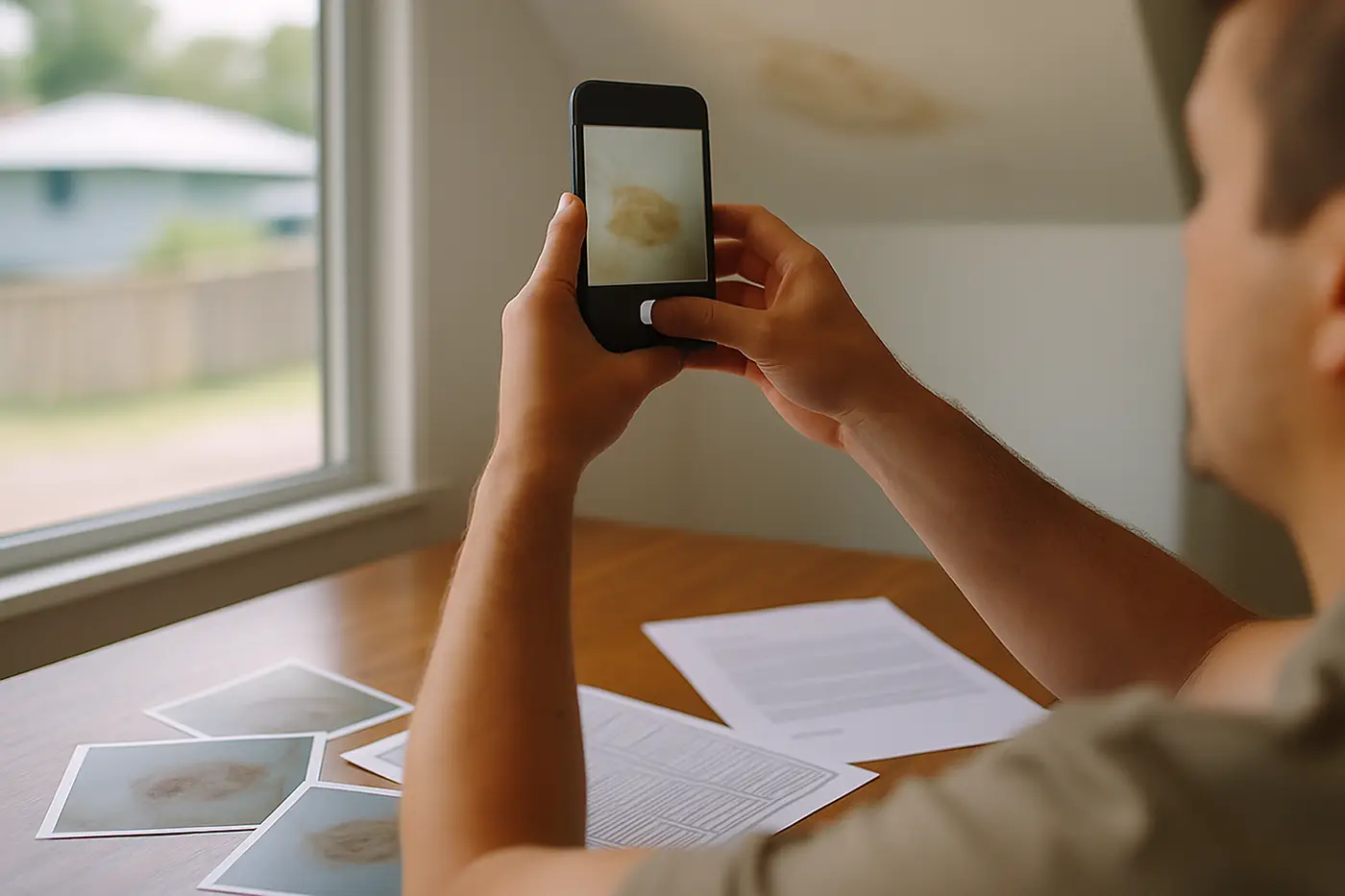
Send a few photos with the form. A coordinator will tell you whether it can wait until morning or needs a crew tonight.

When to call

Signs you needsewage cleanup.

Water moves sideways along bottom plates and under floor coverings, so the wet area is nearly always bigger than the stain you can see. Any of the following is worth a call the same day.

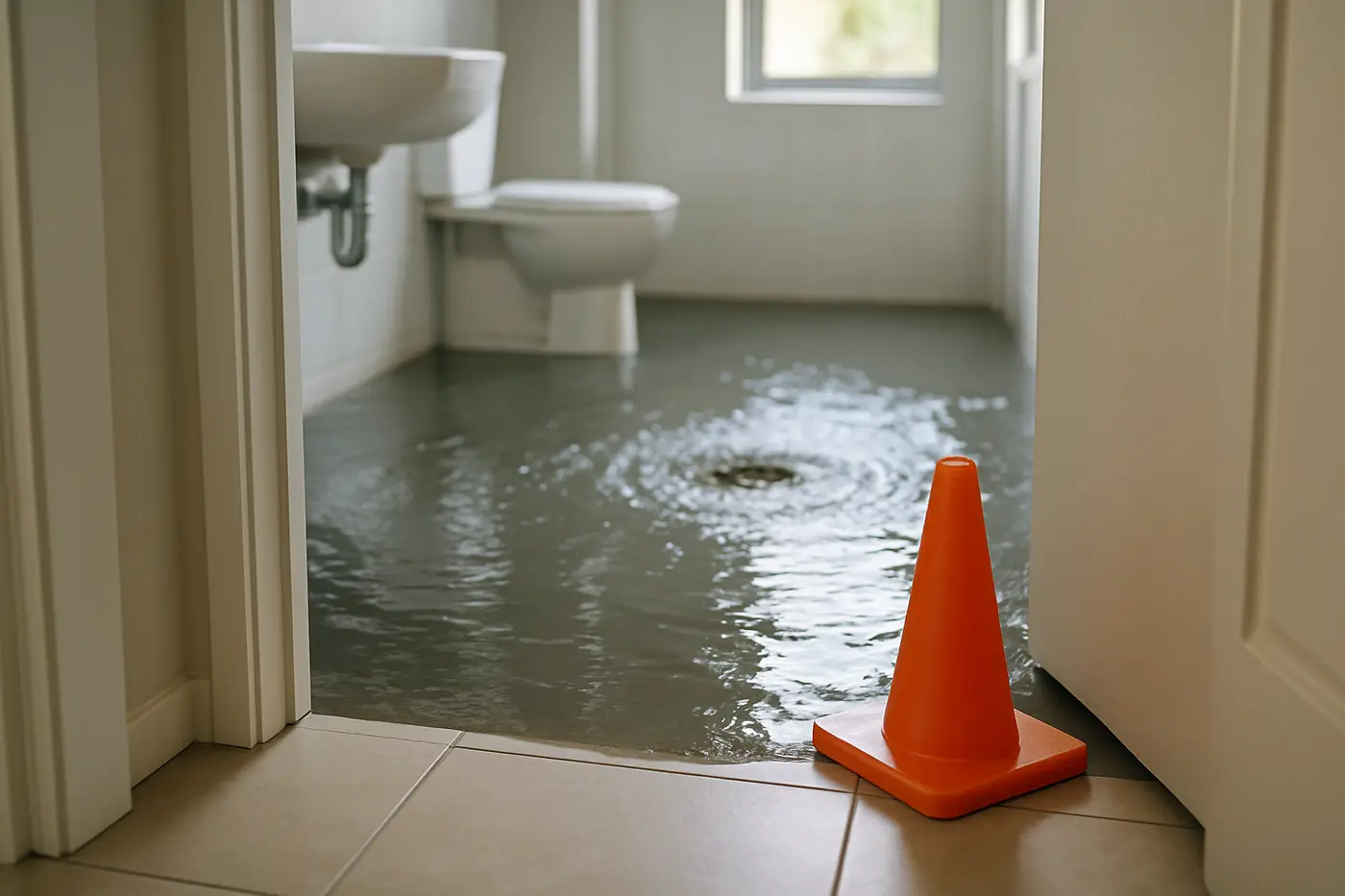
  • Sewage has backed up through a toilet, shower or floor waste
  • Grey or brown water rising in the lowest wet area of the house
  • A strong sewer smell with damp floors or skirting
  • Overflow from a blocked sewer during heavy rain
  • A septic system or pump-out well has failed or overflowed
  • Sewage in the subfloor or under a Queenslander
  • Water from a creek or stormwater drain has entered the house

Our process

How sewage cleanupruns, step by step.

From the first call to the final moisture reading, you will know what is happening, why, and what your insurer will need at each stage.

  1. Step 1: Keep out, call the plumber, call us

    Keep people and pets out of the affected area and do not run water down any drain. A plumber clears the blockage; we handle everything the sewage touched.

  2. Step 2: Contain and extract

    The area is sealed off and the sewage and black water are extracted with dedicated equipment. Technicians work in full PPE and nothing contaminated leaves the zone unbagged.

  3. Step 3: Strip, clean, sanitise

    Porous materials that absorbed sewage are removed and disposed of. Slabs, framing and hard surfaces are cleaned, sanitised and treated with an antimicrobial. Odour is dealt with at the source.

  4. Step 4: Dry, verify, restore

    Drying equipment runs until framing and slab meet dry standard. You get disposal records, photos and a scope, and we reinstate what was removed.

Price guide · AUD, 2026

What sewage cleanupcosts in Brisbane.

Ranges from typical Brisbane, Ipswich and Logan jobs. The final quote is given on site after moisture mapping, in writing, before any work starts. Insurance direct billing where the insurer approves.

ItemTypical range
Sewage cleanup and sanitisation Containment, extraction, strip-out, sanitisation and drying of a typical affected area$2,500–$8,000
Emergency call-out and assessment Category confirmation, moisture mapping and scope$300–$600
Full restoration, black water (multiple rooms) Where sewage has spread through several rooms or the subfloor$6,000–$15,000+
Contents pack-out and restoration Salvageable hard contents cleaned; porous items disposed of$1,000–$5,000
Mould remediation (if cleanup was delayed) Per contained area, to IICRC S520$1,500–$6,000

Ranges cover labour, equipment and disposal for 2026. The number you approve on the written quote is the number you pay; if the scope changes once walls are opened, we stop and re-quote in writing.

Full price guide

In depth

Sewage Cleanup in Brisbane: how the job actually runs.

Sewage in the house is the water damage nobody wants to talk about, and the one most often cleaned up badly. The temptation is to mop, bleach and put a fan on it. That leaves contaminated underlay under the carpet, contaminated paper on the gyprock, and a smell that comes back every humid week for years. Sewage cleanup done to the IICRC S500 standard is a strip-and-sanitise job, and it is not something to do without protective equipment.

What sewage cleanup involves

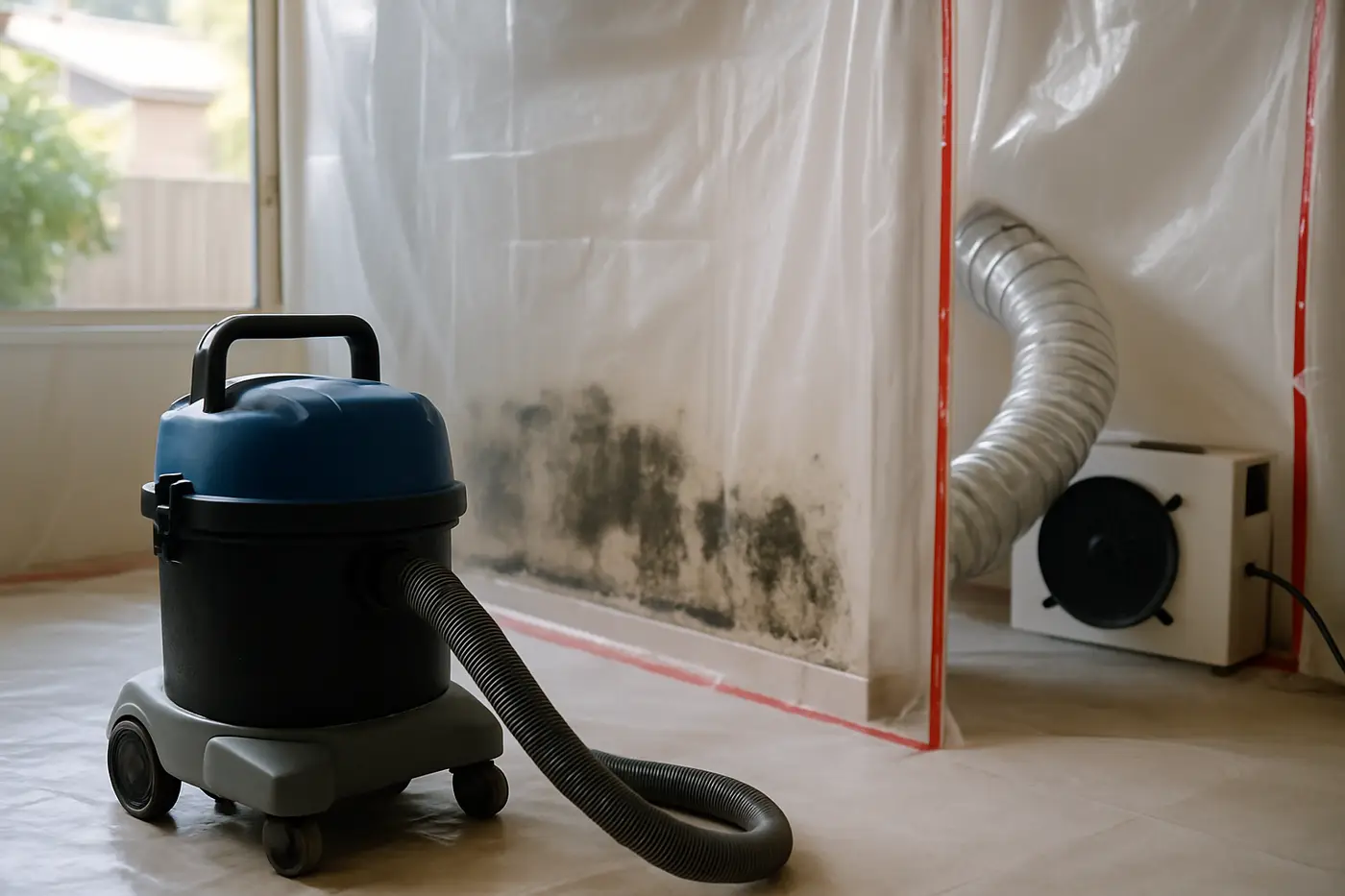
Containment first. The affected area is sealed off from the rest of the house with plastic sheeting, and where possible put under negative air pressure with a HEPA-filtered unit. Everything that leaves the zone is bagged. Technicians work in full PPE.

Extraction. Sewage and black water are removed with dedicated extraction equipment that is decontaminated afterwards, not the same gear used on a clean-water job. Solids are removed and disposed of.

Strip-out. Porous materials are removed and disposed of: carpet and underlay, gyprock to at least 300 mm above the contamination line, wet insulation, particleboard flooring, kick boards and cabinetry that sat in it, and porous contents such as mattresses, upholstered furniture and rugs.

Cleaning and sanitisation. Slabs, framing, subfloor timbers and hard surfaces are cleaned to remove residue, then sanitised and treated with an antimicrobial. Odour is dealt with by removing the source; counteractants are a last step, not a substitute.

Structural drying. Air movers and LGR dehumidifiers dry the framing and slab until readings meet dry standard, typically three to seven days.

Reinstatement. Gyprock, flooring and fittings are replaced once the area is dry and cleared.

Why sewage is handled differently from clean water

Clean water (Cat 1)Sewage (Cat 3)
CarpetDried and keptRemoved
UnderlayOften replacedAlways removed
GyprockDried in placeCut 300 mm+ above line
Timber framingDriedCleaned, sanitised, dried
ContentsMostly keptPorous items disposed of
Airflow during workAir movers from the startContainment first, then drying
PPEStandardFull — suit, gloves, P2 or better

The reason is simple: Category 3 water carries pathogens that survive in porous materials and become airborne when those materials dry. Fans and air-conditioning make that worse. Containment and removal come before any drying begins.

The first hour: what to do and what not to touch

  1. Keep everyone out, especially children, pets and anyone with a compromised immune system.
  2. Stop using water. Every flush, shower and load of washing sends more down a blocked line and back up into the house.
  3. Call a plumber to clear the blockage or fix the line, and call us to begin containment.
  4. Do not run fans or the air-conditioner in or near the area.
  5. Do not try to clean it. Bleach on the surface does not reach the underlay, and disturbing it without a mask is a health risk.
  6. Photograph the extent from the doorway, and note the time.
  7. Wash hands and anything that touched the water with soap and hot water.

Where sewage backups happen in Brisbane, Ipswich and Logan

Older sewer lines. The 1960s–80s brick homes across Sunnybank, Mount Gravatt, Aspley and Logan Central have earthenware sewer pipes that crack, let tree roots in and collapse. A blockage backs up through the lowest fixture — usually a shower or a floor waste.

Storm surcharge. During heavy rain, stormwater gets into the sewer network and the system surcharges. Overflow relief gullies are supposed to release it outside, but where they are buried, raised or missing, it comes up inside. West End, New Farm and the creek suburbs see this in every major event.

Flood water. River and creek flooding is Category 3 for the same reason — the water has been through the sewer network and the paddocks upstream. Goodna, central Ipswich and Beenleigh in 2011 and 2022 were sewage cleanups as much as flood cleanups.

Under Queenslanders. Cracked lines and overflow gullies under the house contaminate the soil, which has to be removed and replaced.

Septic and pump-out systems on the fringes of Logan and Ipswich fail and overflow, and the cleanup is the same.

Insurance and documentation

Sudden sewer backflow is covered under many Queensland home policies, but not all — some exclude it, some cap it, and gradual causes like root intrusion that was never addressed are commonly excluded. Read the PDS before you assume. What every claim needs is the same: the cause (the plumber’s report), the category, the extent, dated photos before and during the strip-out, a list of everything removed and why, and moisture readings through to dry. We produce that package as standard and can bill the insurer directly where approved.

What sewage cleanup costs

Sewage cleanup and sanitisation typically runs $2,500 to $8,000 for a contained affected area — a bathroom and adjoining hallway, a laundry and rumpus room, a subfloor. Where sewage has spread through several rooms or a flood has brought Category 3 water through the house, a full black water restoration is $6,000 to $15,000 or more, with reinstatement scoped separately. Contents pack-out is $1,000 to $5,000. Call-out and assessment is $300 to $600. If the cleanup was delayed and mould has established, remediation adds $1,500 to $6,000 per contained area.

If there is sewage in your home in Brisbane, Ipswich or Logan, stay out of it, stop the water, and call. This is one job where doing it properly the first time is far cheaper than doing it twice.

Last updated 10 September 2026
Common questions

Sewage Cleanup, explained.

Straight answers about response times, water categories, drying timelines and what your insurer will expect for sewage cleanup in Brisbane.

All questions
Why can't I just disinfect it and dry it out?

Because sewage soaks into porous materials, and disinfectant only reaches the surface. Carpet backing, underlay, gyprock paper and particleboard hold the contamination inside, and drying them turns it into airborne dust. The IICRC S500 standard is clear that porous materials affected by Category 3 water are removed. Hard, non-porous surfaces — slabs, tiles, sealed timber, metal — can be cleaned and sanitised properly.

What exactly counts as Category 3 water?

Grossly contaminated water: sewage, toilet overflow containing faeces, water from a creek, river or stormwater drain, and any water that has been through soil or sat long enough to support significant microbial growth. Grey water — a washing machine or dishwasher discharge, or a toilet overflow of urine only — is Category 2 and is handled differently.

Do I call a plumber or you first?

A plumber first if the sewer is still blocked or backing up, because more sewage will come in every time water goes down a drain in the house. Call us at the same time. We can begin containment and assessment while the plumber clears the line, and start extraction the moment it stops.

How far does the contamination spread?

Further than the visible water. Sewage wicks up gyprock, runs under floating floors, gets into the slab and travels into the subfloor. We map it the same way as any water loss, with moisture meters and a thermal camera, and we cut gyprock at least 300 mm above the visible line. Anything the contaminated water reached is either cleaned and sanitised or removed.

Will the smell go away?

Yes, if the source is removed. Sewage odour comes from the contaminated materials, and no amount of deodoriser fixes it while the underlay or the gyprock is still there. Once the strip-out, cleaning and sanitisation are done and the area is dry, the odour goes with it. Where necessary we treat framing and slabs with an odour counteractant as a final step.

Is sewage backup covered by insurance?

Often, if it is sudden and the cause is an insured event — a blocked or collapsed sewer, a storm surcharge — and if your policy does not exclude it. Some policies limit or exclude sewer backflow, and gradual causes or neglected maintenance are usually excluded. Our report documents the cause, the category, the extent and everything removed, which is what the assessor needs to decide.

What about sewage under a Queenslander?

It happens more often than people expect, from a cracked sewer line or an overflow relief gully under the house. Soil under the house is contaminated and cannot be cleaned; it is removed to a depth and replaced, and the bearers, joists and underside of the floor are cleaned and treated. The subfloor is dried and, if it has been enclosed, ventilated.

How long does sewage cleanup take?

Containment, extraction and strip-out are usually done in a day. Cleaning and sanitisation the same or the next day. Drying then runs three to seven days depending on what the sewage soaked into — a slab under tile is slowest. Reinstatement follows once the area is dry and cleared.

Related services

Water rarely stays in one lane. These are the services most often scoped on the same job.

All services
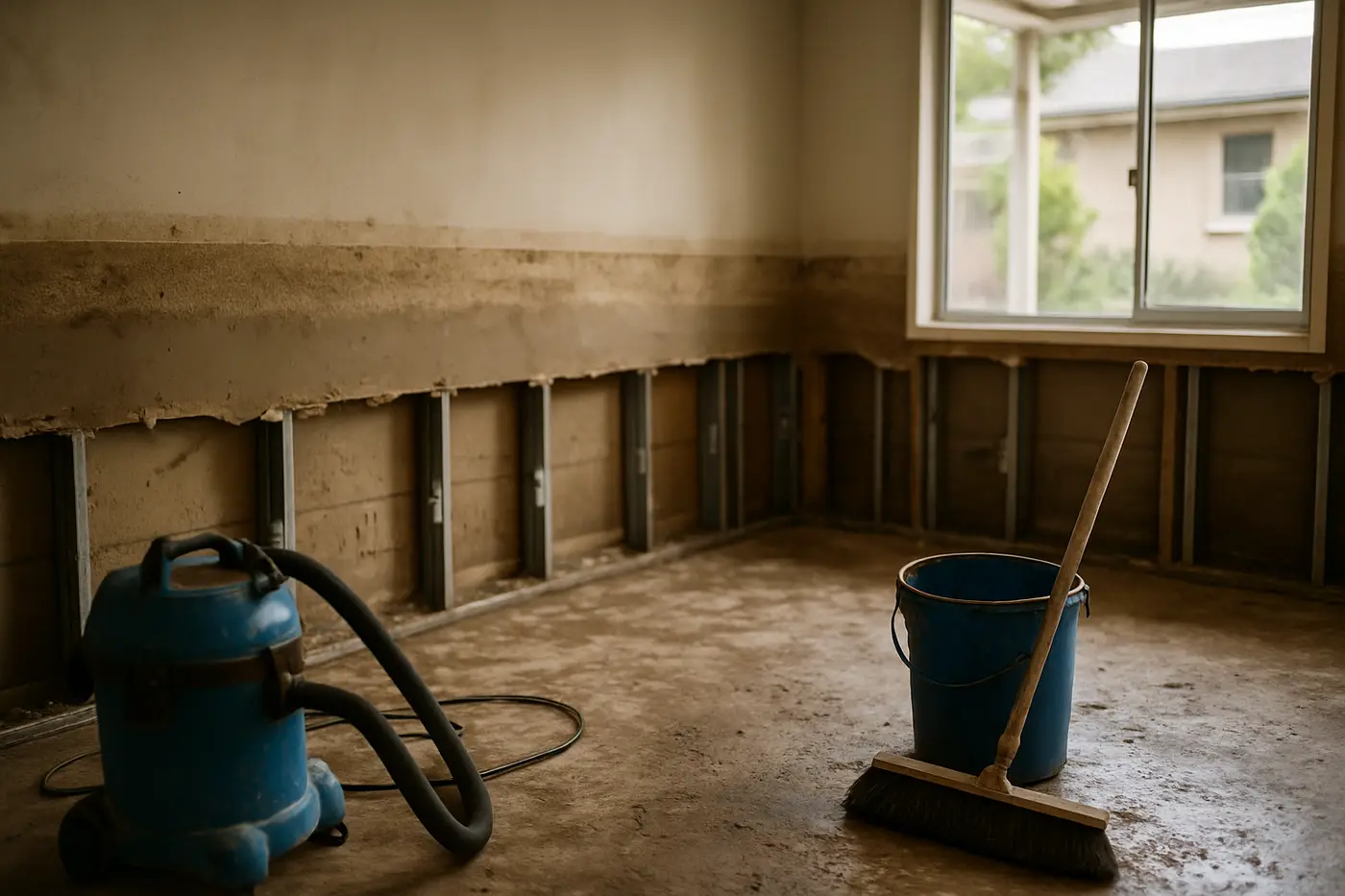
  • Flood line on the walls of a Brisbane home after creek flooding, cleanup in progress
    01

    Flood Damage Restoration

    Flood damage restoration and flood cleanup in Brisbane, Ipswich and Logan. Category 3 water handling, contents removal, structural drying and antimicrobial treatment.

    Learn more
  • Containment sheeting and negative air machine set up for mould remediation
    02

    Mould Remediation

    IICRC S520 mould remediation in Brisbane, Ipswich and Logan. Containment, HEPA filtration, removal of affected gyprock and timber, and drying to stop it coming back.

    Learn more
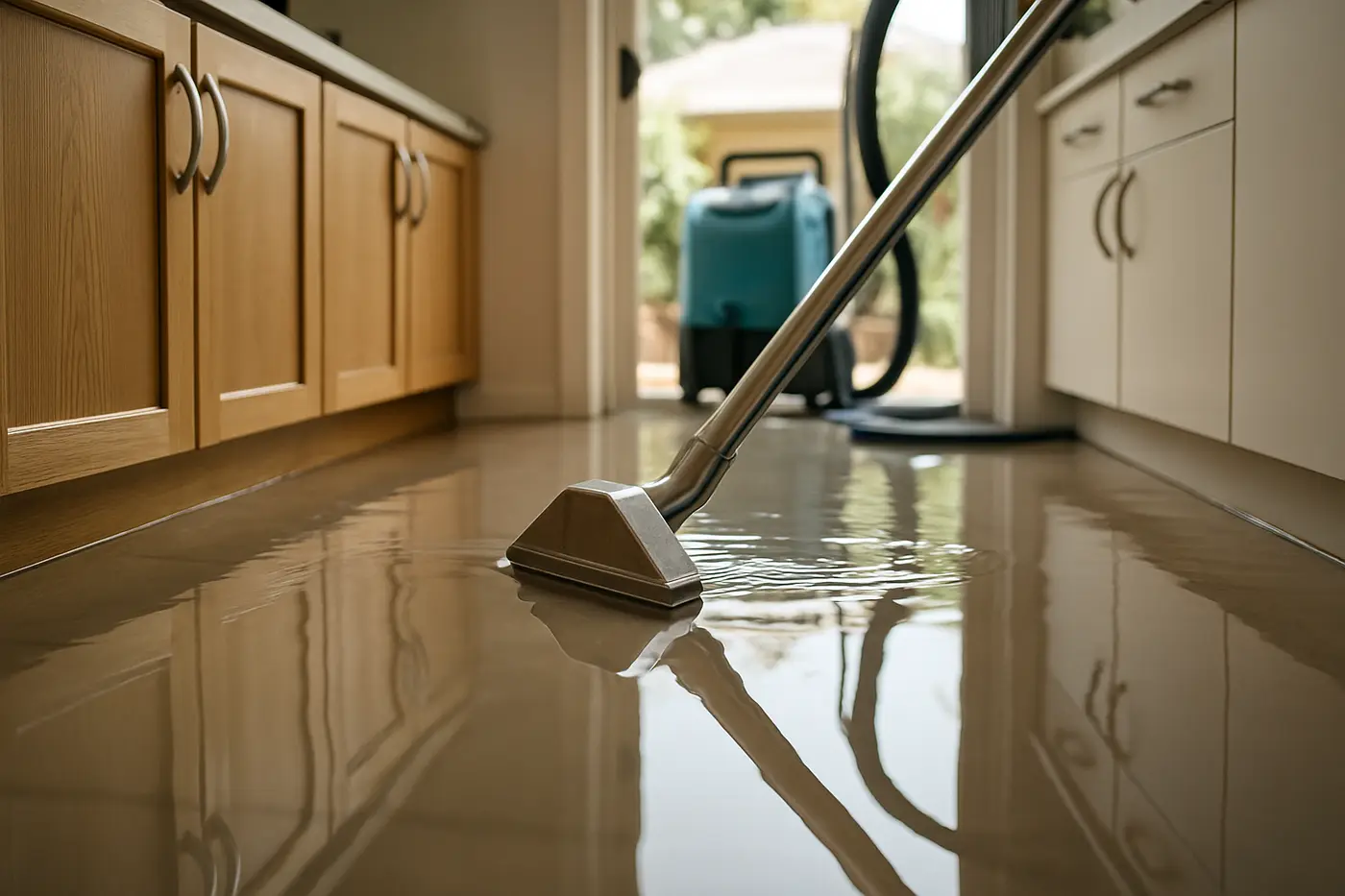
  • Extraction wand pulling standing water from a flooded floor
    03

    Water Extraction

    Professional water extraction and removal services in Brisbane, Ipswich and Logan. Truck-mount and portable extraction, weighted carpet tools and moisture mapping.

    Learn more

Helpful reading

Guides that go withthis service.

Practical, Brisbane-specific reading for the first hour, the drying process, mould risk and insurance claims.

Sewage Cleanup · Brisbane, Ipswich & Logan

Let's take the next step toward drying your property.

Tell us what happened, where the water is and whether it is still active. A restoration coordinator will explain what to do next and what your insurer will need.