Skip to content

Emergency restoration · Brisbane, Ipswich & Logan

Storm Damage Restoration Brisbane

When the supercell has passed and the water is inside — ceiling make-safe, extraction, flash flood cleanup and structural drying across Brisbane, Ipswich and Logan, documented for a storm claim.

  • 24/7 Response
  • IICRC S500
  • Insurance Reports
  • Fully Insured
  • Homes & Business

Request Storm Damage Restoration Help

Australian format - we'll call or text you back straight away.
Add brief description (optional)
How urgent?

Free on-site assessment and quote. Insurance-ready report. No obligation. Privacy.

What's included

Everything the job needs,scoped from the first visit.

Every storm damage restoration job in Brisbane, Ipswich and Logan includes the work below as standard. It is written into the scope before we start, so there are no surprise extras when the invoice arrives.

  • Make-safe of water-loaded ceilings, wet electrical areas and debris
  • Extraction of rainwater from ceilings, walls, floors and carpets
  • Flash flood and stormwater surcharge cleanup, including silt
  • Moisture mapping of ceilings, wall cavities and insulation
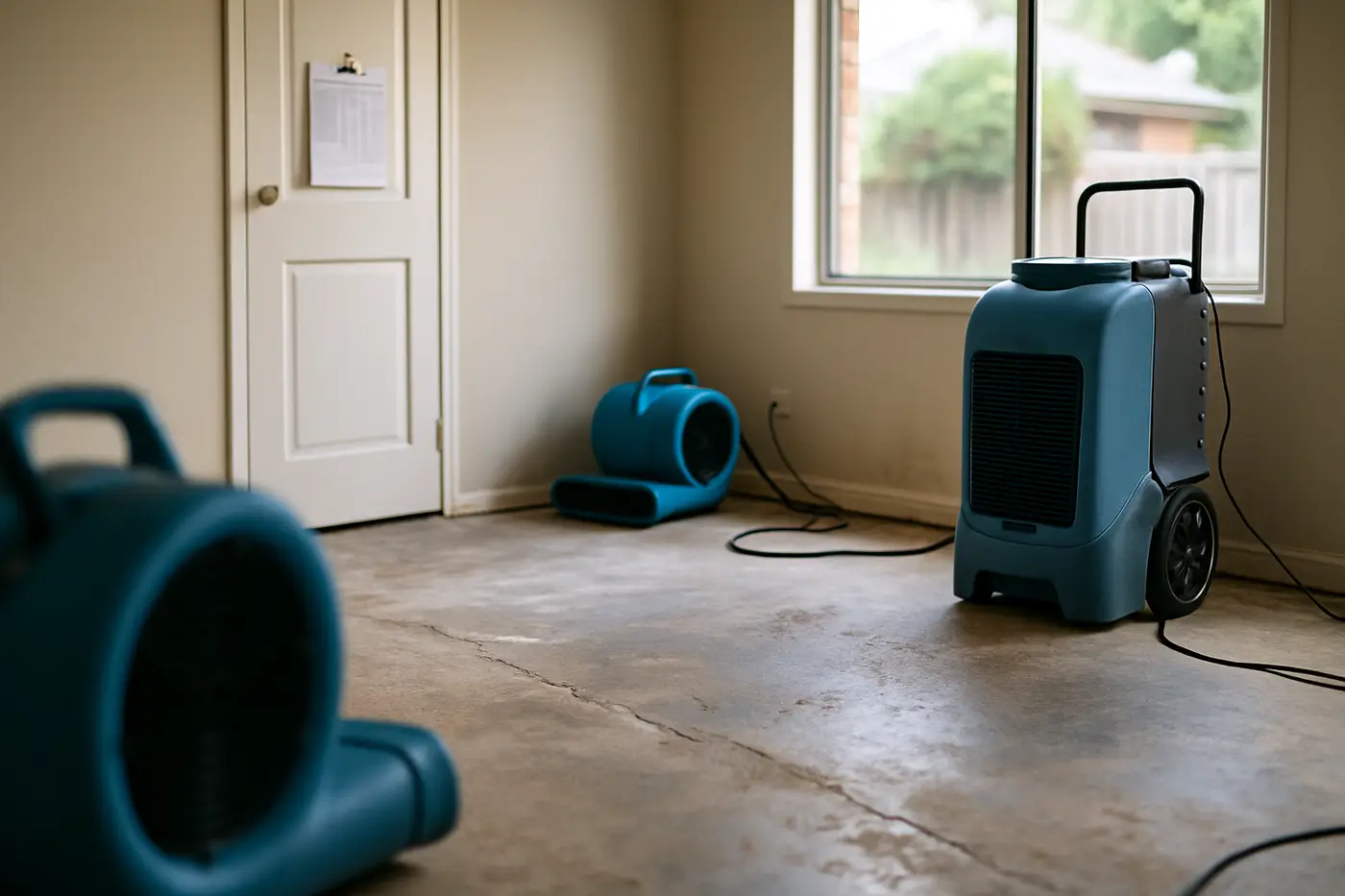
  • Structural drying with air movers and LGR dehumidifiers
  • Removal of wet insulation and sagging plasterboard
  • Storm claim photo report, moisture logs and scope of works
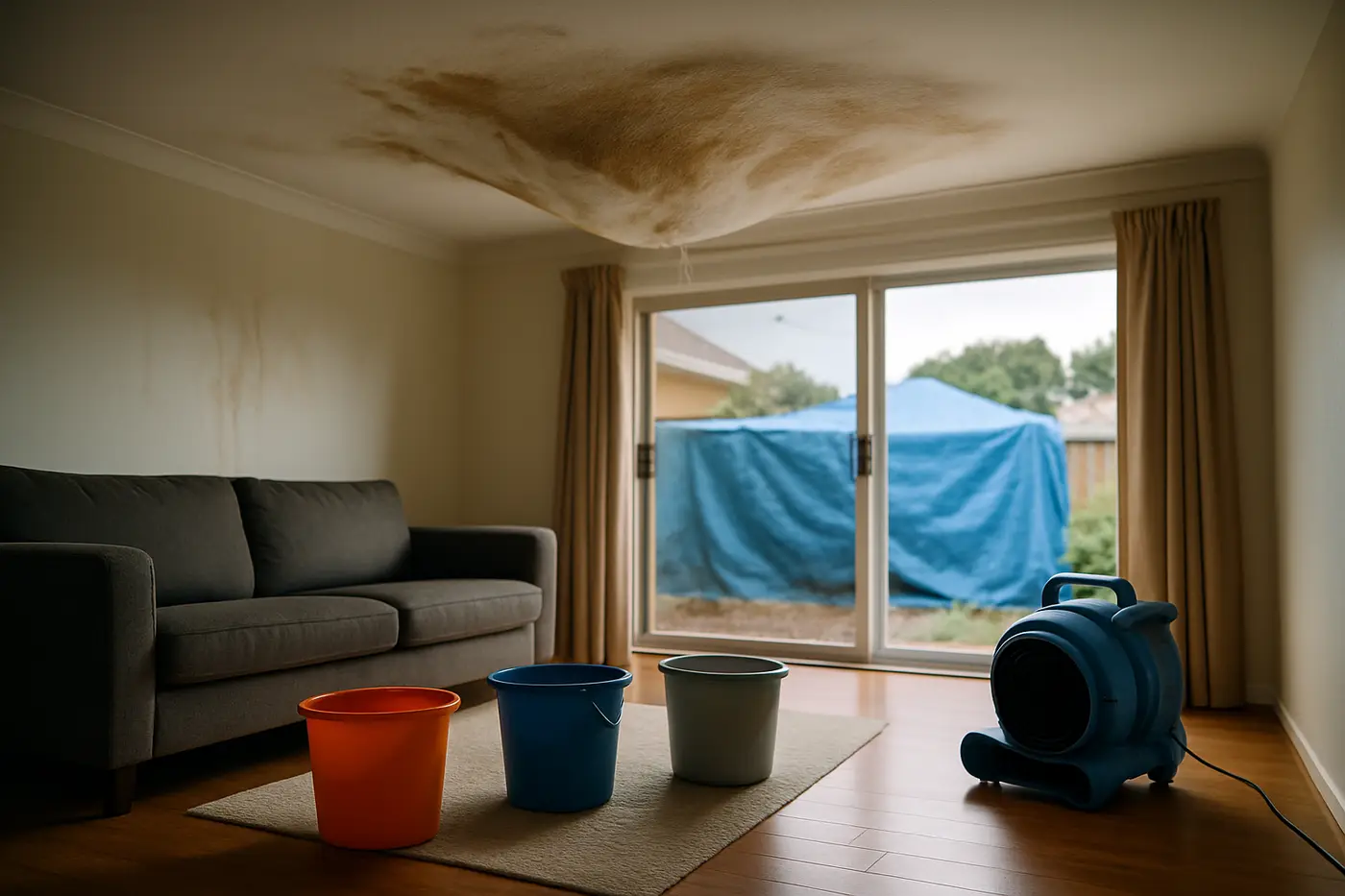
Tarped roof and drying equipment inside a Brisbane home after a summer storm

Not sure it is urgent?

Send a few photos with the form. A coordinator will tell you whether it can wait until morning or needs a crew tonight.

When to call

Signs you needstorm damage restoration.

Water moves sideways along bottom plates and under floor coverings, so the wet area is nearly always bigger than the stain you can see. Any of the following is worth a call the same day.

  • Water came through the ceiling or light fittings during the storm
  • Ceiling plaster is stained, bulging or has come down
  • Wind lifted roof sheets or tiles and rain followed
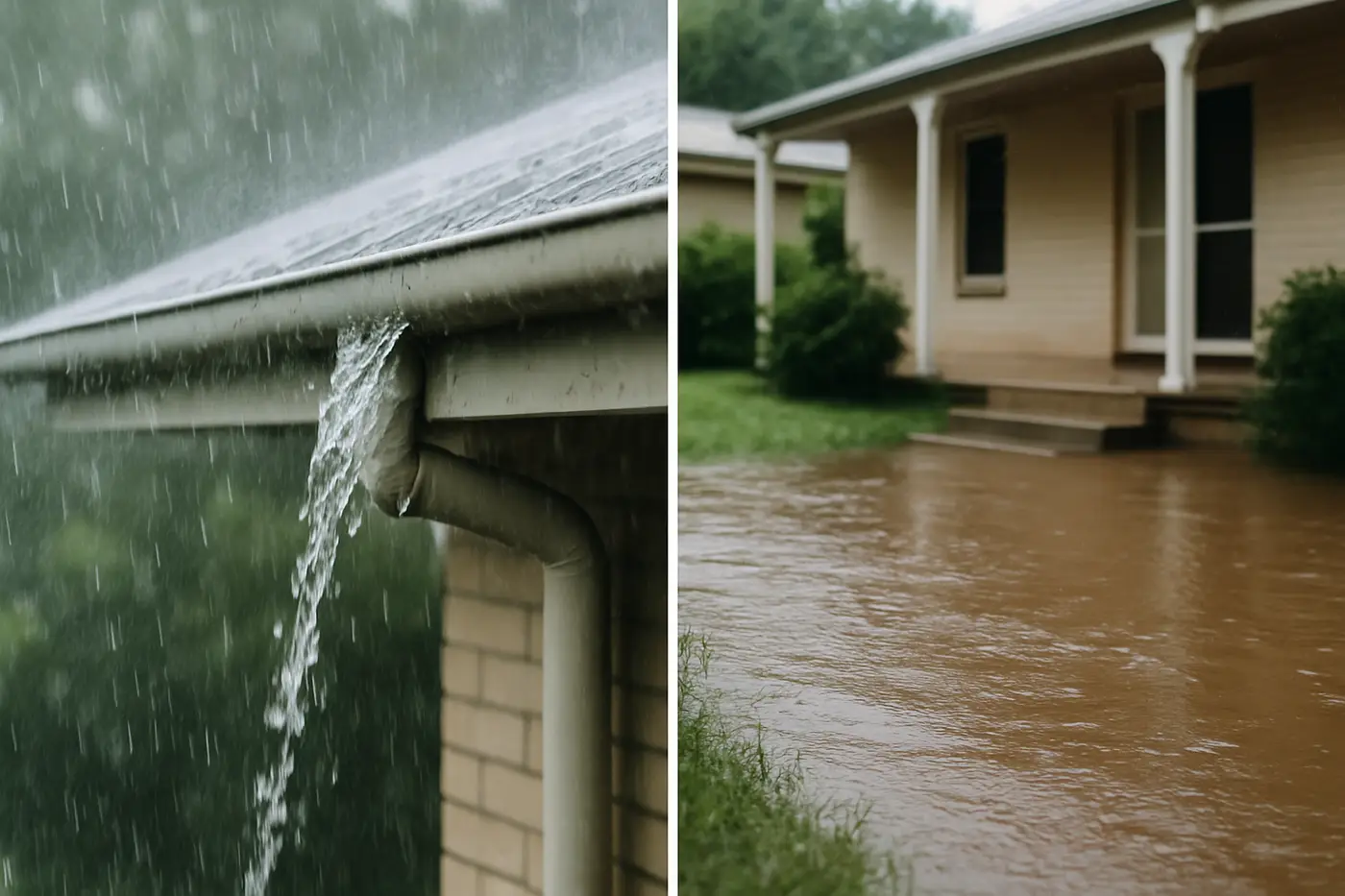
  • Box gutters or downpipes overflowed into the eaves and walls
  • Stormwater surged under doors or through the garage
  • Hail broke skylights or windows and rain got in
  • A wet, earthy smell in the house after the rain stopped

Our process

How storm damage restorationruns, step by step.

From the first call to the final moisture reading, you will know what is happening, why, and what your insurer will need at each stage.

  1. Step 1: Make it safe

    Stay clear of sagging ceilings and wet electrical fittings. Once the roof has been tarped by the SES or a roofer, we drain and prop ceilings, isolate wet circuits and extract standing water.

  2. Step 2: Find where the water went

    Storm water enters at the roof and travels down. We meter ceilings, cavities, insulation, walls and floors and use a thermal camera to trace the path. The map sets the scope.

  3. Step 3: Remove, treat, dry

    Wet insulation and sagging plasterboard are removed. Stormwater that came in from outside is treated as contaminated. Drying equipment is placed and readings logged daily.

  4. Step 4: Document and restore

    You receive a storm claim package — photos, moisture logs, scope. Once dry, we replace ceilings, gyprock and underlay that could not be saved.

Price guide · AUD, 2026

What storm damage restorationcosts in Brisbane.

Ranges from typical Brisbane, Ipswich and Logan jobs. The final quote is given on site after moisture mapping, in writing, before any work starts. Insurance direct billing where the insurer approves.

ItemTypical range
Storm damage make-safe and drying Ceiling make-safe, extraction and drying after roof or gutter failure$800–$4,000
Emergency call-out and assessment Moisture mapping and a claim-ready report; credited against the job$300–$600
Water extraction Rainwater or stormwater across one or more rooms$500–$2,000
Structural drying equipment hire Ceilings and wall cavities typically 3–7 days$80–$150 per unit per day
Full restoration, clean water (2–3 rooms) Ceiling and wall replacement after drying$2,000–$6,000
Contents pack-out and restoration Where furniture and belongings need to be moved and cleaned$1,000–$5,000

Ranges cover labour, equipment and disposal for 2026. The number you approve on the written quote is the number you pay; if the scope changes once walls are opened, we stop and re-quote in writing.

Full price guide

In depth

Storm Damage Restoration in Brisbane: how the job actually runs.

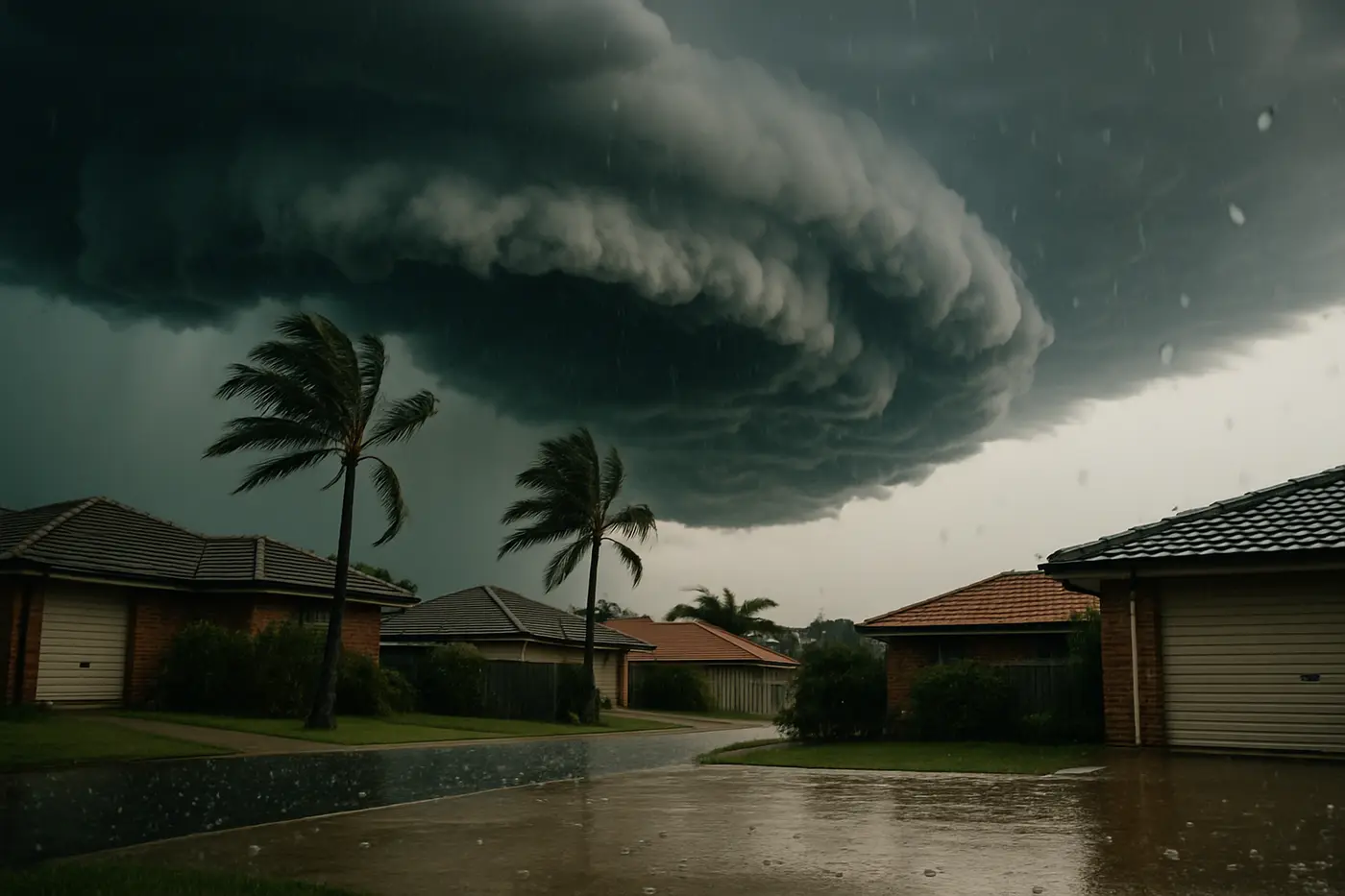
Brisbane’s storm season runs November to March, and the water damage it leaves behind is different from a burst pipe. It comes from the top down, it arrives with wind and hail, it often brings the street with it, and after a big cell it hits hundreds of homes at once. Storm damage restoration is the drying and cleanup side of that — what happens after the roofer has closed the hole and the SES has moved on to the next street.

What storm damage restoration involves

Make-safe. Water-loaded ceilings are drained and propped. Circuits where water reached fittings stay isolated. Broken glass and debris are cleared from wet areas. If the roof is still open, drying waits for the tarp, but assessment and extraction do not.

Tracing the water. Storm water enters at the roof, a gutter or a window and travels down through insulation, ceiling plaster, wall cavities and bottom plates before it shows on the floor. We meter each of those layers and use a thermal camera to follow the path. The wet area is always bigger than the stain.

Extraction and removal. Standing rainwater is extracted. Wet insulation batts are removed — they do not dry and they hold water against the ceiling frame for weeks. Sagging plasterboard comes down. Where stormwater surged in from outside, it is treated as Category 3 and carpet and underlay it touched are removed.

Structural drying. Air movers and LGR dehumidifiers dry the ceiling frame, wall cavities and floors, with readings logged daily. Ceiling cavities are often the slowest part because they are enclosed and hot.

Reinstatement. Once dry, ceilings, gyprock, insulation and underlay are replaced to the approved scope.

Storm versus flood: the distinction that decides your claim

Water sourceInsurance classificationUsually covered?
Rain through damaged roof or windowStormYes, standard policies
Hail damage and resulting water entryStormYes
Gutters and downpipes overflowing into wallsStormUsually, unless neglected maintenance
Run-off crossing your yard before any waterwayStorm (stormwater run-off)Generally yes
Water rising from a creek, river or stormwater channelFloodOnly with flood cover

Since 2012 every Australian insurer uses the same flood definition. The question that decides borderline claims is the path of the water, and that is why our reports document the entry point, the route and the high-water mark before anything is touched.

The first hours after the storm

  1. Stay out from under sagging ceilings. Move furniture, close the door, and do not pierce the plaster.
  2. Power off to rooms where water reached fittings or points.
  3. Roof open? Call the SES on 132 500 for tarping, and a roofer for the permanent fix. Stay off the roof yourself.
  4. Photograph the entry point, the water and the hail if there was any. The date and time matter.
  5. Buckets, towels, rugs up. Get what you can off wet carpet.
  6. Call us so drying starts as soon as the roof is closed.

Why storm damage drying takes as long as it does

Ceiling cavities are the problem. They are enclosed, they run hot under a Brisbane roof, and wet insulation sits directly on the plasterboard. Left alone, the cavity stays humid for weeks and mould establishes on the plaster and the timber within days. The IICRC S500 approach is to open the cavity — remove the wet batts, take down saturated board — and then dry the frame with air movement and dehumidification until pin readings on the timber are back below 18 per cent. Wall cavities behind gyprock are dried the same way, often through skirting removed at floor level.

Three to seven days is typical. Homes that waited a fortnight for attention after a major event are usually looking at mould treatment as well.

Brisbane, Ipswich and Logan in storm season

The northside and west — The Gap, Kenmore, Aspley, Chermside — sit under the path of afternoon cells coming off the ranges, and the older tile roofs there shed tiles in hail and wind. Kedron Brook, Enoggera Creek and Moggill Creek flash flood in the same storms.

The southside — Holland Park, Carindale, Mount Gravatt — has a lot of 1970s–80s brick-and-tile with box gutters, which overflow into the eaves when downpipes block. Bulimba and Norman Creeks come up fast.

Redcliffe and the bayside take the wind side of every system, with storm surge on top, and the older fibro and timber housing stock lets water in at every joint.

Ipswich and Logan estates — Springfield Lakes, Redbank Plains, Beenleigh — are low-set slab homes with particleboard floors, where stormwater surcharge under the doors does the most damage, fastest.

Ex-Tropical Cyclone Alfred in March 2025 put all of this on display at once: wind damage to roofs followed by days of rain into open ceilings across the region.

Insurance and documentation

Storm damage is covered on almost every Queensland home policy. The friction points are maintenance exclusions (blocked gutters that had not been cleaned) and the storm-versus-flood line. Both are settled with evidence. Our package includes the entry point and path of the water, dated photos, moisture readings from arrival through to dry standard, everything removed and why, and an itemised scope. Where the insurer approves, we bill them directly.

What storm damage restoration costs

Storm make-safe and drying runs $800 to $4,000 depending on how many rooms and how much ceiling and cavity work is involved. Extraction alone is $500 to $2,000, drying equipment $80 to $150 per unit per day, and a full clean-water restoration with ceiling and wall replacement across two or three rooms is $2,000 to $6,000. Where stormwater surcharge has brought contaminated water inside, costs move toward the grey and black water brackets. Call-out and assessment is $300 to $600.

If the storm has been through and the water is inside, get safe, get photos, and get in touch. We cover Brisbane, Ipswich and Logan through the whole season.

Last updated 16 September 2026
Common questions

Storm Damage Restoration, explained.

Straight answers about response times, water categories, drying timelines and what your insurer will expect for storm damage restoration in Brisbane.

All questions
Is this storm damage or flood damage for my insurance?

Rain through a damaged roof, hail-broken windows, overflowing gutters and run-off crossing your yard are storm damage, and storm is covered on nearly every Queensland home policy. Water rising out of a creek, river or stormwater channel is flood under the Insurance Council of Australia's standard definition and is only covered if you hold flood cover. Where both happened in the same event, our report records the entry point and path of the water so the claim is decided on the facts.

Should I call the SES or you first?

If the roof is open, call the SES on 132 500 for emergency tarping — they prioritise the worst-affected homes and it is free. Our job starts once the water has stopped coming in: draining ceilings, extracting, drying and documenting. During a major event we are happy to be booked while you wait for the tarp, so drying starts the moment the roof is closed.

The ceiling is stained but not sagging — do I need drying?

Almost certainly. A stain means the plasterboard was wet through, and the insulation above it holds water for weeks. Left alone in Brisbane humidity, the ceiling cavity becomes a mould farm and the stain reappears after every paint job. We meter the ceiling and cavity, remove wet insulation and dry the frame before anything is patched.

How long after a storm should I wait before calling?

Do not wait. The best time to start drying is the same day the water came in. After a major event across South East Queensland — a supercell over the southside, or a system like ex-Tropical Cyclone Alfred in March 2025 — crews are stretched and the homes that have been made safe, documented and booked are the ones that get attention first.

Is stormwater that came under the door contaminated?

Treat it that way. Stormwater from the street or a surcharged drain carries soil, oil and often sewer overflow, which makes it Category 3 under the IICRC S500 standard. Carpet and underlay it touched are removed, hard surfaces are cleaned and treated, and porous contents are assessed case by case. Rain that came straight through the roof is usually Category 1 and can be dried in place.

Will hail damage be covered as well?

Hail is a storm event and is covered on standard home policies, including the water that came in through broken skylights, windows or cracked tiles. Photograph the hail and the damage on the day. Our report records the water damage that followed; a roofer's report covers the roof itself. Together they make up the storm claim.

What is included in the storm claim package?

Dated photos of the entry point and each affected area, the water category and path, moisture readings on arrival and daily through drying, a list of anything removed and why, and an itemised scope of works for reinstatement. It is the format assessors expect, and it is what you use to query the scope if the insurer's builder comes back short.

Related services

Water rarely stays in one lane. These are the services most often scoped on the same job.

All services
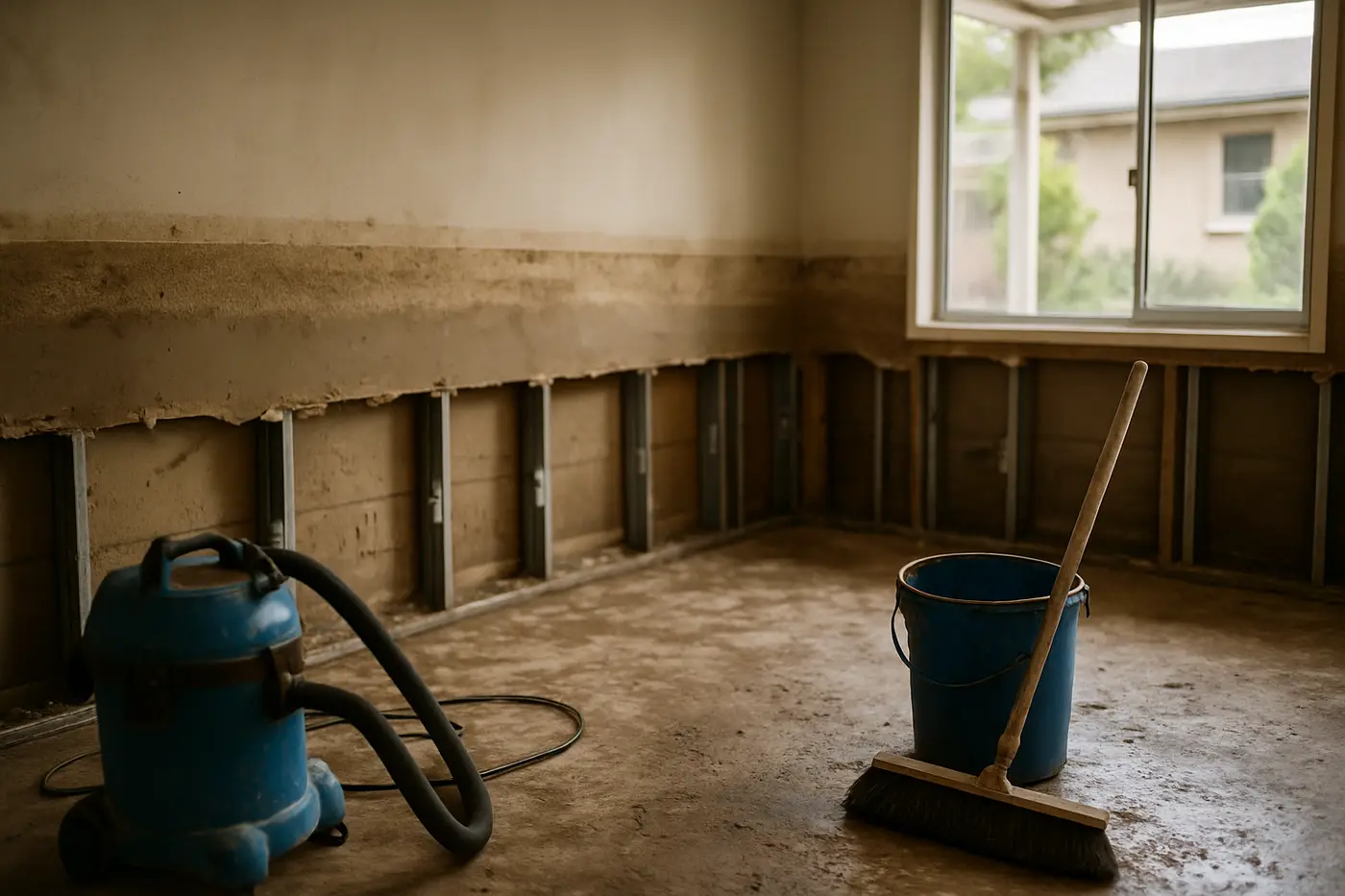
  • Flood line on the walls of a Brisbane home after creek flooding, cleanup in progress
    01

    Flood Damage Restoration

    Flood damage restoration and flood cleanup in Brisbane, Ipswich and Logan. Category 3 water handling, contents removal, structural drying and antimicrobial treatment.

    Learn more
  • Technician arriving at night with extraction equipment for a burst pipe emergency
    02

    Emergency Water Damage

    24/7 emergency water damage response across Brisbane, Ipswich and Logan. Fast water extraction, make-safe, moisture mapping and drying to stop damage spreading.

    Learn more
  • Air movers and a dehumidifier drying a water-damaged Brisbane living room
    03

    Water Damage Restoration

    IICRC S500 water damage restoration across Brisbane, Ipswich and Logan. Emergency extraction, moisture mapping, structural drying and insurance-ready reports.

    Learn more

Helpful reading

Guides that go withthis service.

Practical, Brisbane-specific reading for the first hour, the drying process, mould risk and insurance claims.

Storm Damage Restoration · Brisbane, Ipswich & Logan

Let's take the next step toward drying your property.

Tell us what happened, where the water is and whether it is still active. A restoration coordinator will explain what to do next and what your insurer will need.