Skip to content

Emergency restoration · Brisbane, Ipswich & Logan

Water Extraction Brisbane

Standing water out fast — truck-mount and portable extraction for flooded rooms, carpets, subfloors and garages across Brisbane, Ipswich and Logan, with moisture mapping so you know exactly what is still wet.

  • 24/7 Response
  • IICRC S500
  • Insurance Reports
  • Fully Insured
  • Homes & Business

Request Water Extraction Help

Australian format - we'll call or text you back straight away.
Add brief description (optional)
How urgent?

Free on-site assessment and quote. Insurance-ready report. No obligation. Privacy.

What's included

Everything the job needs,scoped from the first visit.

Every water extraction job in Brisbane, Ipswich and Logan includes the work below as standard. It is written into the scope before we start, so there are no surprise extras when the invoice arrives.

  • Truck-mount extraction for large volumes and multi-room losses
  • Portable extractors for upper floors, units and tight access
  • Weighted extraction tools that pull water from carpet, underlay and slab
  • Submersible pumps for flooded garages, subfloors and basements
  • Moisture mapping of floors and walls after extraction
  • Water category assessment and contaminated water handling
  • Drying equipment placement if required on the same visit
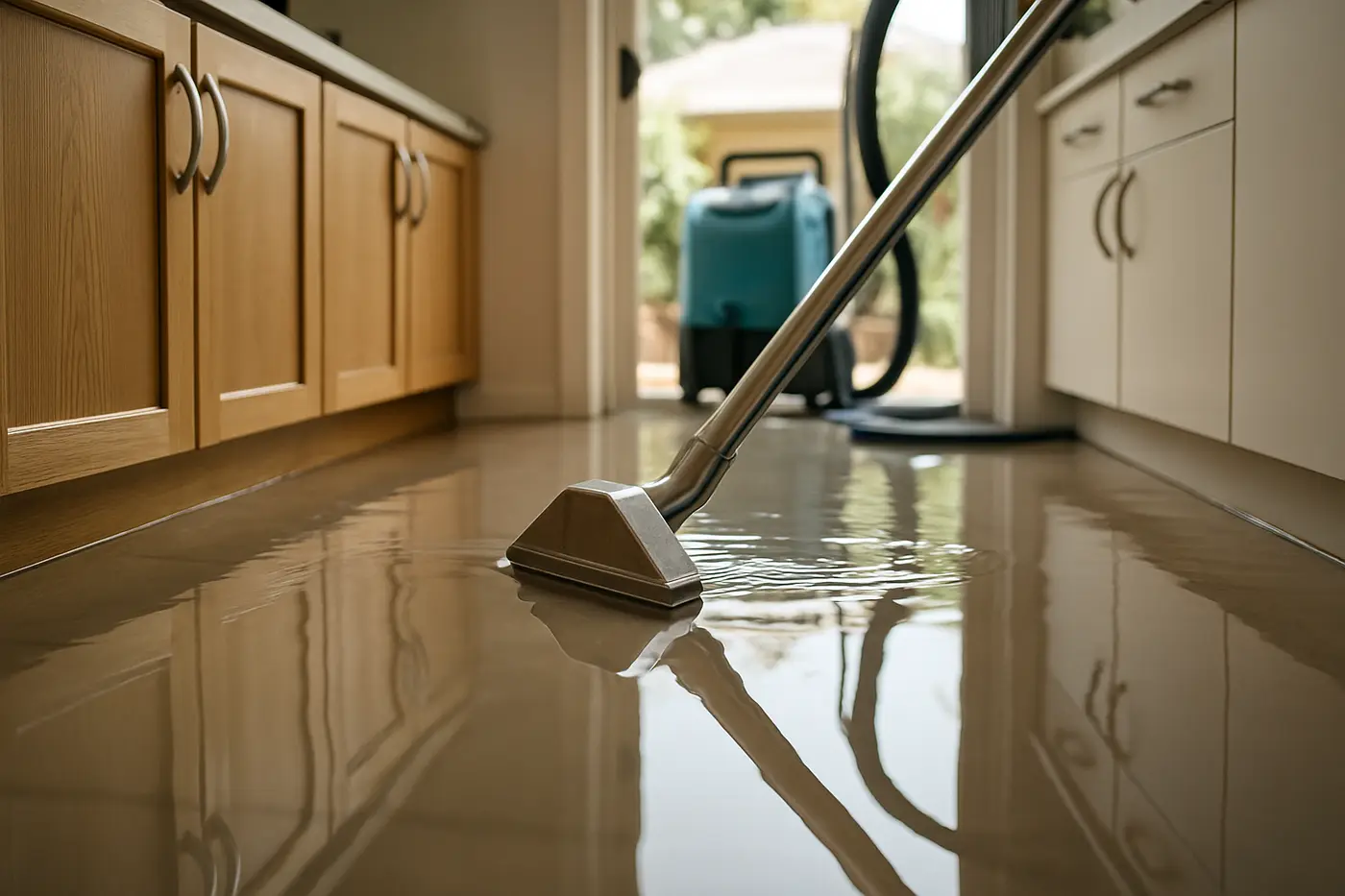
Extraction wand pulling standing water from a flooded floor

Not sure it is urgent?

Send a few photos with the form. A coordinator will tell you whether it can wait until morning or needs a crew tonight.

When to call

Signs you needwater extraction.

Water moves sideways along bottom plates and under floor coverings, so the wet area is nearly always bigger than the stain you can see. Any of the following is worth a call the same day.

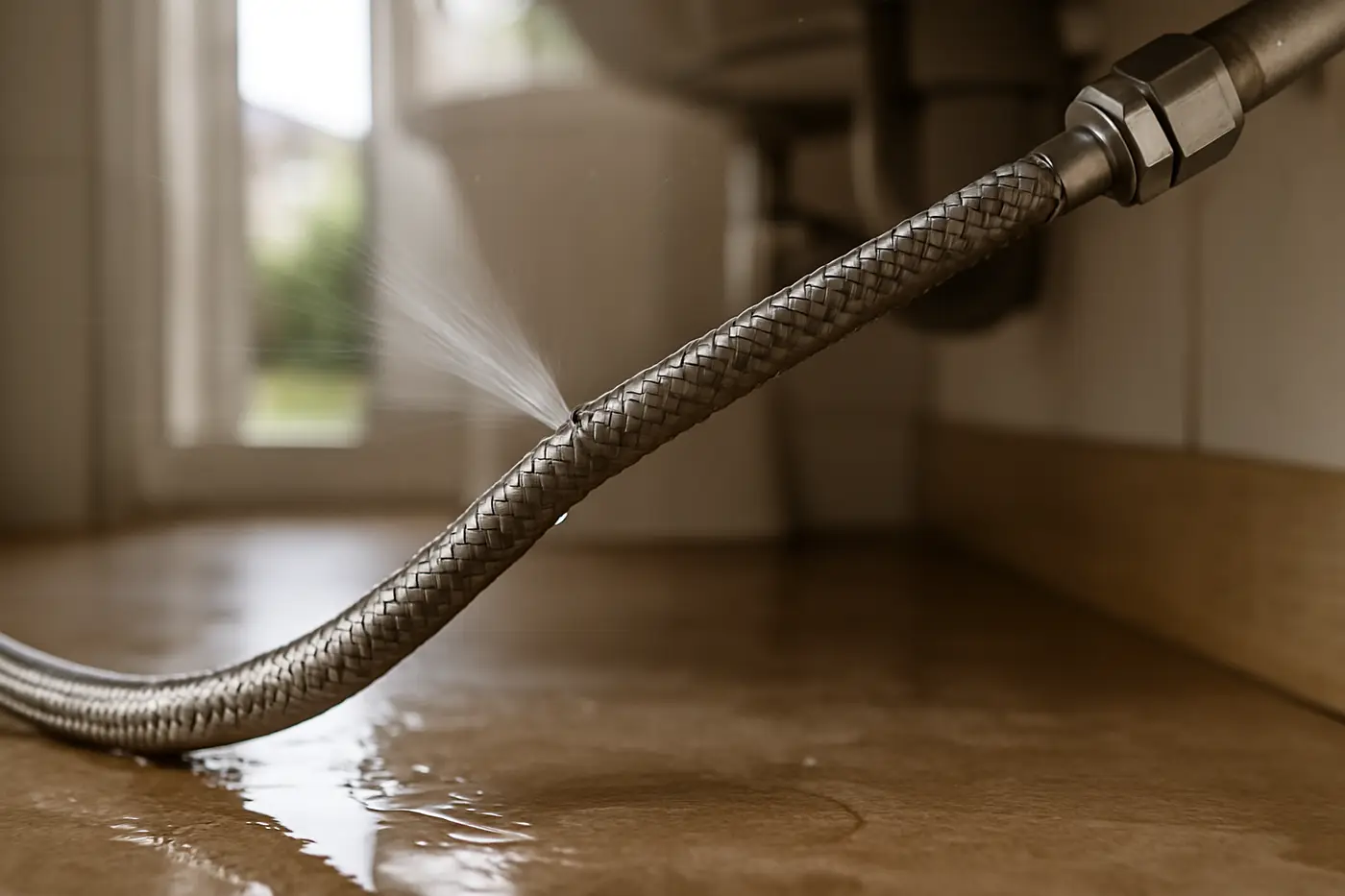
  • Standing water on floors after a pipe, hose or appliance failure
  • Carpet saturated across one or more rooms
  • A flooded garage, basement or under-house room after heavy rain
  • Water sitting on a tiled floor and seeping under cabinetry
  • A hot water system that has emptied into the laundry or a cavity
  • Rainwater that has come through the ceiling and pooled on the floor
  • Water you have mopped repeatedly that keeps coming back

Our process

How water extractionruns, step by step.

From the first call to the final moisture reading, you will know what is happening, why, and what your insurer will need at each stage.

  1. Step 1: Stop the source and send photos

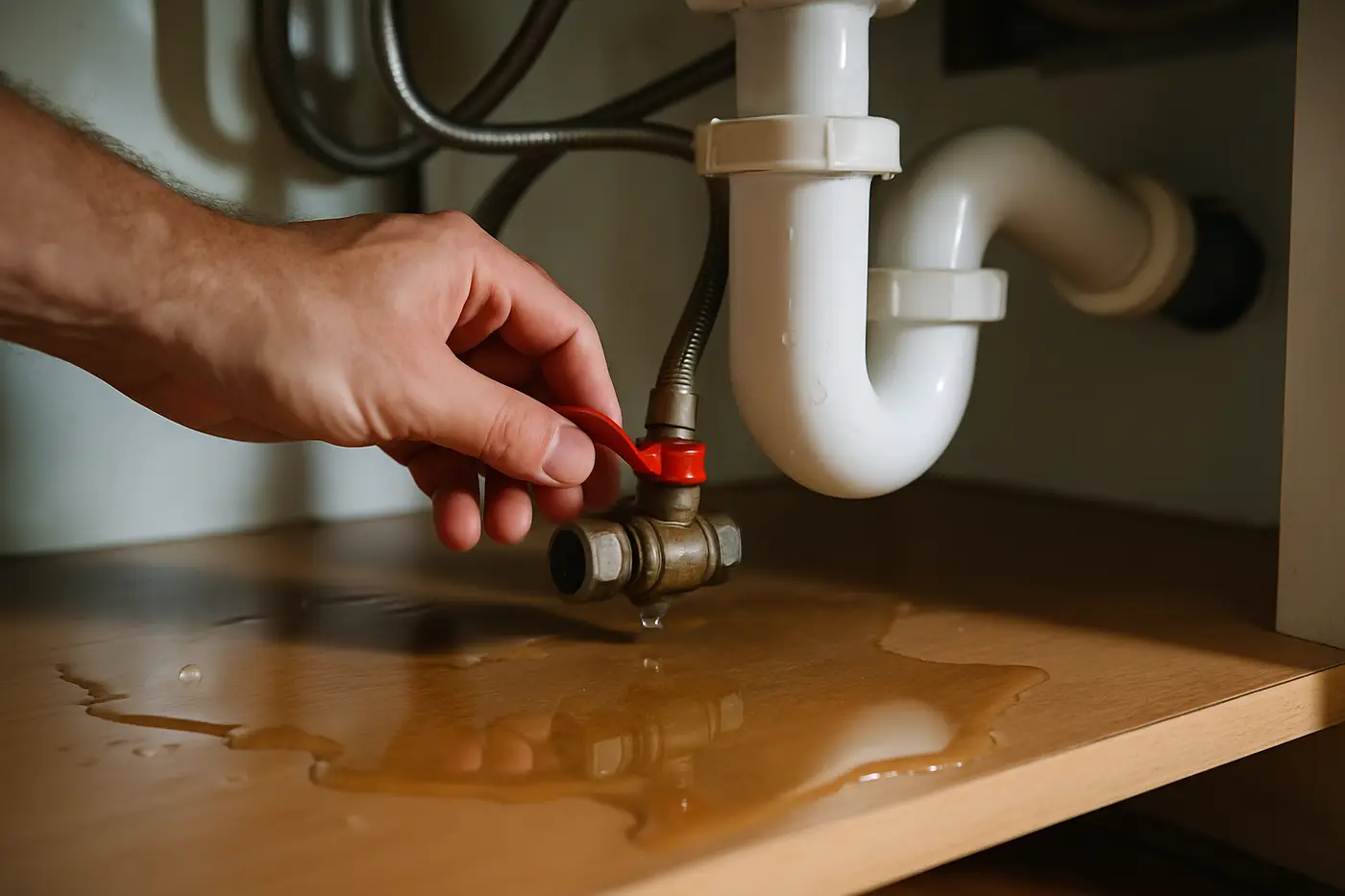
    Shut the water off at the isolator or the mains. Send us photos of each affected room and tell us where the water came from — that sets the category before we arrive.

  2. Step 2: Extract the bulk water

    Truck-mount or portable extractors and, where needed, submersible pumps remove the standing water. Weighted tools compress carpet and underlay to pull water from the layers below.

  3. Step 3: Map what is still wet

    After extraction we meter floors, skirting, walls and cabinetry. Extraction removes the water you can see; the map shows the water you cannot.

  4. Step 4: Dry or hand over

    If materials are still above dry standard we place air movers and an LGR dehumidifier the same visit. If the loss was small and caught fast, you get the readings and a report and that is the end of it.

Price guide · AUD, 2026

What water extractioncosts in Brisbane.

Ranges from typical Brisbane, Ipswich and Logan jobs. The final quote is given on site after moisture mapping, in writing, before any work starts. Insurance direct billing where the insurer approves.

ItemTypical range
Emergency call-out and assessment Includes moisture mapping and a written report$300–$600
Water extraction (standard home) By volume, number of rooms and water category$500–$2,000
Structural drying equipment hire Only where mapping shows materials still wet$80–$150 per unit per day
Carpet drying and restoration If carpet needs drying beyond extraction$250–$600 per room

Ranges cover labour, equipment and disposal for 2026. The number you approve on the written quote is the number you pay; if the scope changes once walls are opened, we stop and re-quote in writing.

Full price guide

In depth

Water Extraction in Brisbane: how the job actually runs.

Every water damage job in Brisbane starts with the same question: how much water can we get out mechanically before we have to evaporate the rest? Extraction is the answer, and it is the part of the process that most determines how long drying takes and what it costs. A litre pulled out with an extractor in the first hour is a litre a dehumidifier does not have to remove over the following three days.

What water extraction involves

Bulk removal. For a flooded room or several rooms, a truck-mount extractor gives the volume and vacuum lift to clear standing water quickly. For units, upper floors and tight access, portable extractors do the same job with more trips. Flooded garages, basements and under-house rooms are cleared with submersible pumps first.

Weighted extraction on carpet. A standard wand skims the pile. Weighted tools — sometimes called water claws or the operator standing on the tool — compress the carpet and underlay against the slab while the vacuum runs, pulling water from all three layers. It is slow per square metre and it is the single most effective thing you can do for a wet carpet.

Hard floors and cabinetry. Tiles, vinyl and timber are squeegeed and vacuumed, and water under kick boards and cabinetry is extracted where there is access. What cannot be reached is mapped for drying.

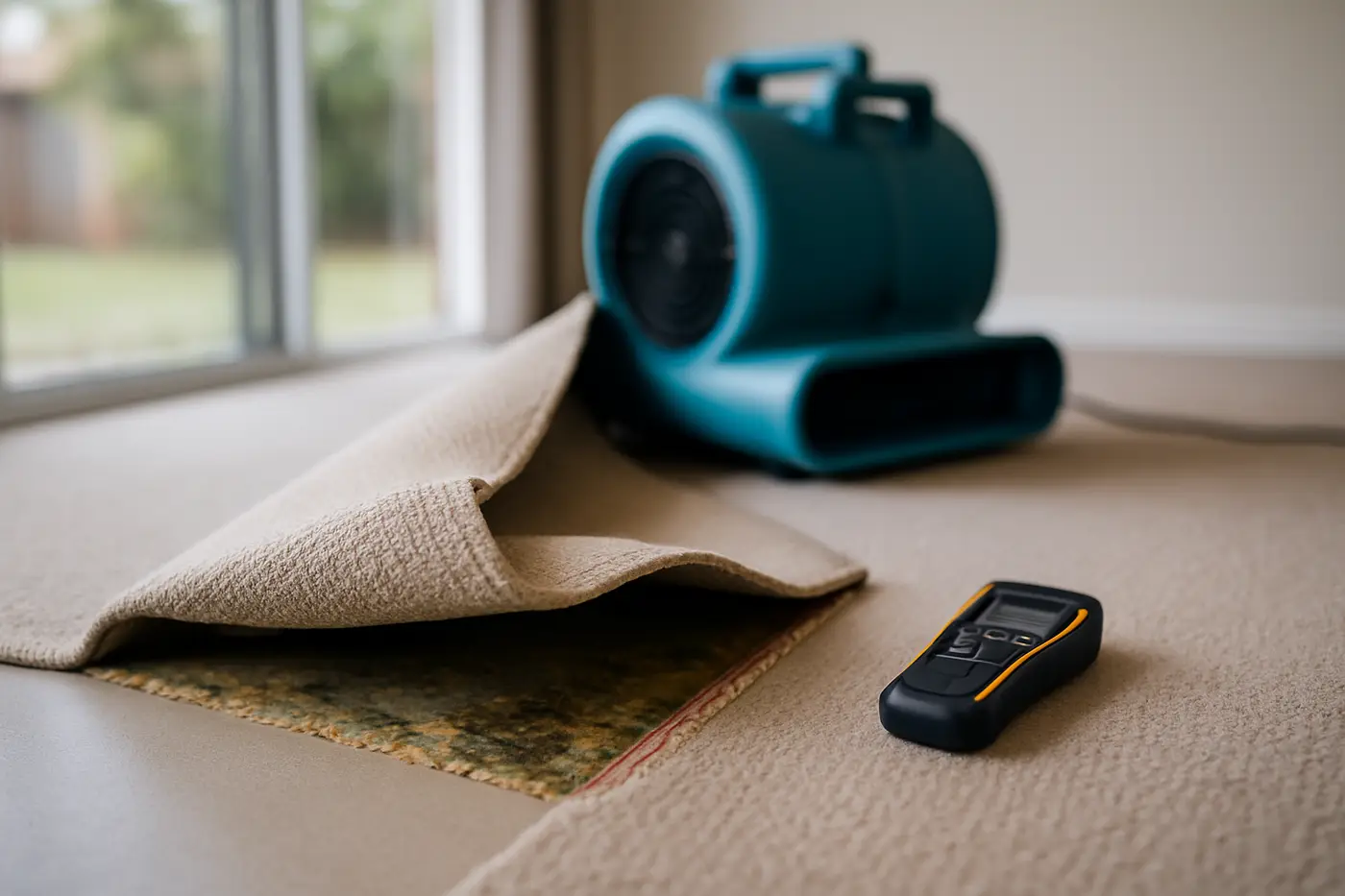
Moisture mapping afterwards. Extraction removes the water you can see. Pin and non-invasive meters and a thermal camera show the water you cannot: wicked into gyprock, held in the slab, sitting under the floating floor. The map decides whether the job ends here or moves to drying.

Why extraction beats evaporation

The IICRC S500 drying standard is built around a simple principle: remove as much water as possible by physical means before relying on evaporation. The numbers explain why. A commercial LGR dehumidifier removes 30 to 60 litres a day in good conditions. A truck-mount extractor can remove that in minutes. A saturated carpet and underlay across a 4 by 4 metre bedroom can hold well over 50 litres.

Brisbane makes this more important, not less. Summer relative humidity of 70 to 80 per cent means the air has little capacity to accept moisture. Every litre left in the materials is a litre that has to be pulled out slowly through humid air, extending drying time and the mould window. Thorough extraction on the first visit is what keeps a clean-water job at three to five days of drying rather than a week or more.

Water removal by cause

SourceTypical categoryExtraction approach
Burst flexi hose or pipeCat 1Weighted carpet extraction, map, dry
Hot water systemCat 1 (Cat 2 if old)Extract laundry and cavity, dry framing
Washing machine or dishwasherCat 2Extract, antimicrobial, dry
Storm water through ceilingCat 1–2Drain ceiling, extract floor, map walls
Blocked stormwater into garageCat 3Pump out, extract, treat, dry
Sewer backflow or creek floodCat 3Pump out, remove porous materials, treat

The first hour before extraction

  1. Stop the water at the isolator or the mains.
  2. Cut power to affected circuits at the switchboard if it is safe.
  3. Move furniture and anything cardboard off wet floors.
  4. Towel or squeegee what you can — it all helps.
  5. Do not use a household vacuum, and do not run the air-conditioner to dry the room; it recirculates the moisture.
  6. Photograph the water level and the cause before it changes.

Brisbane, Ipswich and Logan: where the water goes

Slab homes — the brick-and-tile suburbs like Sunnybank, Nundah, Aspley and Springwood, and the newer estates at Springfield Lakes and Redbank Plains — hold water on the slab under carpet and floating floors. Extraction here is about carpet and underlay, and about getting under floating floors before the planks swell.

Queenslanders in The Gap, Paddington and central Ipswich let water through the floorboards into the subfloor. Extraction is often under the house rather than in it, and the timber above is dried rather than extracted.

Split-level and sloping blocks in Kenmore, The Gap, Holland Park and Shailer Park send water into the lowest room, garage or under-house area, particularly during storm season when stormwater surcharges. These are pump-out jobs first.

Units and townhouses in New Farm, Toowong, Chermside and Logan Central often mean a leak upstairs and water in the ceiling and walls below. Extraction is from the ceiling cavity down, and it is worth finding the strata manager early.

Insurance and documentation

Water extraction is mitigation, and mitigation of an insured event is generally covered under Queensland home policies when it is documented. The report from our extraction visit includes the cause, dated photos, the water category, and moisture readings before and after extraction. That is what an assessor uses to decide the claim and to approve any drying that follows. Keep the failed hose or part.

What water extraction costs

Extraction for a standard home runs $500 to $2,000, depending on how much water, how many rooms and whether it is contaminated. Call-out and assessment is $300 to $600 and includes the moisture mapping and report. If the map shows materials still wet — and it usually does for anything beyond a small spill — drying equipment runs $80 to $150 per unit per day, and carpet drying and restoration is $250 to $600 per room.

If you are looking at standing water in Brisbane, Ipswich or Logan, the most useful thing you can do is stop the source and call. The sooner it is extracted, the less there is to dry.

Last updated 02 September 2026
Common questions

Water Extraction, explained.

Straight answers about response times, water categories, drying timelines and what your insurer will expect for water extraction in Brisbane.

All questions
What is the difference between water extraction and water damage restoration?

Extraction is the first step: removing the standing and absorbed water as fast as possible. Restoration is the whole process — extraction, moisture mapping, structural drying, removal of unsalvageable materials and repair. A small clean-water loss caught within hours sometimes needs extraction and little else. Most jobs need extraction plus a few days of drying.

Why not just mop it up and hire a fan?

Mopping removes surface water only. Carpet underlay, gyprock, timber and concrete all absorb water, and a fan without dehumidification just moves humid air around a humid room. Professional extraction pulls water out of the materials, and moisture mapping tells you whether it worked. In Brisbane humidity, guessing wrong means mould inside a week.

How much water can you remove and how fast?

A truck-mount extractor handles a standard flooded home in a couple of hours. Submersible pumps clear a flooded garage or subfloor faster than that. Weighted extraction on carpet is slower per square metre but removes far more water from the underlay than a standard wand. The aim is to get as much out mechanically as possible, because evaporation is slow and expensive by comparison.

Do you extract contaminated water?

Yes. Grey water (washing machine, dishwasher, sink overflow) and black water (sewage, creek, stormwater) are extracted with dedicated equipment and disposed of appropriately, and the affected surfaces are treated. Porous materials that absorbed Category 3 water are removed rather than dried, in line with the IICRC S500 standard.

Can you extract water from under a floating floor or tiles?

Under a floating floor, the planks usually need to be lifted so the water on the slab can be extracted and the slab dried. Water under tiles is in the bed and the slab and cannot be extracted; it has to be dried with containment and dehumidification. We meter through the tile to confirm what is there.

Is water extraction covered by insurance?

As mitigation of an insured event — a burst pipe, hose, hot water system or storm ingress — it generally is. Insurers expect to see the cause, dated photos and moisture readings before and after. Our extraction visit produces that report as standard.

What about a flooded garage or under-house area?

Common after heavy rain in Brisbane, particularly where stormwater is blocked or the block slopes toward the house. We pump it out, extract what the pump leaves behind, and check the walls and any stored contents. If the water came in from the street or a creek, it is treated as Category 3.

Related services

Water rarely stays in one lane. These are the services most often scoped on the same job.

All services
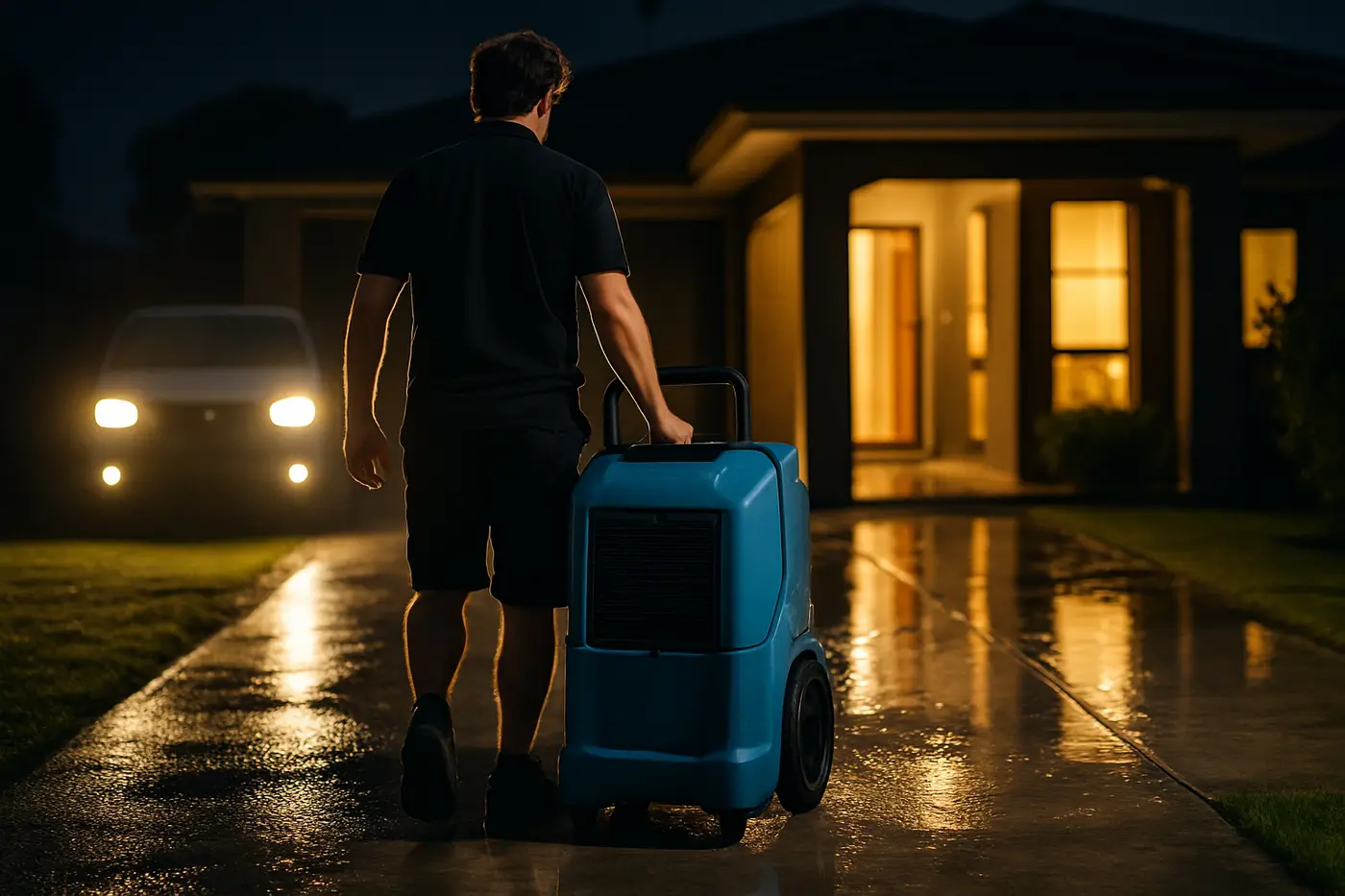
  • Technician arriving at night with extraction equipment for a burst pipe emergency
    01

    Emergency Water Damage

    24/7 emergency water damage response across Brisbane, Ipswich and Logan. Fast water extraction, make-safe, moisture mapping and drying to stop damage spreading.

    Learn more
  • Wet carpet lifted from the underlay with an air mover blowing underneath
    02

    Flooded Carpet Drying

    Flooded carpets in Brisbane? We extract, lift, dry and sanitise water damaged carpet and underlay to IICRC S500, and say honestly when replacement is cheaper.

    Learn more
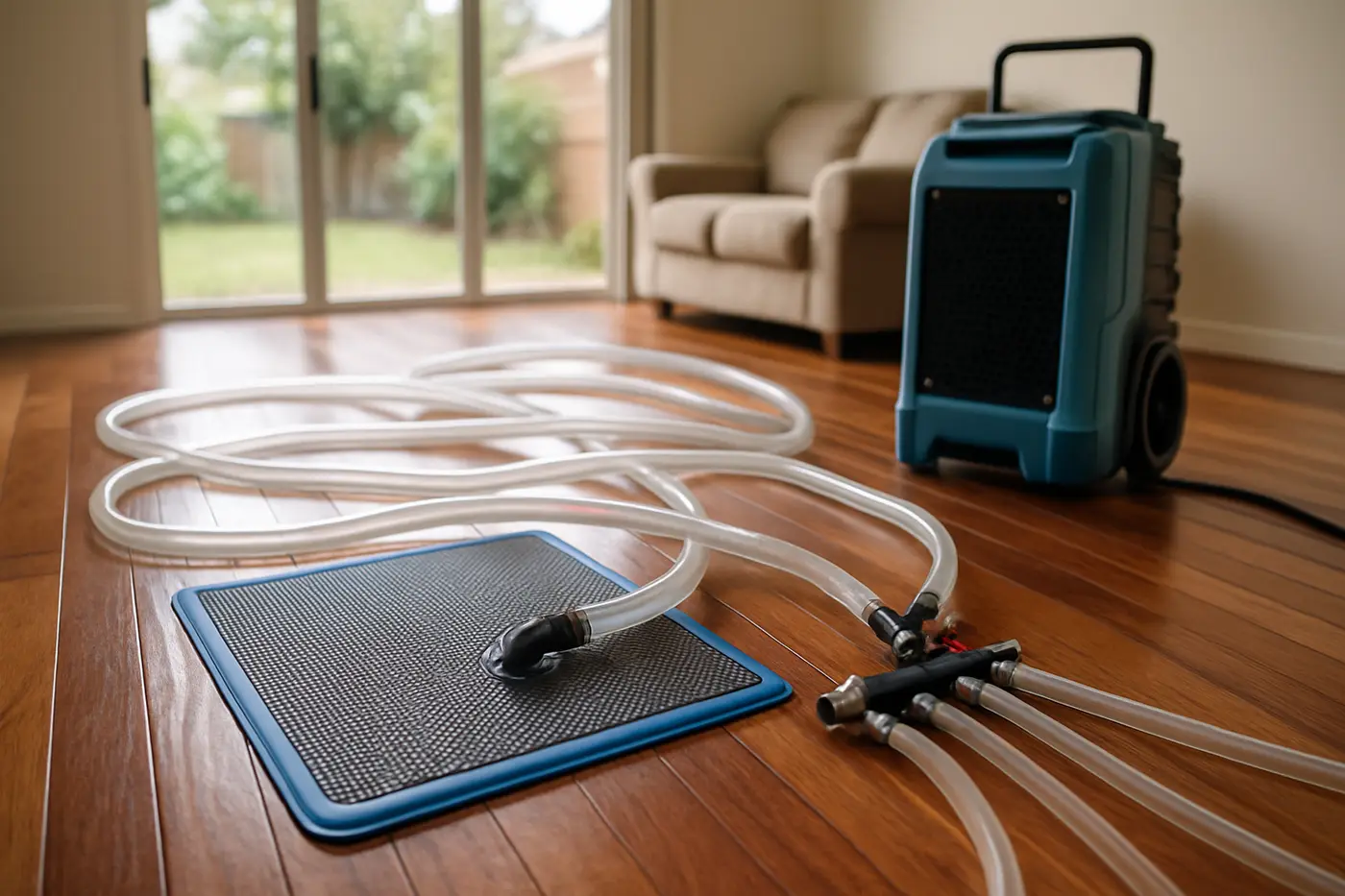
  • Drying mat system laid across a water-damaged timber floor
    03

    Wet Floor Drying

    Flooded floors in Brisbane, Ipswich or Logan? Specialist drying for timber, laminate, particleboard and tiled slabs, with moisture mapping to stop cupping and mould.

    Learn more

Helpful reading

Guides that go withthis service.

Practical, Brisbane-specific reading for the first hour, the drying process, mould risk and insurance claims.

Water Extraction · Brisbane, Ipswich & Logan

Let's take the next step toward drying your property.

Tell us what happened, where the water is and whether it is still active. A restoration coordinator will explain what to do next and what your insurer will need.