In depth
Wet Floor Drying in Brisbane: how the job actually runs.
Floors are where water ends up, and they are where the expensive mistakes happen. A wet floor looks dry long before it is dry, and a floor that is closed up, sanded or re-laid too early comes back as cupping, swelling, hollow tiles or a mould problem months later. Wet floor drying is a separate skill from general water damage work because every floor type behaves differently, and Brisbane has all of them.
Flooded floors by type: what happens and what we do
Solid hardwood (Queenslanders and older homes)
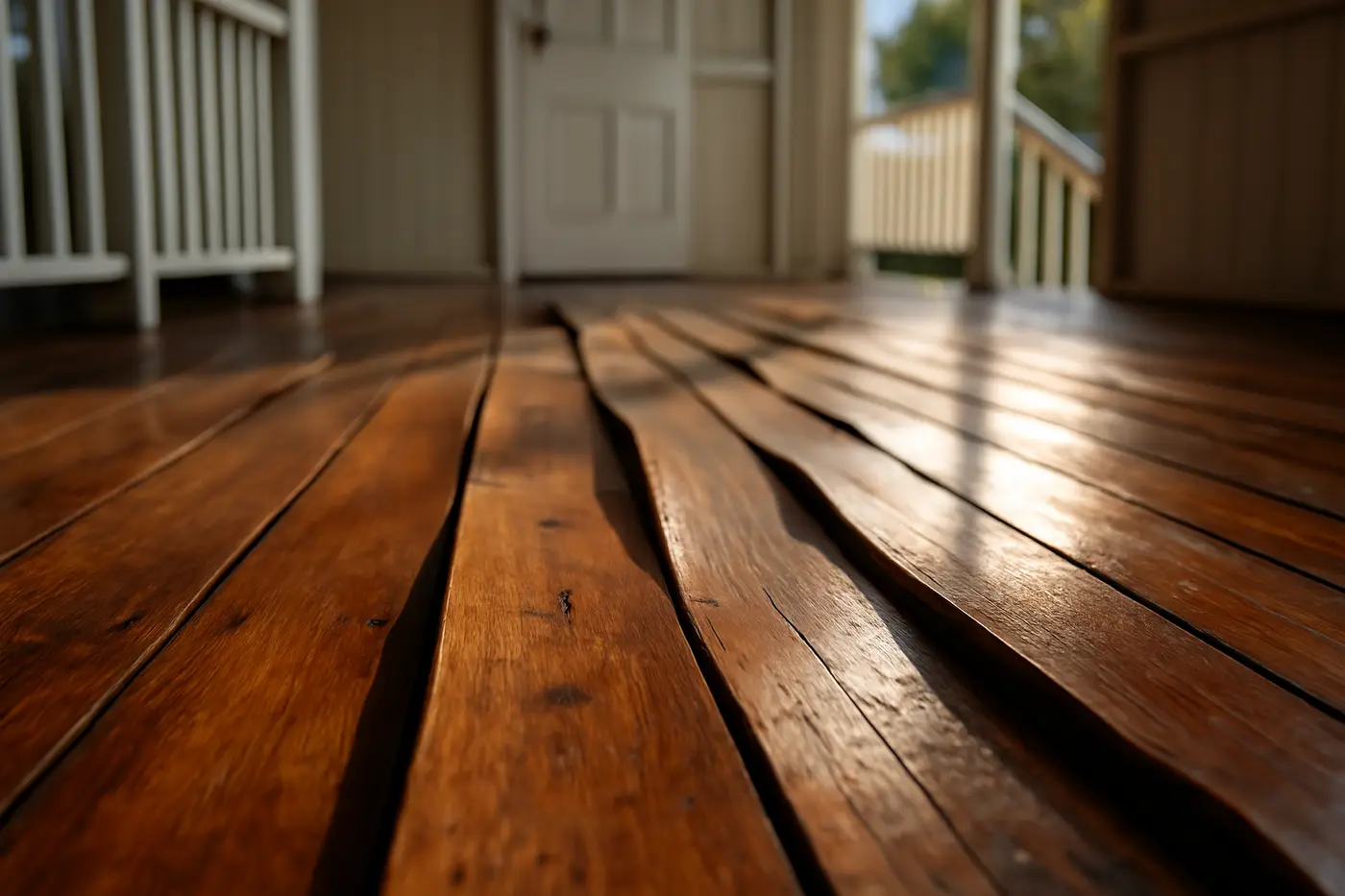
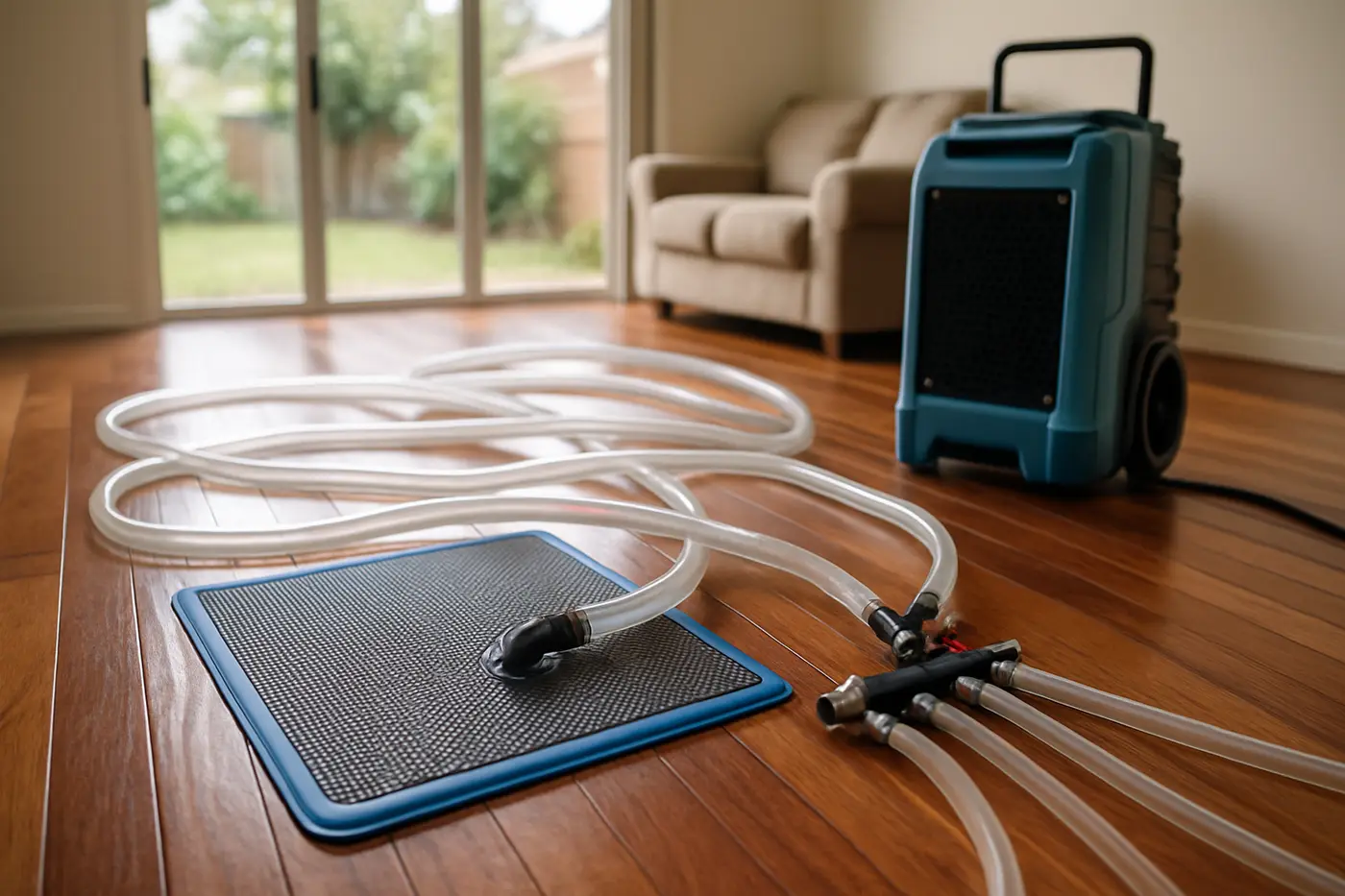
Spotted gum, blackbutt and hoop pine boards on joists, common across Paddington, Toowong, New Farm and central Ipswich. Water goes through the joints and wets the underside of the boards, which swell and cup — edges up, centre down. The boards are not ruined at this point. Controlled drying from above with floor mat systems and from below through the subfloor brings the moisture content back down evenly and most floors flatten. The mistakes are sanding a cupped floor (it crowns when it finally dries) and drying too fast (the boards check and split).
Engineered timber and laminate floating floors
Water runs under the planks and sits on the foam underlay and slab. Laminate swells at the joints within a day; engineered timber holds out a little longer. In both cases the affected area is usually lifted, the slab dried, and the planks re-laid or replaced. Drying a floating floor without lifting it generally does not work — the water is under the plank and cannot evaporate through it.
Particleboard sheet flooring
Standard in newer estates at Springfield Lakes, Redbank Plains and across Logan. Particleboard soaks up water, swells and loses its strength, and it does not recover. Sheets that are only surface damp can sometimes be dried, but swollen or soft sheets are cut out and replaced once the joists are dry. Here the whole job is speed.
Tile over concrete slab
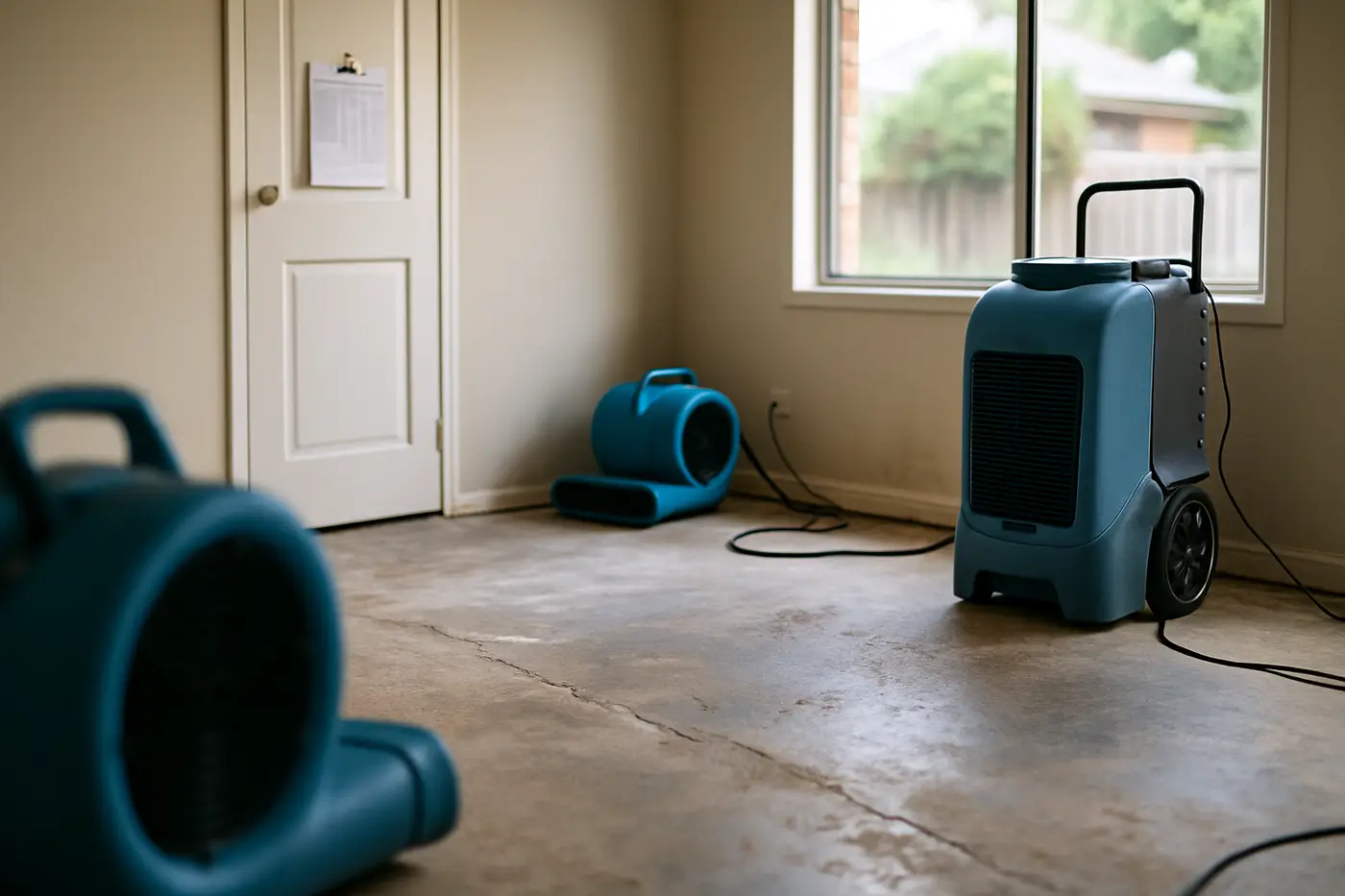
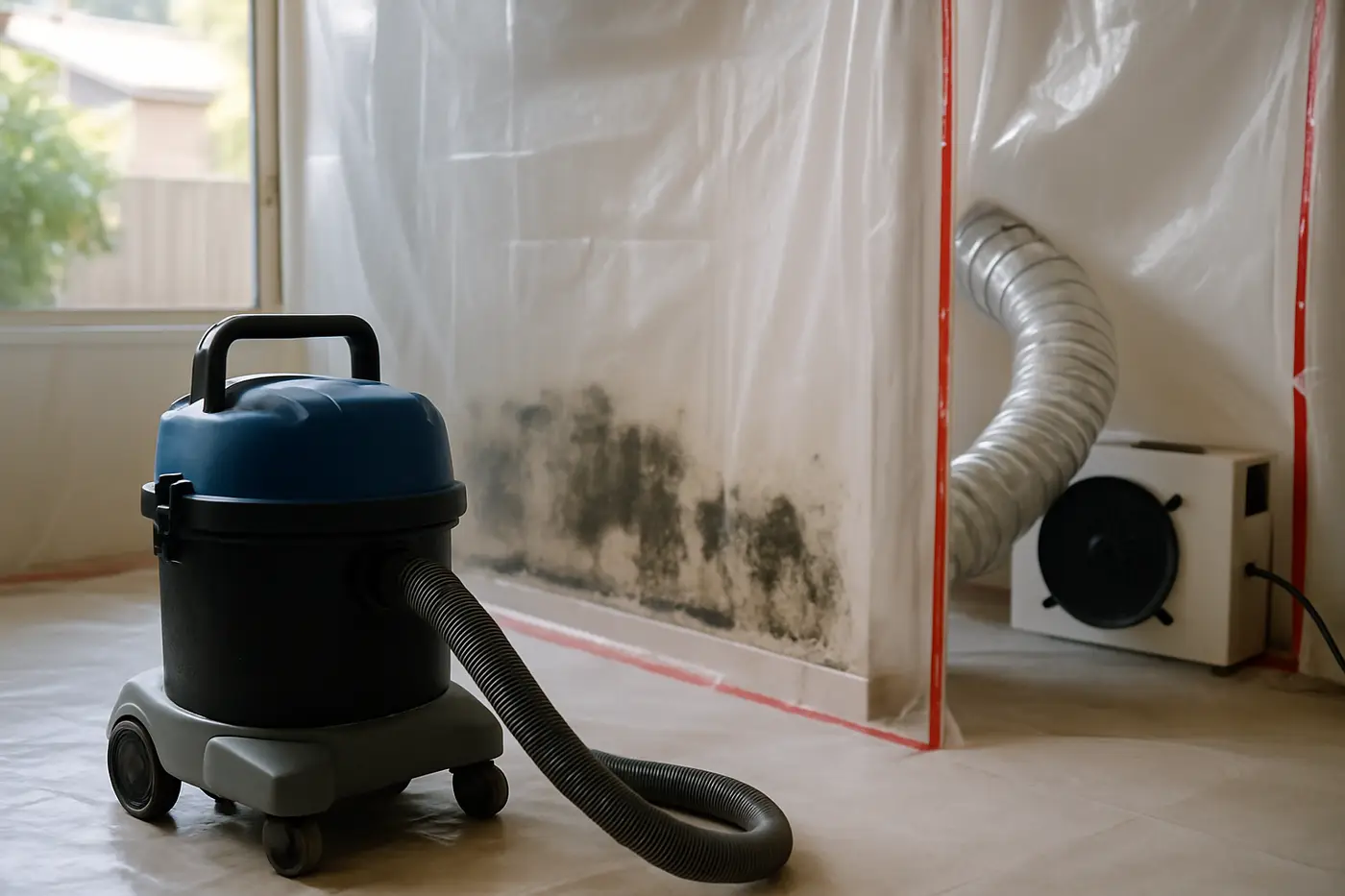
The 1970s–80s brick-and-tile homes in Sunnybank, Mount Gravatt, Aspley and Springwood. Water sits on tile long enough to get through the grout and into the bed and slab. This is Class 4 drying under the IICRC S500 standard — a lot of water bound in dense materials — and it is the slowest scenario we see. The slab needs containment, heat and dehumidification, and the bottom plates of the surrounding walls are almost always wet too.
The drying science: why a floor takes a week
A floor is dry when its moisture content matches the rest of the house — for timber in Brisbane, roughly 10 to 14 per cent. A wet hardwood floor can read 30 per cent or more. Getting it down means moving water out of the timber into the air and out of the air into a dehumidifier, and in summer humidity of 70 to 80 per cent that is a slow process without equipment.
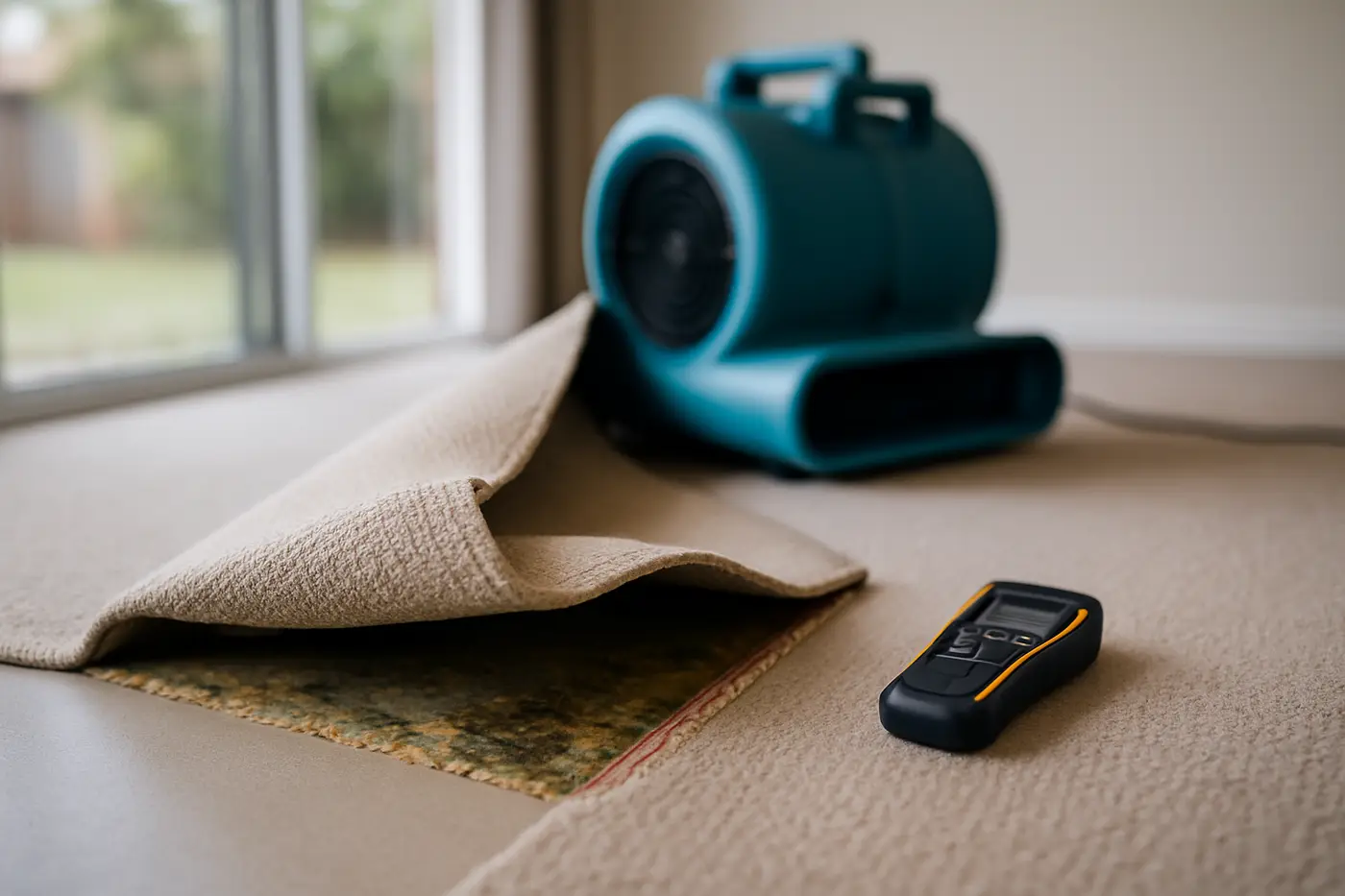
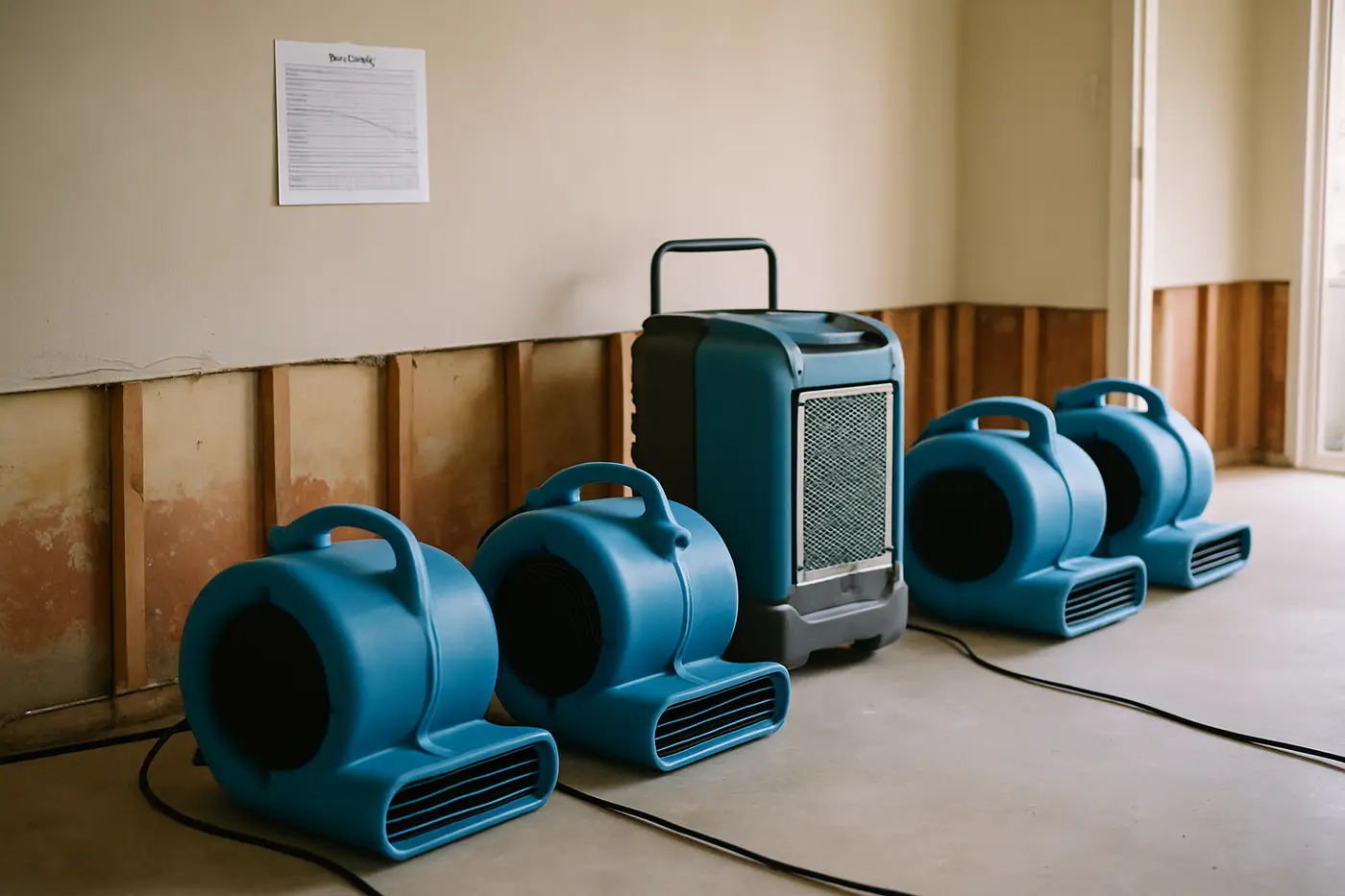
We use three tools. Air movers keep air moving across and under the floor so evaporation continues. LGR dehumidifiers keep the room air dry enough to accept the moisture. Floor mat systems — sealed mats connected to a vacuum — pull moisture directly through the board joints of hardwood floors and are the single most effective tool for saving cupped timber.
Readings are taken daily with pin meters at fixed points across the floor and on an unaffected reference board. The floor is finished when the wet points match the reference, not when the surface reads dry.
Repair versus replace
| Floor type | Save | Replace |
|---|---|---|
| Solid hardwood | Cupping, no buckling, clean water | Buckled off joists, Cat 3 water |
| Engineered timber | Lifted and dried early | Delaminated veneer |
| Laminate | Only if lifted within a day | Swollen joints |
| Particleboard | Surface damp only | Any swelling or softness |
| Tile on slab | Always — slab is dried in place | Drummy tiles re-laid after drying |
What to do in the first hour
- Turn off the water source and isolate power to the room.
- Mop, squeegee or towel up standing water — every litre removed by hand is a litre the floor does not absorb.
- Do not put a heater on a timber floor. Fast surface heat splits boards.
- Lift rugs and mats; they trap water against the floor.
- If it is a Queenslander, check under the house for pooling and open any subfloor vents or doors.
- Photograph the floor and the cause, and send them to us.
Insurance and documentation
Insurers generally prefer drying to replacement because it costs less, but they need evidence: initial readings, daily logs, and a final set at dry standard. When a floor cannot be saved, the same logs justify replacement. We photograph the floor at each stage, keep the readings, and issue a drying certificate at the end. For timber floors this record also protects you if cupping reappears later — it shows the floor was returned to equilibrium.
What wet floor drying costs
Wet floor drying runs $400 to $1,500 per area, depending on the floor type and the method. Mat drying of a hardwood room sits at the upper end; a laminate lift on a small slab area at the lower. Timber and slab jobs typically need five to ten days of equipment at $80 to $150 per unit per day. Where several rooms are affected, a whole-home extraction is $500 to $2,000 and a full clean water restoration with floor section replacement is $2,000 to $6,000. Call-out and assessment is $300 to $600, credited against the job.
If your floor is wet in Brisbane, Ipswich or Logan, keep the heaters off, get the standing water up, and call us. The earlier a floor is metered and the drying started, the more of it we can save.
Last updated 05 September 2026